
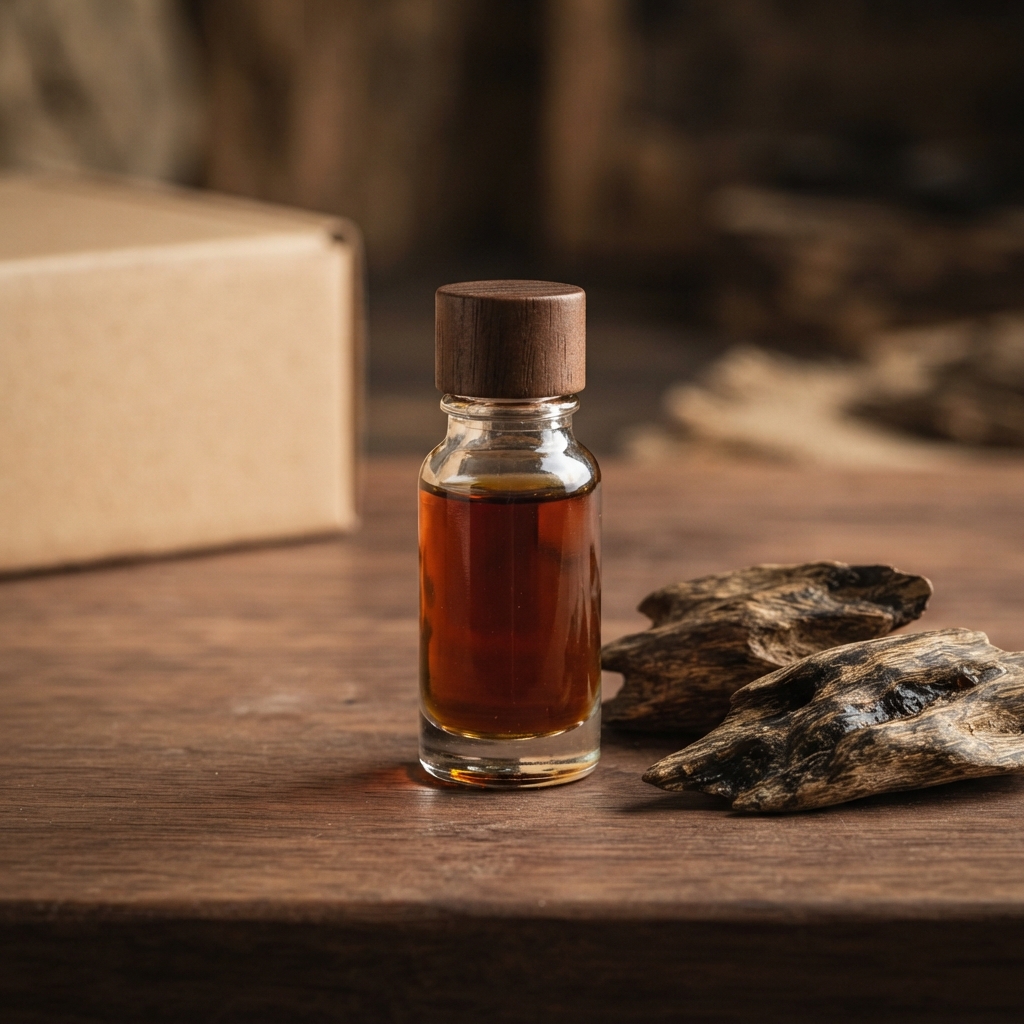
Oud oil distillation is where an oud quotation is actually made: the wood that goes into the vessel, the route used, the oil recovered, and the record kept of all three. Buyers who cannot read that record end up comparing prices on material they cannot verify. This guide sets out the fields to request, the yield arithmetic to check, and the capacity evidence that shows whether a supplier can repeat a lot.
What an Oud Oil Distillation Record Is, and Why It Outranks a Grade Label
An oud oil distillation record — issued as a batch record, lot sheet or production certificate — is the document that connects a volume of oil to the material and process that produced it. Its value is that each field is checkable: wood input, species, wood form, moisture state, vessel and route, run duration, output volume, date and storage.
A grade label is something else. "AAA", "premium" or "super" is supplier vocabulary, and two suppliers can both sell "premium" while meaning different species, routes and dilutions. No international standard assigns those letters, so the label cannot be audited. Read the record before you read the price: if a supplier cannot produce one for the lot being quoted, the quotation describes a category rather than a consignment.
Oud Oil and Agarwood Oil: One Material, Two Names
Oud is the Arabic and South Asian name; agarwood oil is the English trade name for material recovered by oud oil distillation from resin-bearing Aquilaria and closely related genera. The two words describe the same product category, and neither is a specification. ISO 4720, Essential oils — Nomenclature, exists because common names alone do not identify a material: the botanical name has to travel alongside the trade name.
Treat both terms as the opening of the conversation. The specification begins when the supplier names the species, the part of the plant used, the extraction route, any diluent, and the lot to which the price applies.
What the Extraction Route Changes in Your Evaluation
Distillation is not one process. The agarwood oil extraction method named on the record — water distillation, steam distillation, solvent extraction or supercritical CO2 extraction — decides contact time, temperature and what is carried over, and each route produces a commercially different material. Because the route affects odour character, colour, oud oil yield and cost, a quotation becomes comparable only once the route is fixed.
| Route | What it changes for a buyer | What to ask for |
|---|---|---|
| Water / hydrodistillation | Long water contact and a traditional profile; output depends heavily on resin content | Run duration, water-to-wood ratio, recorded output for the lot |
| Steam distillation | Steam carries the volatiles with shorter soaking time | Operating pressure range, batch size, condenser and separator setup |
| Supercritical CO2 extraction | A different extract composition, often darker and heavier; it is an extract, not a traditional distillate | Whether the product is an extract or a distillate, and the specification issued for it |
| Solvent extraction | Residue and carrier questions become central | Solvent used, removal method, residual limits declared |
No route is automatically better; the route simply has to be named on the record and matched to the sample you approve. For a worked comparison of two routes, see our article on steam-distilled versus supercritical agarwood oil.
Oud Oil Yield: From Price per Kilogram to Cost per Millilitre
Agarwood oil is sold by weight but recovered by volume from wood, so the number that governs the price is how much oil a lot produced from how much material. Ask for the recorded input and output of the lot: kilograms of prepared wood in, millilitres of oil out. Divide output by input and you hold that lot's own oud oil yield, which is more useful than a catalogue average because recovery varies with species, resin content, wood form and route.
With those two figures you can rebuild the cost: (wood cost + processing + packing) divided by output volume. A supplier quoting a lower price per kilogram from a materially lower recovery is not necessarily cheaper; the offer may simply describe a different input.
Illustrative arithmetic, not a market figure: if a run consumed 200 kg of prepared wood and recovered 400 ml of oil, the lot yielded 2 ml per kg of wood. If the wood was costed at a stated rate per kilogram, the material component per millilitre is that rate multiplied by 0.5. Run the same calculation on two quotations and the comparison becomes arithmetic instead of impression.
The Fields an Oud Oil Batch Record Should Contain
An oud oil batch record is only useful if it is complete. Ask for these fields, and treat a missing line as a question rather than a formality:
| Field | Why it matters to a buyer |
|---|---|
| Lot or batch number | Ties the sample, the documents and the shipment to one production run |
| Species and origin | Decides legality questions and sets the expected odour family |
| Wood form and preparation | Chips, fragments, powder and shavings behave differently in the vessel |
| Input weight and moisture state | Without it, a yield figure means nothing |
| Route, vessel and run duration | Explains what the oil is and why two lots can differ |
| Output volume and production date | Allows the yield calculation above |
| Dilution or carrier, if any | The most common silent gap between sample and invoice |
| Storage conditions after production | Light, heat and headspace change the material before it ships |
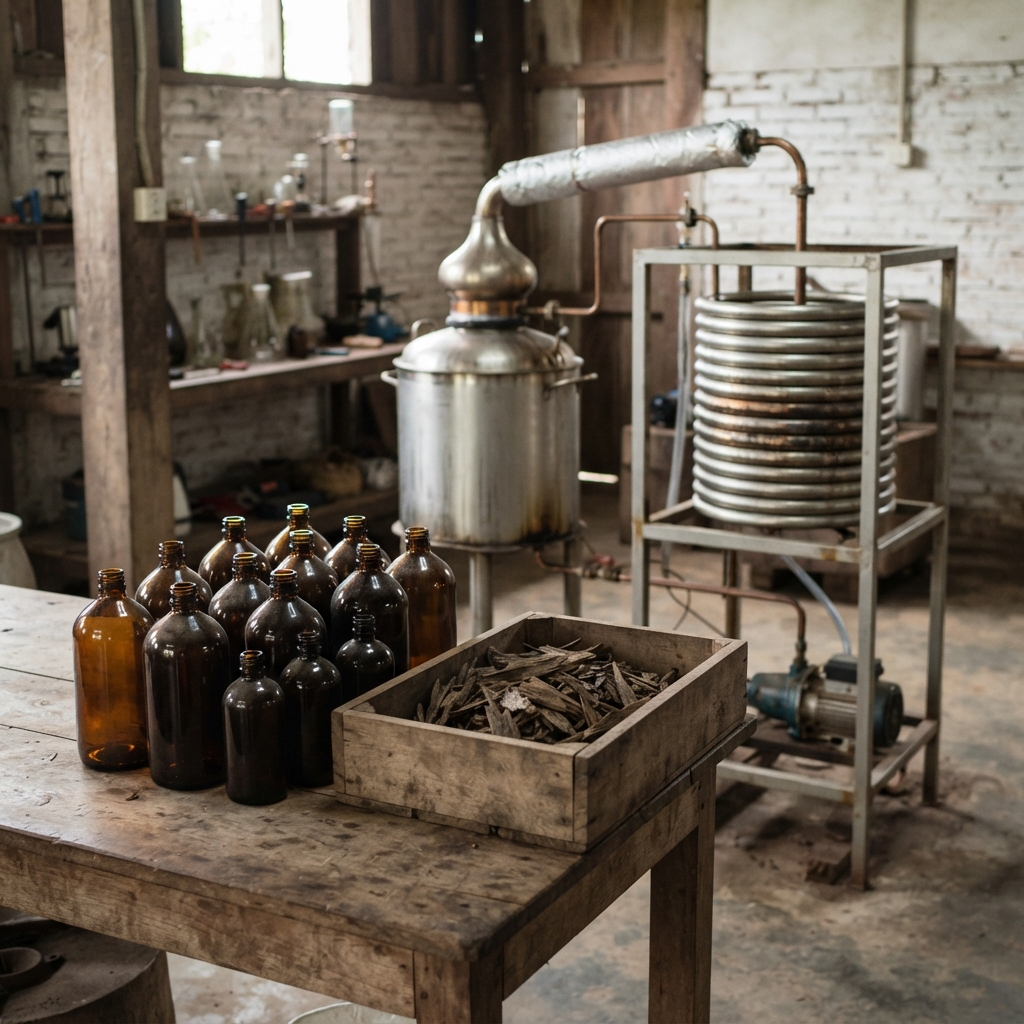
Why Aroma Alone Cannot Verify Purity or Species
Sensory assessment is necessary and insufficient. Smell varies between assessors, between days, and with dilution and substrate, and it cannot establish whether an oil has been extended with a carrier or a synthetic oud accord. Aroma confirms that a sample sits in the right family; it does not validate an oud oil distillation run, confirm the species, or prove that the delivered lot matches the approved one.
Pair sensory notes with the batch record and, where the order value justifies it, laboratory results tied to the same lot number. A certificate that carries no lot reference proves nothing about the drum in front of you. Our article on verifying purity, dilution and batch claims covers the tests buyers commonly request.
Distiller, Manufacturer, Wholesaler or Trader
Who owns the still decides what you are able to verify. A producer controls material selection and the oud oil distillation run; a wholesaler buys and resells; a trader may never see the goods. All three can be legitimate partners, but only one of them can answer a question about a specific run without relaying it to somebody else.
Practical check: match the company name on the quotation, the bank account, the export documents and the batch record, then ask who physically processes the oil and where. Behind the label "oud oil manufacturer China" there are growers with their own stills, processors who buy wood and distil it, and sellers who do neither. Our guide to verifying who really produces the oil walks through that document trail.
Verifying Capacity Before You Need It
Capacity is arithmetic, not a claim. Ask for the number of runs per month, the typical input weight per run and the recorded output per run. Multiplied out, those three figures give a monthly oud oil distillation output range that you can set against your own requirement. If your annual volume is a large share of that range, allocation risk is part of what you are buying.
A second, cheaper test: ask for the lot numbers issued over the last twelve months. A supplier running production regularly can list them with dates and volumes. A reseller usually cannot, or produces a list that stops where somebody else's records begin.
A Three-Stage Trial: Sample, Pilot, First Bulk
Sample, pilot and bulk order test different things. The sample tests whether the material fits your brief. The pilot run tests whether the supplier can repeat it at production quantity. The first bulk order tests documentation, packaging and logistics — and if the oil is destined for perfume manufacturing, it tests whether the material still behaves in your base at full scale.
Record the same fields at every stage: sample identity and lot, receipt date, appearance in a standard glass container under consistent light, odour undiluted and at a fixed dilution in a neutral carrier, and behaviour in your own base where the end use is a finished product. Where you need numbers rather than impressions, a laboratory can measure colour, clarity, specific gravity and refractive index against the specification the supplier issued. The wholesale agarwood oil sample evaluation record sheet is built to be copied into an RFQ.
Batch Consistency, Storage and Packaging
Consistency begins as a written tolerance. Decide what variation in colour, odour and any measured parameter you will accept between lots, then require each oud oil distillation record to state its own values against that tolerance. Without the clause, "same as last time" remains an opinion.
Storage and packaging belong in the same conversation, because oil can be correct at the still and wrong at arrival. Ask what container the oil is filled into, how much headspace is left, whether the fill is under inert gas, and how the drum or bottle is protected from light and heat in transit. For bulk supply, specify container material, closure, fill weight, labelling and outer carton. The clause structure in our packaging and storage specification guide transfers to oil with minor changes, and our article on storage, retest and batch retention covers what happens after arrival.
What Moves the Quotation
Five variables build an oud oil price: the raw material and its resin content, the route and its recovery, the packaging format, the testing and documentation included, and the delivery term. A price per kilogram that separates none of these cannot be compared with anything else, because it hides the difference between a high-yield lot and a thin one.
Ask for the build-up: material, processing, packing, testing, freight and insurance, plus the Incoterm that fixes where risk passes. Our breakdown of bulk oud oil price comparison converts competing bids into landed cost per unit of usable material.
Comparing Three Quotations on Equal Terms
Three bids are the practical minimum for a defensible decision, and they compare only when normalised to the same Incoterm, currency, packaging unit, documentation set and delivery window. Then compare landed cost, the batch evidence offered, the sample approval route and the stated output capacity.
Note the silences. A bulk oud oil supplier that does not answer a question about species, route or documents is not a gap in your form; it is a risk you would be accepting. Our supplier qualification scorecard shows how to weight those criteria across candidates.
Destination Rules: SDS, Labelling and Species Documents
What you need in order to import depends on the material, its classification, its end use and the destination market. Confirm the position with your own regulatory adviser or customs authority rather than with a supplier's marketing page, and ask the supplier for the documents that support it: a safety data sheet for the material as supplied, composition information, and the labelling data your market requires for the finished product.
On species, Aquilaria is listed in CITES Appendix II subject to an annotation that excludes certain forms (see the CITES Appendices, 2025). That listing does not mean every oil consignment travels under the same permit: the requirement depends on the species, the form and quantity of the material, and how the importing country applies the listing. Ask which permit the shipment will travel under, who the named holder is, and whether the permit description matches the goods — a permit written for wood chips will not clear a drum of oil.
MOQ, Private Label and OEM Questions
A minimum order quantity reflects run size, cleaning between grades, packaging runs and the documents issued per shipment. Ask what the figure is based on and whether a smaller pilot quantity is possible before bulk. For private-label and OEM programmes, confirm in writing who supplies the container, who owns the artwork, which approval steps precede production, and how the approved sample is referenced in the order. Our private label programme guide sets out that sequence.
Lead Time, Inspection and Claims
Lead time runs as parallel clocks: material allocation, production, documentation and transit. Ask for a dated schedule and identify which clock the supplier actually controls. Agree the inspection method before dispatch — who inspects, against which specification, and what happens if the lot fails — then write the claim route into the order: the notification window after arrival, the evidence you will provide, the remedy ladder and who bears return freight.
Oud Oil Supplier Evaluation Checklist
| Area | What to confirm | Evidence to request | Red flag |
|---|---|---|---|
| Raw material input | Species, origin and wood form feeding the run | Origin declaration and input weight on the batch record | Origin given only verbally, or as a whole continent |
| Sample performance | Colour, clarity, odour and behaviour in your base | Lot-linked sample plus your own trial record | Sample from an unlabelled stock bottle |
| Batch records and yield | Lot number, output volume, route, duration | Batch record with input and output figures | Certificate with no lot reference, no yield data |
| Quotation conditions | Unit, Incoterm, currency, validity, documentation included | Written quotation with packing and freight separated | One figure with no delivery term |
| Packaging | Container, closure, headspace, fill weight, labelling | Pack specification and a photo of a packed unit | "Standard export packing" and nothing more |
| Lead time | Allocation, production, documents, transit | Dated schedule in the order confirmation | Lead time appears only after the deposit |
| Verifiable documents | Entity, bank, export and species papers agree | Copies matching the quotation entity | Documents issued in a different company name |
What to Request for NanjaOud Oil
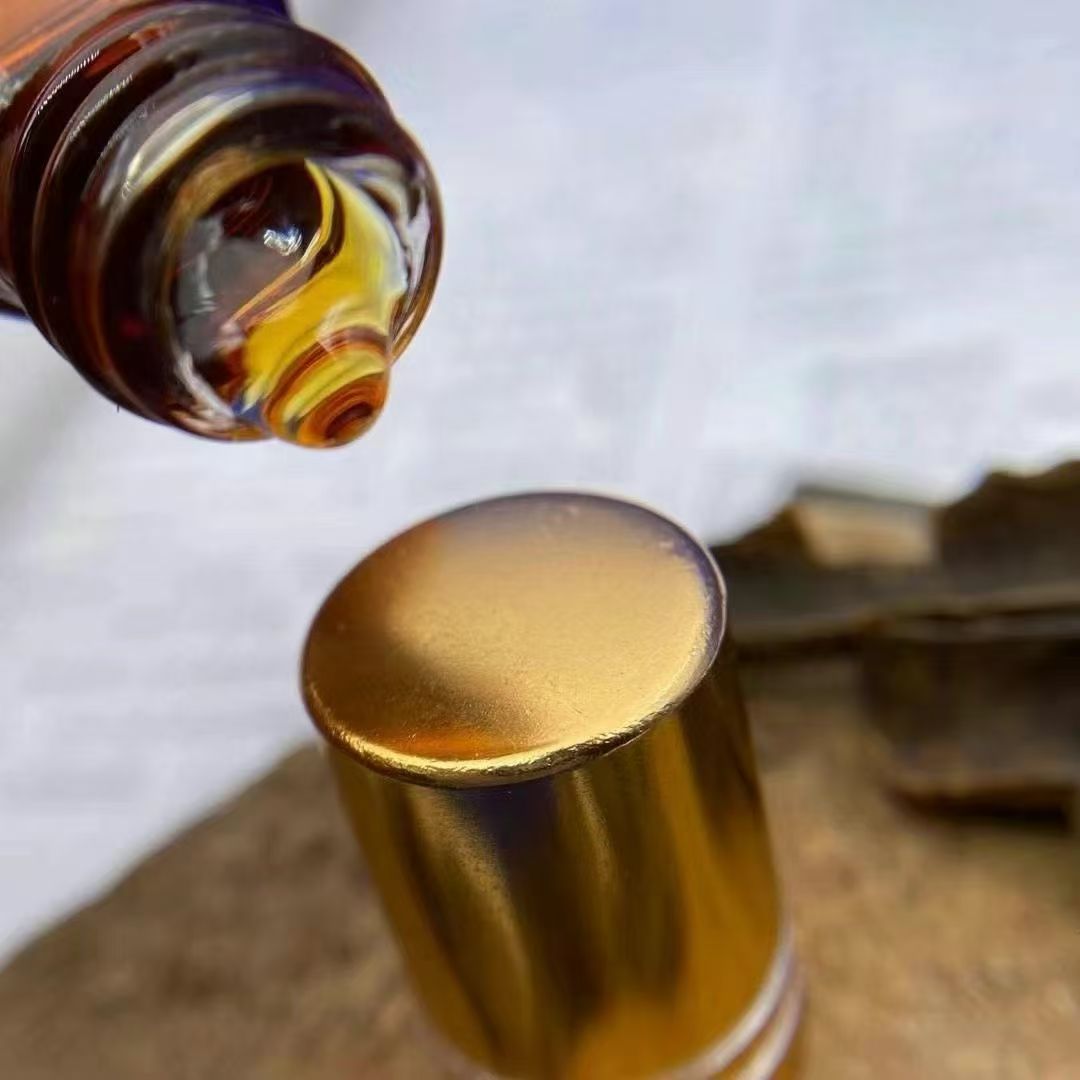
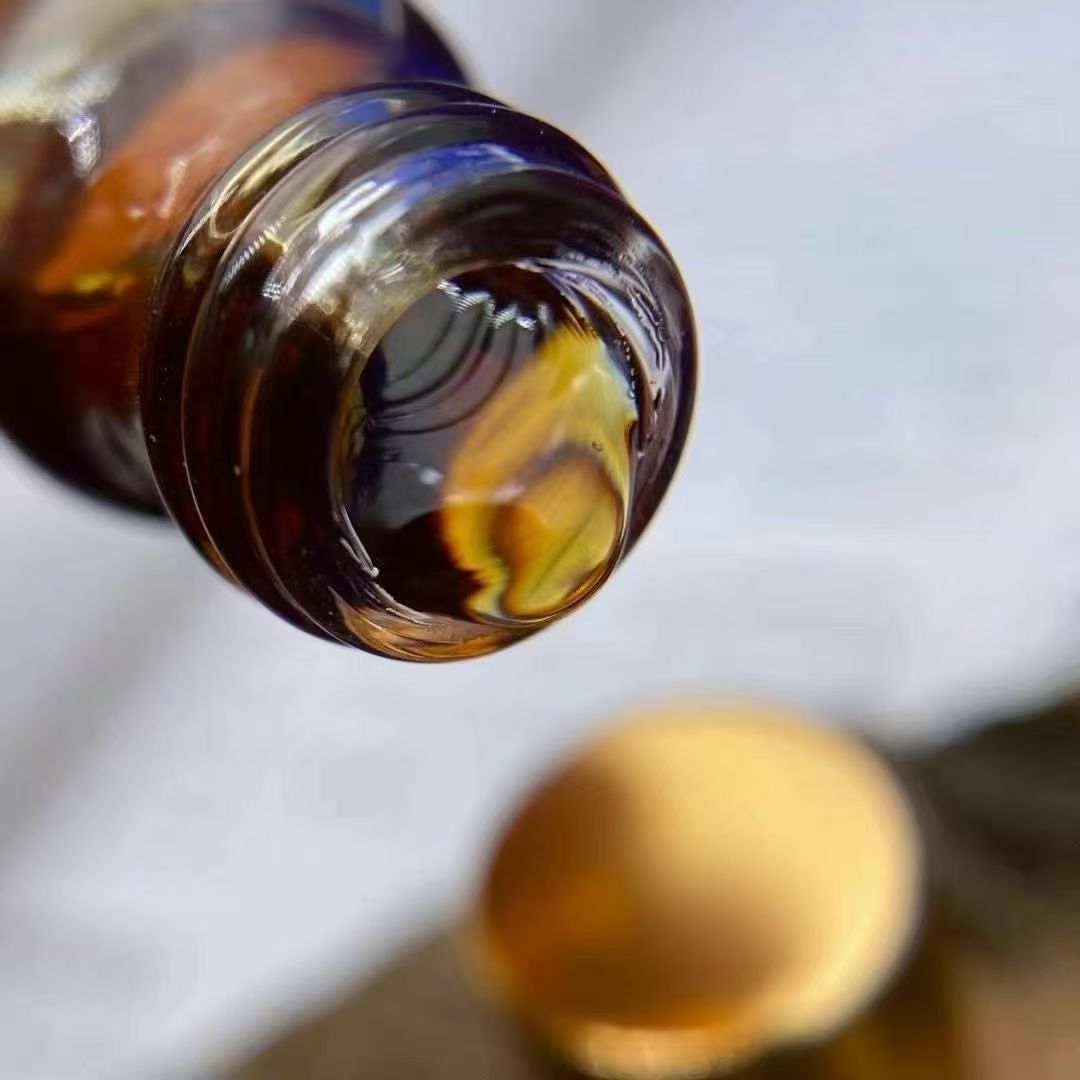
NanjaOud lists supercritical agarwood oil as a product reference. The listing does not by itself verify the yield, capacity or records for a particular lot. For a proposed order, request the batch identifier, process route, sample, input and output units, any carrier or dilution declaration, and documents available for that lot. Ask which data can be shared before using a yield or capacity number in your purchasing model.
Conclusion
Verifying an oud oil supplier is largely a records exercise: a batch record that ties wood to oil, an oud oil yield you can recalculate, capacity you can multiply out, and documents that agree with one another. Fix the specification before you negotiate the price, and approve the lot rather than the grade label.
If you are building a programme, send your intended application, target market, estimated quantity, packaging direction and sample requirements through our contact page so availability, sample route and commercial terms can be confirmed against what we can actually supply.
FAQ
Is oud oil distillation the same as agarwood oil distillation?
As a category, yes: both names describe material recovered by distillation from resin-bearing Aquilaria and related genera. Neither name is a specification, so the batch record still has to state species, route, lot and any diluent.
How much oil does a kilogram of agarwood yield?
Oud oil yield varies too widely to answer from a catalogue. Recovery depends on species, resin content, wood form and route, so ask for the recorded input weight and output volume of the lot you are being quoted and calculate that lot's own figure.
What is an oud oil batch record?
The production document for one run: lot number, species and origin, wood form, input weight and moisture state, route and duration, output volume, date and storage. It is the only document that connects a drum of oil to the material behind it.
Can I verify yield from a supplier's quotation alone?
Rarely. A quotation normally states price per unit, not recovery. Ask for input and output figures per lot, then rebuild the cost from material, processing, packing and freight.
Does the extraction method change the price?
Yes. Distilled oil, supercritical extract and solvent-extracted material differ in recovery, composition and handling, so the agarwood oil extraction method has to be fixed before two offers mean the same thing.
How many lots should I review before a bulk order?
At least the lot you sample and, where possible, records from two or three earlier lots of the same grade. That is enough to see whether a specification is being held or restated.
Do I need CITES documents for oud oil?
It depends on the species, the form and quantity of the material and your importing country's rules. Aquilaria sits in CITES Appendix II with an annotation, so confirm the position for your shipment with your customs authority and ask the supplier which permit it will travel under.
What packaging should bulk oud oil arrive in?
That is a specification decision, not a default. Agree container material, closure, fill weight, headspace, labelling and outer carton before production, and ask how the packed unit is protected from light and heat in transit.


