
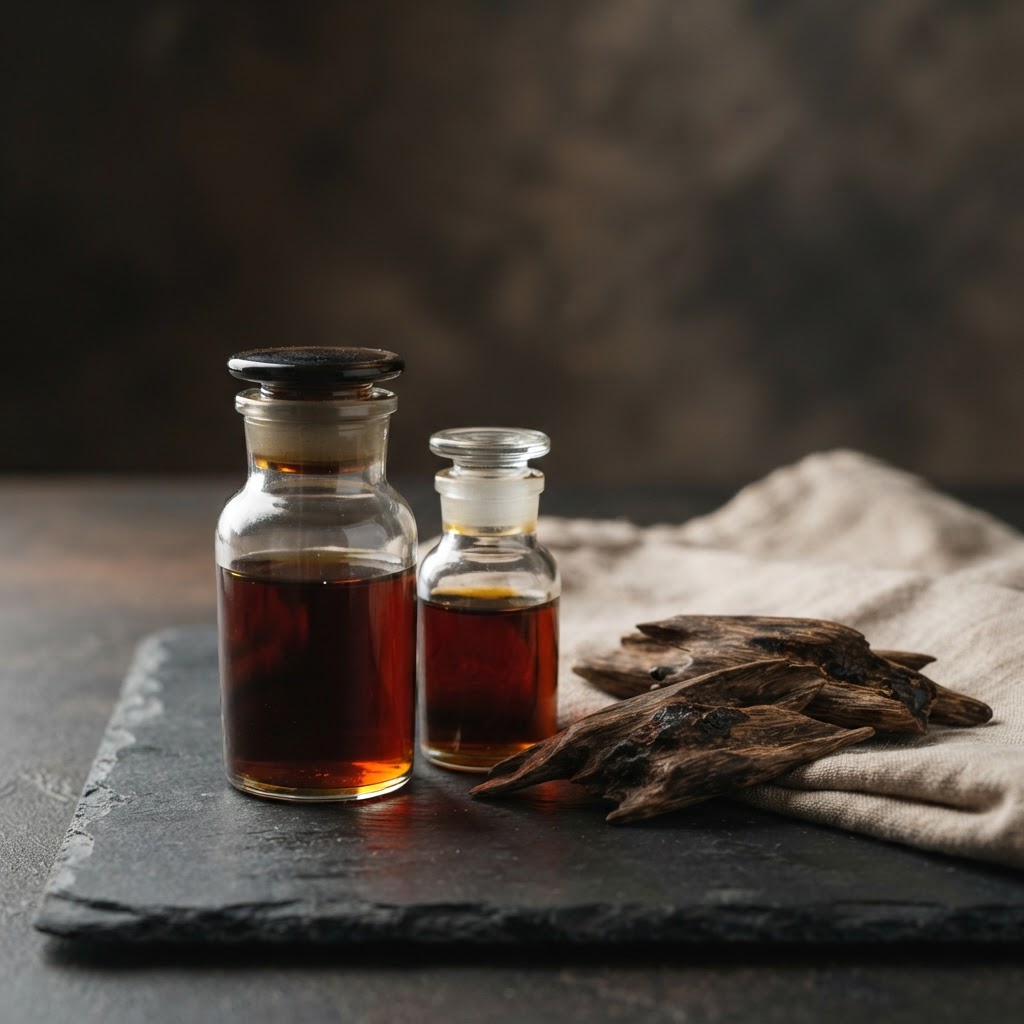
An oud oil private label supplier is judged less by the fragrance of one bottle than by whether the tenth shipment can be matched to the first. Private label turns a bulk oil purchase into a product carrying your name, which means every undefined variable — species, wood grade, extraction route, carrier, packaging and documentation — becomes your commercial risk. This guide sets out how perfume brands, attar houses and home-fragrance companies can brief, sample, verify and contract an oud oil program that stays repeatable.
It is written for buyers who already know they want agarwood-derived material and now need to decide which supplier can deliver it consistently, with documents that survive an import inspection and a customer complaint.
What a Private Label Oud Oil Program Actually Buys
Before comparing suppliers, define the product. “Oud oil” can describe an undiluted distilled oil, a solvent or supercritical extract, a dilution in a carrier, or a compounded fragrance accord built around an oud note. These are different commercial products with different price bases and different documentation needs, and a quotation is meaningless until you know which one you are being offered. Choosing an oud oil private label supplier therefore starts with the product form, not the price list.
The naming question is the first place buyers lose clarity. Oud oil, agarwood oil, agarwood essential oil and dehn al oud are used interchangeably in trade, while the botanical source sits in the genus Aquilaria or Gyrinops. No trade name obliges a supplier to declare species, wood grade or extraction route, so the specification has to be requested in writing. Our companion guide to oud oil versus agarwood oil covers the naming question in more detail; here the point is commercial: your private label brief must state the product form, because the label, the safety file and the price all follow from it.
NanjaOud supplies a bulk agarwood oil range for perfumery, home fragrance and incense applications, alongside finished-product and ODM support. What any individual program includes — dilution, pack format, documentation, minimum quantity — has to be confirmed for your specific item rather than assumed from a category page.
Raw Material and Extraction Route Set the Specification
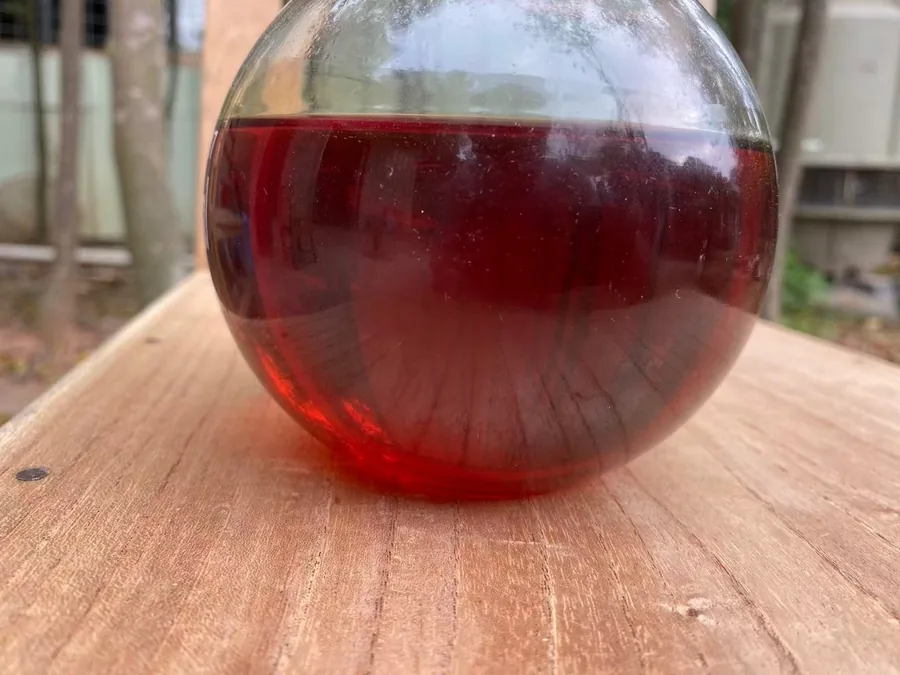
Species and origin frame every comparison. Aquilaria malaccensis, A. crassna, A. sinensis and Gyrinops species carry different regional profiles and different regulatory conditions, so record the declared species and country of harvest. A declaration is not a verification, but a supplier who will not state one has told you something useful.
Wood grade matters as much as species. Resin loading varies from piece to piece, and low-resin wood yields a thinner oil for the same processing effort. Ask what grade of wood the batch came from, how much wood was consumed per kilogram of oil, and whether the wood was cleaned and sorted first. Resin formation is a separate question: some material comes from naturally formed resin, some from wounding or induction treatments, and buyer acceptance differs by market.
| Extraction route | What it means for your brief | What to put in writing |
|---|---|---|
| Steam or hydrodistillation | Oil separated by steam; an essential oil in the technical sense | Distillation date, still type, wood-to-oil ratio for the lot |
| Solvent extraction | An extract rather than a distilled oil; residues are a specification question | Solvent used, residue statement, any carrier or diluent |
| Supercritical CO₂ | Extraction with pressurised CO₂; different aromatic profile and cost base | Process conditions, post-treatment, batch analysis |
Route affects cost, yield and residue profile, not only scent. NanjaOud lists a supercritical agarwood oil for fragrance and incense manufacturing, described as dark amber to reddish-brown and intended for fragrance blending and aromatic product development. The description tells you the appearance and the intended application; it does not tell you the species, the wood grade or the analytical profile of your lot, and those are the questions to send back.
Why a Scent Description Cannot Prove Purity
Oud descriptions — sweet, woody, smoky, animalic, balsamic — help match expectations, but they are not evidence. Vocabulary differs between markets, and two evaluators can describe the same oil differently. Sensory assessment also depends on temperature, humidity, substrate, dilution and nose fatigue.
More importantly, the character you admire can be produced or reinforced by blending other oils and aroma materials. A convincing opening note says nothing about what the batch contains, how the next batch will differ, or whether the wood came from a legal source. Treat sensory evaluation as a screening step, not a verdict, and approve against a coded retention sample plus a written specification.
A chromatogram is not a certificate of identity on its own either. It shows what a method detected in a sample, so check which method, which laboratory and which batch number appear on the report. When a supplier offers “100% pure” as a description rather than a document, convert it into a question: pure with respect to what specification, tested by which method, on which lot?
Manufacturer, Wholesaler or Trader: Who Holds the Record
A grower-processor controls the wood, the extraction and the batch record, so it can usually document a lot back to its own plantation and factory. A trader or wholesaler buys and resells: it may hold stock, consolidate origins and serve small volumes well, but its documentation is only as good as what its upstream supplier provides. A private-label or ODM partner fills and packs under your brand and may not produce the oil at all.
None of these is automatically wrong. A buyer weighing an oud oil manufacturer against a trader is really weighing how much of the evidence chain stays visible, and the same test applies when an agarwood oil supplier presents itself as a grower. The error is paying manufacturer-level prices for documentation the seller does not control, or assuming a factory claim means distillation happens at the address on the invoice. Ask which steps occur on which site, and who signs the batch record. If you are comparing producers rather than traders, the site’s guide to evaluating agarwood oil manufacturers approaches the same question from the fragrance-brief side.
Verifying Production Capability and Supply Continuity
Start with identity: the legal entity on the quotation, the invoice and the bank account should match, and the factory address should be a production site you can locate. Then ask for capacity in units you can compare — kilograms of oil per month, typical batch size, number of stills or extraction lines, and how much of that capacity is already committed.
Put your own volume in proportion. If your annual requirement is a large share of a supplier’s stated output, you are exposed to every disruption on their line; if it is a small share, you are exposed to being deprioritised in a busy season. Ask how material is allocated when demand exceeds supply, and what happens when a batch fails the supplier’s own check.
NanjaOud describes more than ten years of agarwood cultivation and a managed plantation base of more than 160 acres in Jiangmen, Guangdong, with its own processing facility and bulk supply for international buyers; the quality and supply pages set out that process. Treat such claims as the opening of a conversation: ask for the site address, the batch numbering convention and the retention-sample practice behind them.
Samples, Batch Records and Documents to Request
Ask for a sample that matches the offer
An oud oil sample is only useful if it can be traced to the lot behind the quotation, so build the request around that link.
- State the application, target volume and destination market in the first email.
- Ask that the sample be drawn from the lot you would actually buy, or from current production, with a lot number and packing date.
- Request enough volume for a bench trial and an application trial, not a single smelling strip.
- Ask how the sample was stored and shipped, and whether sample and freight costs are credited against a first order.
Documents that make a sample auditable
- Specification sheet: declared species and origin, extraction method, appearance, odour reference, relative density or refractive index where offered, batch number, production date, shelf life and pack format.
- Certificate of analysis, if offered: check the parameters, the method and the laboratory, and confirm the batch number matches your sample.
- Chromatogram, if offered: ask for the full report rather than a summary image, and ask which laboratory issued it.
- Safety data sheet: current, product-specific, and in the language your market requires.
- Allergen and fragrance-compliance statements where the oil enters a fragrance or cosmetic application.
- CITES documentation where the species and trade route require it, issued in the name of the shipping party.
- HS code proposal for your customs broker to confirm.
A supplier who cannot attach documents to a specific lot has told you something useful, even if the oil smells good. If your team is new to this step, the site’s agarwood oil sample evaluation record shows how to log what arrived and what it represents.
Designing a Sample Evaluation You Can Defend Later
Blind the samples. Give each supplier a code, remove branded packaging, and let the evaluator score without seeing the price. Evaluate all samples in one session, at the same dilution, on the same substrate, and record room temperature and time of day.
Score in stages: opening, heart and dry-down; intensity and tenacity on blotter and on the intended substrate; colour, clarity and any sediment; and off-notes such as burnt, sour or solvent-like characters. Then test the shortlisted oils inside your real application — a perfume base, an incense blend, a candle — because an oil that performs on paper may behave differently in a formula. For a fine-fragrance program, that base trial is the decisive test, not the smelling strip.
Keep a sealed retention sample of every coded sample with the written record, and re-test the winning sample against the first bulk delivery. That comparison is the only practical way to prove consistency later, and it is the document that settles most “this is not what we approved” conversations.
Batch Consistency, Storage and Packaging Requirements
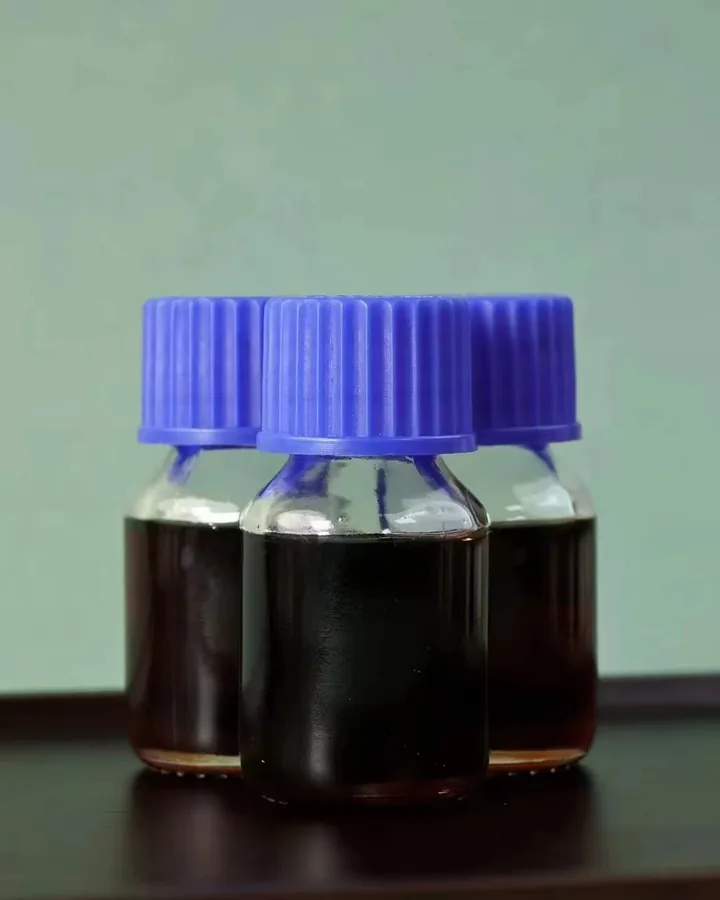
Consistency has to be defined before it can be measured. Write tolerances into the agreement: an appearance range, an odour comparison against the approved reference, density where specified, and clarity. Ask for the batch numbering convention and for retention samples held per batch.
Storage changes oil between production and your warehouse. Light, heat and oxygen darken colour and shift odour, so ask how the oil is stored before shipment, whether containers are filled to minimise headspace, and whether transit time and climate have been considered for your destination.
Packaging is part of the specification, not an afterthought. Glass is inert but fragile and costly to ship; coated steel or aluminium drums suit bulk volumes; plastic is convenient but needs a liner compatibility check. Confirm fill volume, closure and liner type, seal integrity, labelling, and the pack sizes available for sampling versus production. Ask for the supplier’s stated shelf life and the basis for it, then store to that standard in your own facility.
What Actually Moves the Quotation
Six factors explain most of the difference between quotations: the resin content and species of the wood, the yield (how much wood is consumed per kilogram of oil), the extraction route and its energy and capital cost, documentation and legality costs, packaging and testing, and freight, insurance and payment terms.
One more factor is easy to miss: what else is in the bottle. An oil extended with a carrier or blended with other aromatic material can look cheaper per kilogram while delivering less oud character per unit. Ask for the composition statement and compare price per kilogram of the material as specified, not per kilogram of liquid.
Comparing Three or More Quotations on Landed Cost
Whether you are buying wholesale oud oil or bulk agarwood oil, send every supplier the same written specification and ask for the same quotation structure: price per kilogram at the stated specification, incoterm and named port, currency, payment terms, MOQ, pack format, lead time and the documents included. Convert each offer into a landed cost per kilogram of usable material, including freight, insurance, duty and any testing you will commission yourself.
Then compare terms, not only numbers. A quote without a specification cannot be compared at all, and a price far below the others needs a stated reason — a different species, a lower resin grade, a carrier, or a document set you will have to obtain yourself. Three quotations on identical terms tell you more than ten on different ones.
SDS, Labelling and Destination-Market Compliance
Requirements depend on the destination country, the intended use and the form of the material, so confirm them for your own market rather than relying on a supplier’s general statement. At minimum, request a current safety data sheet that matches the product and is written in the language your market requires, and check that the trade name and composition on it match what you are buying.
Labelling and fragrance compliance are separate questions. For oud oil for perfume manufacturing, a cosmetic or fine-fragrance application brings its own labelling, allergen-declaration and fragrance-standard considerations; incense, bakhoor and home fragrance follow different rules. The IFRA Standards set use limits for fragrance ingredients, and the U.S. Food and Drug Administration explains that fragrance ingredients in cosmetics must meet the same safety requirement as other cosmetic ingredients. Neither replaces a safety assessment of your finished formula, so have a qualified specialist review the actual product for the target market.
CITES and Export Documents for Regulated Agarwood Species
Agarwood is also a regulated trade issue. Aquilaria and Gyrinops species are listed in CITES Appendix II, which means trade is controlled. It does not mean every oil shipment needs the same certificate: the permit type, the issuing party and the requirement itself depend on species, form, origin, destination and quantity, and CITES documentation discusses specific allowances for small personal quantities of oil and woodchips that do not apply to commercial consignments. Confirm the position with your importing authority before you order, and ask the supplier which permits they can obtain and in whose name those permits are issued. “CITES certified” is a phrase, not a document — ask to see the permit that names your shipment.
MOQ, Custom Packaging and OEM/ODM Confirmation
An oud oil MOQ is rarely one number. Ask separately about the minimum for a trial order, for a repeat order, per pack size and per private-label SKU, and whether sample costs are credited. For custom packaging, confirm who supplies the bottle, closure and label, who fills and seals, whose batch record applies, and how artwork approval and label compliance for your market are handled.
A private label program adds its own questions. Separate what is genuinely customized — formula direction, pack format, scent profile, outer packaging — from what is standard, and get the finished-product specification in writing rather than only the bulk oil specification. NanjaOud sets out its OEM and private-label options; use that page to frame your brief, then confirm MOQ, artwork timeline and label responsibility for your destination in writing. Where a supplier describes itself as an OEM factory, ask which production steps it performs itself and which it subcontracts.
Lead Time, Logistics, Inspection and Claims
Break lead time into its parts: material allocation, production, testing and documents, packing, freight booking, transit and customs clearance. Ask for each date in writing, attached to the order rather than to an email thread.
Agree inspection before shipment — who inspects, where, which samples are drawn and sealed, and who holds them. Confirm the document pack: commercial invoice, packing list, HS code, permits, safety data sheet and any certificate of analysis, plus the incoterm and insurance cover.
Claims need a clock and an evidence list. Set a notification window after arrival, define what the buyer must provide (photographs, sealed sample, inspection report, batch number), and agree a remedy ladder — replacement, credit or return — before the first order. Both sides keeping a sealed retention sample is what makes a dispute resolvable instead of rhetorical.
Oud Oil Private Label Supplier Evaluation Checklist
Use this table as the agenda for a supplier call and as the structure of your comparison file, whatever the quotation calls the product.
| Area | What to confirm | Evidence to request |
|---|---|---|
| Raw material source | Declared species, country of harvest, wood grade, plantation or wild, how resin formed | Specification sheet naming species and origin; written statement of wood source |
| Sample performance | Sample drawn from the offered lot; performance in your own application | Lot number and packing date on the sample; your coded evaluation record |
| Batch documentation | Batch number, production date, retention sample, analysis parameters | Batch record, certificate of analysis, chromatogram if offered, all with the same batch number |
| Quotation terms | Price per kg at the stated specification, incoterm, currency, payment terms, MOQ | Written quotation against your specification, not a chat message |
| Packaging | Container material, liner, fill volume, seal, pack sizes | Pack specification and a photo of the packed unit |
| Lead time | Allocation, production, testing, documents, freight | Dated schedule attached to the order |
| Verifiable documents | Legal entity match, SDS, permits where applicable, HS code | Business licence, SDS, CITES permit naming the shipment, broker-confirmed HS code |
Common Mistakes in Private Label Oud Oil Sourcing
- Choosing on scent alone, without a specification or a retention sample.
- Comparing prices across different incoterms, currencies and pack sizes.
- Accepting “CITES certified” or “100% pure” as a document.
- Testing a sample that was never linked to the lot being offered.
- Leaving packaging, storage and shelf life out of the purchase order.
- Discovering the claim procedure only after the first dispute.
Frequently Asked Questions
Is a private label oud oil program different from buying bulk oil?
Yes. Bulk oil is a material purchase; private label adds a finished-product specification, packaging, artwork, label compliance and a batch record tied to your brand. Confirm both the bulk specification and the finished-product specification in writing.
Can a supplier guarantee every batch smells identical?
No natural material is chemically identical between lots. What a supplier can offer is a defined tolerance range, a retention sample per batch and a documented comparison method. Ask for those three before you sign.
What documents should come with a private label oil shipment?
Commercial invoice, packing list, HS code, safety data sheet, any certificate of analysis or chromatogram offered, and permits where the species and route require them. Each should name the same product and lot as your sample.
Do I need CITES documents for oud oil?
Possibly. Aquilaria and Gyrinops species are listed in CITES Appendix II, but the requirement depends on species, form, origin, destination and quantity. Confirm with your importing authority and ask which permit the supplier can obtain.
What MOQ should I expect for a first private label run?
It varies with pack size and whether the oil is standard or custom. Ask for the MOQ per pack, per SKU and for a trial order separately, and get each figure into the written quotation.
Who is responsible for label compliance in my market?
The brand owner is ultimately responsible for the finished product. A supplier can provide the safety data sheet, composition information and artwork support, but your regulatory adviser should confirm the label meets your destination’s requirements.
How many quotations should I compare?
Three or more, all against the same written specification. Fewer than three makes it hard to see whether a price reflects the material or the terms; more than three is only useful if each is quoted on identical terms.
Can I evaluate a sample without a laboratory?
Yes for sensory and application screening, provided you blind the samples and record conditions. Laboratory analysis answers different questions — composition, identity markers, residues — and should be commissioned against a stated purpose, not as a generic authenticity check.
Conclusion
A private label oud oil program succeeds when the supplier can attach a species, an extraction route, a batch number and a document set to the material behind your brand. Scent gets you to the shortlist; specification, retention samples and written terms keep you there.
Write your brief before you write your RFQ: intended application, target market, estimated annual and first-order volume, pack format, sample quantity and the documents you need to see. NanjaOud supplies agarwood materials and finished products from Jiangmen, Guangdong, with cultivation and processing in one chain; if you are assessing oud oil supply for your market, send those points and ask which products, sample arrangements and services we can confirm for your case.


