
Short answer: identify the material and its lot before comparing aromas. Record the sample code, stated production method, container, date received and intended use. Evaluate equal amounts under the same conditions, then test shortlisted samples in the actual fragrance or incense application. Keep the approved reference and request a written link between that reference and the material proposed for a wholesale order. A pleasant scent from an unlabelled vial is an observation; it is not an identity, purity or repeat-supply decision.
This guide covers the sample decision. Our oil manufacturer evaluation guide covers supplier selection. A commercially suitable supplier can still send an oil that fails your formula; a promising vial alone cannot establish what future lot will be supplied.
NanjaOud's public agarwood and oud oil range separates distilled material, supercritical extract and finished fragrance directions. Buyers should ask which of these they are actually sampling. A supercritical agarwood oil listing illustrates one supply direction; it does not establish the composition or availability of any newly requested lot.
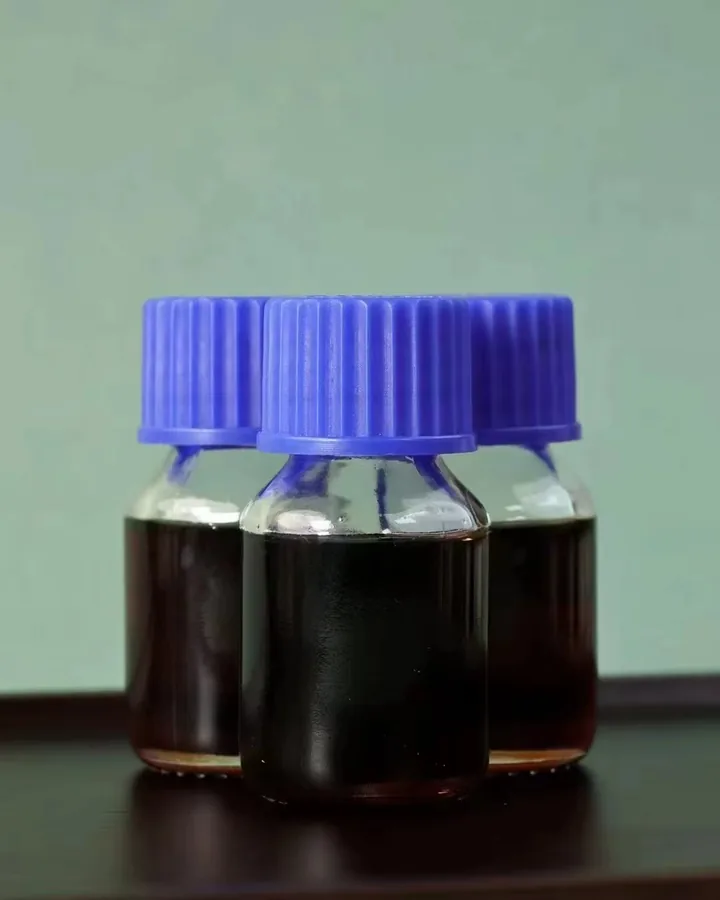
NanjaOud site-format photograph. The bottles are visual context, not coded samples from this guide or proof of their contents.
Establish what arrived before opening the vials
Start one log row per vial. Give each a buyer ID, keep the supplier's original code alongside it, and copy the material name exactly. Ask whether the sample is a distilled oil, extract, fragrance mixture or another format. ISO 9235:2021 supplies vocabulary for aromatic natural raw materials; it is a terminology reference, not evidence that a NanjaOud sample was certified.
The label or accompanying document should let the team connect the vial to an offered lot or, if it is a development sample, state that no commercial lot has yet been allocated. Record the amount supplied and the packaging condition. Note any leakage, damaged closure, missing label or mismatch between vial and paperwork before forming a scent judgment. A photograph of the label beside the vial can prevent a later code mix-up.
The same applies to origin and species language. “Oud” is a commercial description, not a complete botanical or sourcing record. Do not infer either from color or fragrance. Ask the supplier which identity and source documents apply to this material and which claims may be included in a buyer's own product brief. If your destination requires trade documentation, check the relevant authorities for the identified material and route; do not assume a document is available because another sample or product page mentions a plantation.
Make the sensory comparison repeatable
Choose a simple procedure that your own team can follow again. Set one reference sample, use the same blotter type, approximate dose, room and evaluation intervals, and limit the number of oils in a session so fatigue does not make later samples seem weaker. These are buyer-side controls, not a claim that NanjaOud operates this exact protocol. If a formula uses a dilution, specify the diluent and ratio in the record; do not compare one neat sample with another diluted sample as if they were equivalent.
Blind the vial names during the first pass when practical. Record the opening impression, development after the same waiting period, and the dry-down impression at a stated interval. Use descriptions that another evaluator can understand: smoky wood, sweet resin, dry leather, medicinal edge or a particular unwanted note. A score such as “8/10” without those notes is difficult to use when the purchasing team returns to the decision weeks later. Two evaluators can record notes independently and reconcile differences after the session.
No single aroma descriptor proves the process or purity. The purpose of the first pass is to shortlist material for your application, not to certify authenticity by smelling it. An unusually strong top note, dark color or thick appearance may invite a question; none is a substitute for lot-specific evidence. If a lab report is offered, check that its sample ID and method match the vial. A GC–MS trace, when available, describes the material tested under a stated method; it should not be represented as a universal quality grade or a guarantee that every later lot will smell the same.
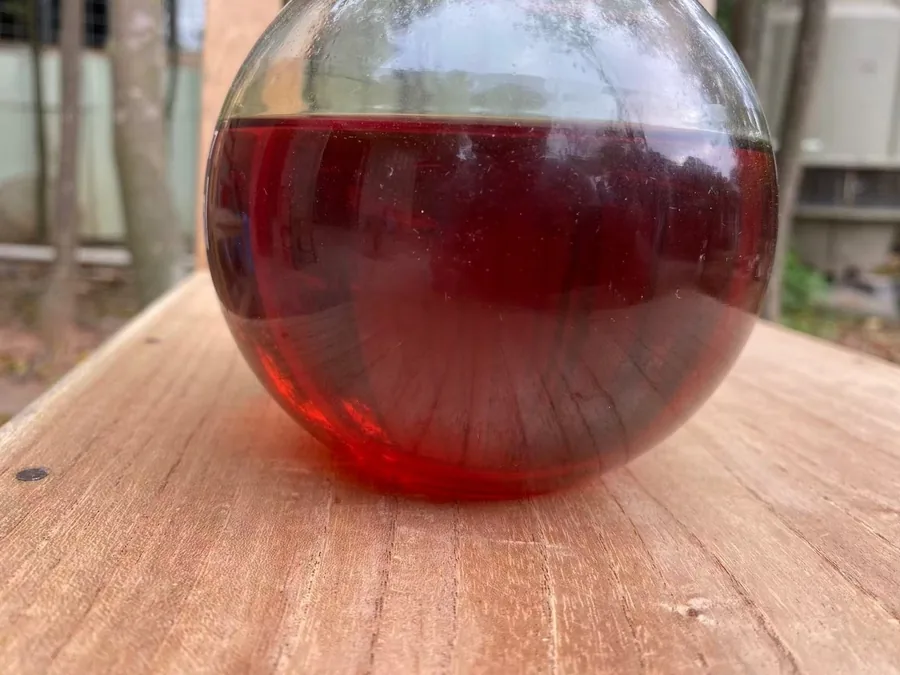
NanjaOud site photograph of an oil-format presentation. The image does not identify an extraction process, composition or current sale lot.
Test the shortlist in the intended product
A blotter answers only part of the brief. For a perfumery buyer, test a controlled amount in a base that resembles the intended fragrance; record concentration, solvent or carrier, base code and observation times. For attar development, evaluate the oil in the actual carrier and presentation route being considered. For incense or home-fragrance development, review it in the material and process you intend to use. Avoid treating these trials as interchangeable: heat, base materials and dilution can change how the aroma is perceived.
Keep the trial small and documented. You are comparing options, so change one input at a time. If sample A is tested in a citrus-heavy perfume base and sample B in a neutral base, the resulting preference cannot be attributed to the oil alone. If you need to discuss skin-contact or consumer-product use, route the formula through the responsible safety and regulatory review. IFRA explains that its standards concern intended uses and finished fragrance mixtures; a raw material vial should not be labelled “IFRA certified” merely because the buyer plans to use it in perfumery.
| Record field | What the buyer writes down | Why it matters |
|---|---|---|
| Sample identity | Buyer ID, supplier code, stated material format, lot or development status | Connects observations to a real offer |
| Receipt | Date, amount, closure condition and label photograph | Exposes mix-ups and handling issues |
| Scent method | Blotter, dose, room, dilution and time points | Allows a fair comparison |
| Aroma notes | Opening, development, dry-down and objectionable notes | Gives the formula team a usable brief |
| Application trial | Base, concentration, process, date and evaluator | Tests suitability in the actual use |
| Documentation | Document title, version, sample/lot code and missing items | Prevents a generic PDF from being treated as lot evidence |
| Decision | Shortlist, hold, reject or request a second sample, with reason | Makes the next supplier request specific |
Separate approval of a scent from approval of a lot
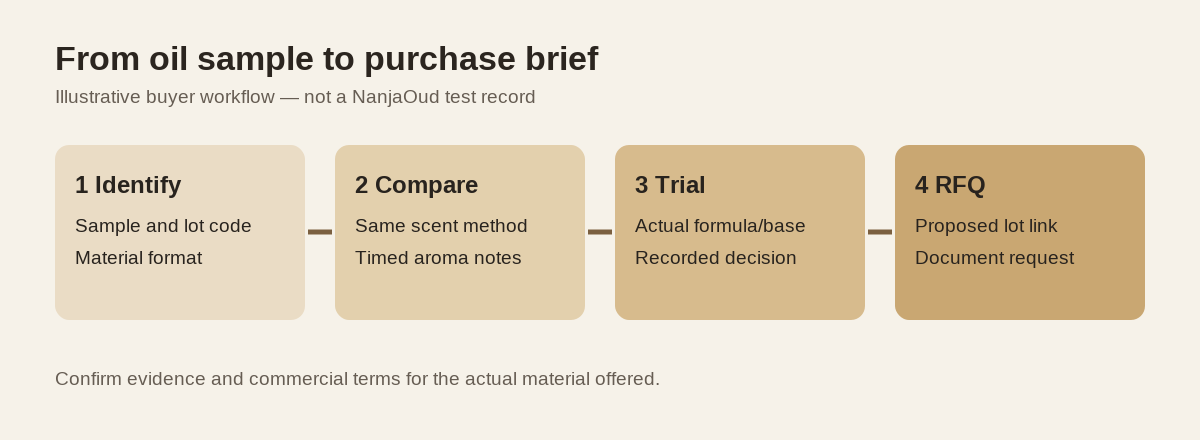
Illustrative buyer workflow, not a NanjaOud test record or evidence of a particular lot.
After the trial, decide what exactly has been approved. A buyer may approve the direction of an aroma while still requiring a fresh sample from the lot proposed for purchase. Another buyer may approve a coded lot subject to matching paperwork and a retained control sample. Write that distinction into the feedback. “Approved oil” is too vague when the commercial order may be sourced months later.
Ask the supplier which quantity is represented by the submitted vial, how the production or extraction route is described, and how the quoted material will be compared with it. If the supplier cannot offer the same lot, request a replacement sample with a new code and compare it alongside the approved reference. ISO 212:2007 provides general rules for sampling essential oils for laboratory examination; it is useful background for discussing representative, identified samples, not proof of any supplier's internal sampling procedure.
Your written order brief can then name the selected format, reference/sample code, intended use, target quantity, destination, packaging, document requests and any agreed acceptance method. Leave price, minimum quantity and lead time for a quotation tied to that brief. That is more actionable than asking for a “best wholesale oud oil price” without explaining the required material.
Common shortcuts that weaken the decision
Before sending feedback, check that the photograph, laboratory document and quotation refer to the same coded material. Tell the supplier which note worked in which base, and which note is unacceptable. Keep the one-page log and a retained reference with that feedback. This gives the next sample or quotation a clear point of comparison.
Buyer FAQ
Should I compare agarwood oil samples neat or diluted?
State the method and use it consistently. A neat blotter may help document the raw impression, while a controlled dilution may be more relevant to the target formula. Record the carrier and ratio; a neat and a diluted sample cannot be treated as equivalent observations.
Can color show whether an oud oil is pure?
No. Color is a visible property to record, but it does not establish composition, origin, extraction route or purity. Ask for material identification and any lot-linked evidence actually available.
Is a GC–MS report required for every sample?
That depends on the buyer's specification, intended market and the supplier's available documentation. If one is requested or provided, verify the sample code, method and date. Do not assume a product page or an unrelated report covers the vial in hand.
What if the approved sample is no longer the available lot?
Ask for a new, identified lot sample. Compare it beside the retained reference under the same conditions and document whether it is acceptable for the intended application before approving the revised offer.
What should an RFQ include after sample review?
Identify the selected material format and sample code, intended application, quantity, destination, preferred packaging, document needs and how the supplied lot will be checked. Ask the supplier to confirm commercial terms against those inputs.
Send a decision the supplier can act on
When you contact NanjaOud, name the oil format you want to evaluate, your target application and market, and the sample or reference code if you have one. Ask which oil product direction and lot-specific information can be supplied for that brief. A useful enquiry tells the supplier what your team observed and what evidence you still need; it does not ask the supplier to guess your standard of approval.


