
The most useful question for an agarwood oil manufacturer is not simply “Is this pure oud?” It is “What exactly is this sample, how was it produced, and can a future lot meet the same agreed requirements?” A purchasing decision should combine a controlled scent evaluation, a product-development trial, the documents tied to that sample, and a plan for comparing repeat lots.
Two suppliers may use the same words—agarwood oil, oud oil, extract or fragrance oil—for materially different products. Establish the product identity and intended application before comparing prices.
Illustrative scene. These vials are not verified NanjaOud samples or laboratory results.
Begin with one brief for every supplier
Send each candidate the same written request. State whether the oil is for fine fragrance, attar, incense, home fragrance or another use, and identify the target market. Explain whether you want a single botanical material, a diluted oil, a formulated fragrance mixture or a custom accord. These products have different specifications and documentation needs.
At minimum, request answers to the following:
| Question | Why it matters |
|---|---|
| What is the exact commercial product name and botanical source claimed? | “Oud oil” alone does not define the material. |
| Is it an undiluted extract, a dilution or a compounded fragrance? | Price and formulation performance are not comparable until the form is clear. |
| Which extraction or production method was used? | The method affects what should be compared and documented. |
| Which lot does the sample represent? | A beautiful sample is useful only if the order can be linked to it. |
| What batch and safety documents are available for this exact product? | Product development and importing teams need traceable information. |
| What is the proposed process for approving a repeat lot? | Natural raw materials can vary between batches. |
NanjaOud publicly describes an agarwood oil product range for B2B fragrance applications. The details of an individual oil, dilution, sample and document set must be confirmed for the requested item.
Evaluate the sample in your actual application
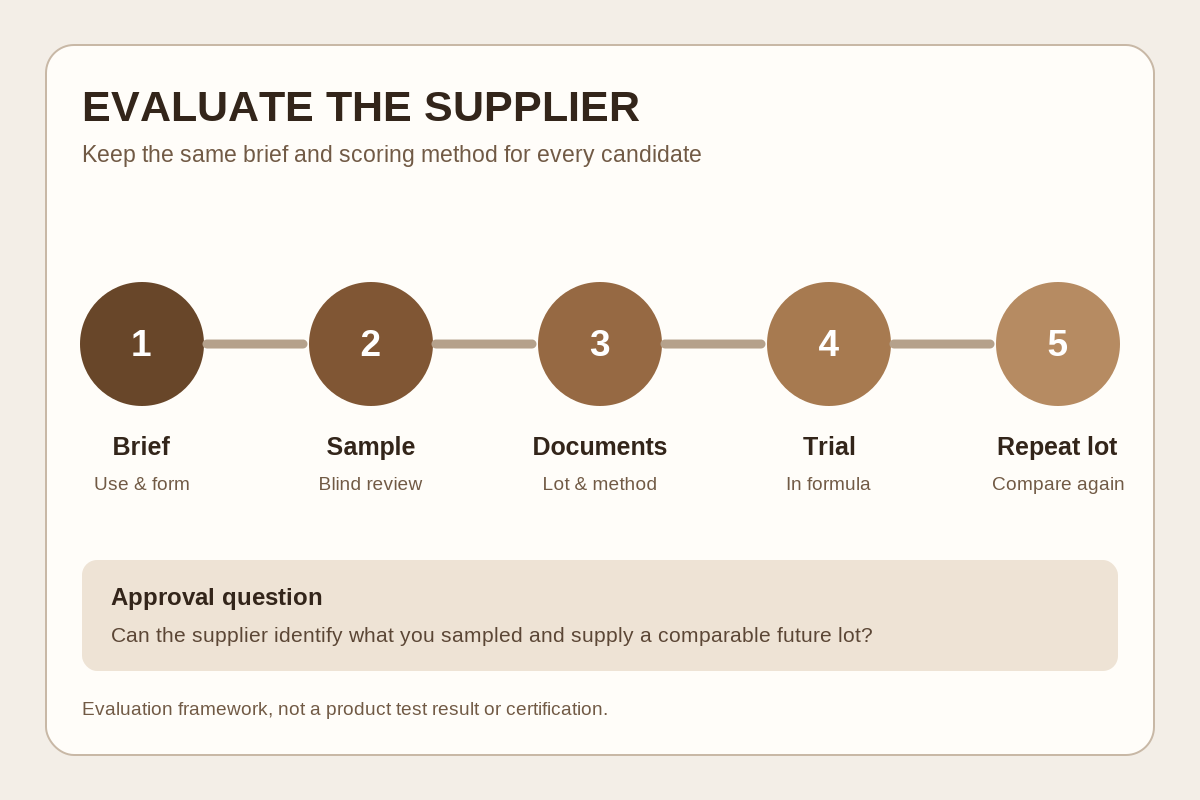
Do not decide from a bottle sniff alone. Give samples neutral codes and record the supplier, lot, date received, bottle condition and stated product form in a separate key. Have evaluators smell the materials under the same conditions. Then test the shortlisted sample at the intended level in the actual base or prototype.
For a perfume project, note the opening, development and drydown at several agreed observation times. For an incense or home-fragrance project, evaluate the scent under the intended processing or use conditions. Record the test concentration, carrier or base, temperature where relevant, evaluator and date. The goal is a repeatable comparison, not a universal scent score.
Use a small scorecard: target scent fit, distinctiveness, behavior in the formula, sample documentation, and supply responsiveness. Give the technical and commercial teams space to disagree. A perfumer might prefer one sample’s profile while procurement identifies a serious lot-traceability gap. Both findings belong in the decision.
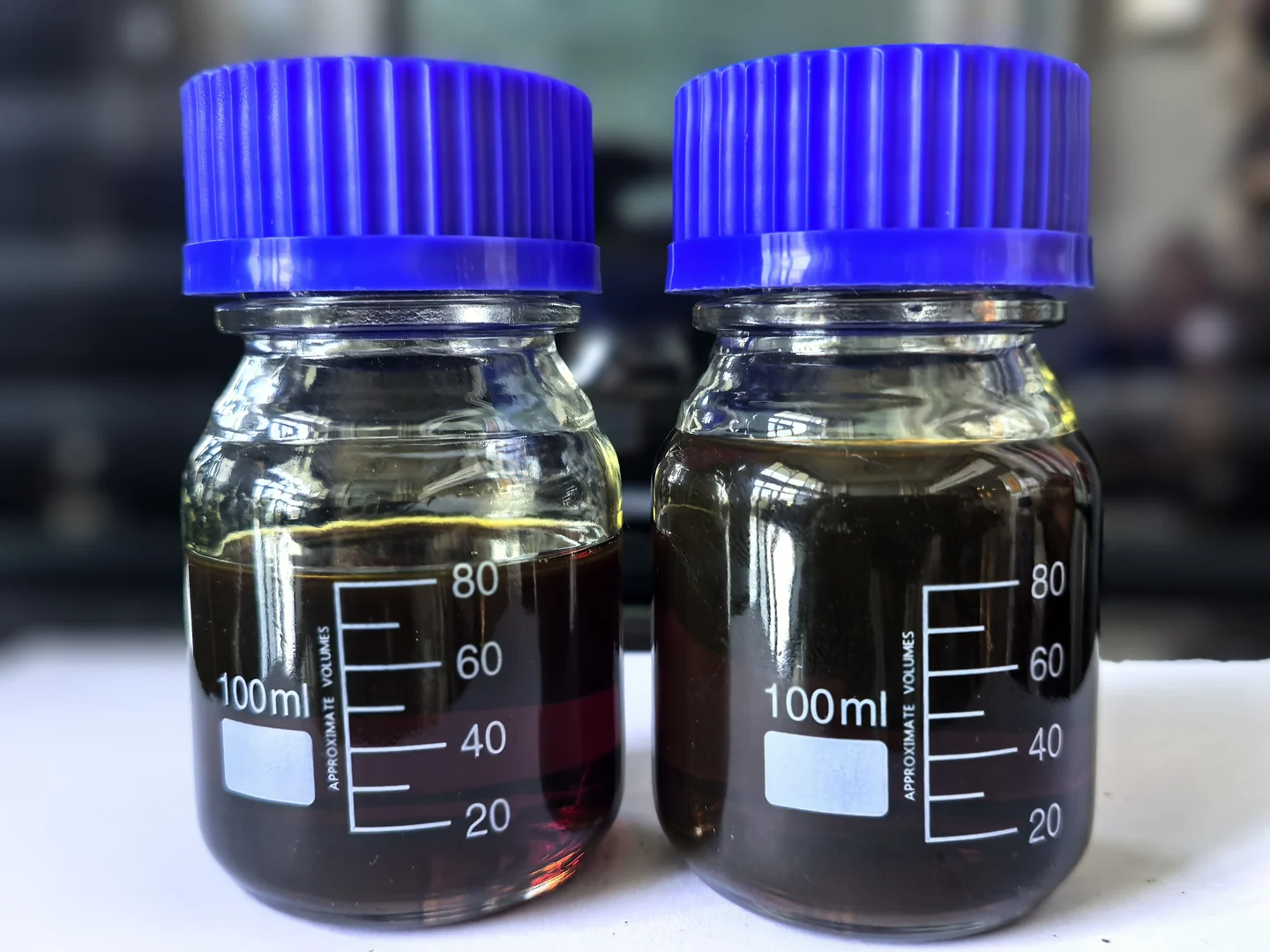
Image from NanjaOud’s public oil category page. Bottle appearance is not evidence of composition, purity or a specific production lot.
Ask what the documents actually describe
A document is useful when it identifies the same material and lot as the sample. Ask for the product specification and available batch documentation, then check the product name, lot code, date and extraction or formulation description across records. Depending on the material and market, your technical team may also request a certificate of analysis, an appropriate safety data sheet, a chromatographic profile or other test results. Whether a particular test is necessary depends on the use and agreed specification.
GC-MS can characterize many volatile constituents, but one chromatogram is not a universal certificate of authenticity, safety or fitness for every formula. Published research on Aquilaria sinensis oils found that variety and growing region can affect measured volatile profiles in supercritical extracts. That supports a practical buyer conclusion: compare like with like, document the method, and retain a reference sample rather than expecting every natural lot to be chemically identical. See the original GC-MS research.
For fragrance applications, ask your product-safety specialist to determine the relevant IFRA Standards and local rules for the finished formula. IFRA explains that an IFRA Certificate of Conformity is associated with a fragrance mixture and does not replace a safety assessment; it is misleading to treat a raw oil’s generic “IFRA certificate” as proof that every finished product is compliant.
If the shipment contains material derived from CITES-listed agarwood taxa, have the exporter and importer check current species, product-form and route-specific requirements. CITES lists Aquilaria and Gyrinops; the relevant documentation should be checked for the actual transaction rather than inferred from a marketing claim.
Separate the manufacturer question from the trader question
A distributor can be a good commercial partner. The buyer simply needs clarity on who produces the oil, who holds the batch records, who can answer technical questions and who is accountable for a replacement lot. Ask a supplier to describe the chain from raw material to extraction, finishing, storage and shipment at a level they can substantiate.
Useful evidence may include a process description, photographs of the relevant operation, sample and lot labels, and a clear contact for technical questions. None of these alone proves every claim. They become valuable when the details agree with each other and with what arrives.
If you are comparing extraction approaches, the site’s existing supercritical agarwood oil supplier guide provides a narrower companion topic. This article focuses on the broader supplier-approval process regardless of the offered method.
Approve a trial before committing to repeat supply
After the initial evaluation, request a small trial order or an agreed production sample where commercially feasible. Before approval, document the reference sample code, acceptable scent variation, physical and documentation checks, packing, shelf-handling instructions and the response if a future lot differs. A natural material can vary without being defective; the contract still needs a workable comparison method.
Ask how the supplier will notify you if the source, extraction method, dilution, carrier, specification or packaging changes. Those are changes that can affect formula performance. A substitute oil with a similar name should not silently replace the approved material.
An RFQ that produces comparable answers
Copy this brief into your enquiry:
We are evaluating agarwood oil for [finished product] in [target market]. Please identify the exact product form, botanical source claimed, production or extraction method, whether any carrier or diluent is present, and the lot linked to the sample. We need [sample amount] for [evaluation method]. Please describe available batch and safety documents, packaging, trial-order options, repeat-lot comparison process, and the quotation basis for [estimated quantity]. Confirm any item that requires technical review rather than assuming it is available.
This brief is deliberately specific about what you need to know but leaves commercial quantities, prices and timelines open for the supplier to confirm.
Frequently asked questions
Is agarwood oil the same as oud fragrance oil?
Not necessarily. “Oud” can name a botanical extract, a diluted material or a formulated scent accord. Request the exact product description and disclose the intended use before comparing offers.
Does a GC-MS report prove an oil is pure?
No single report establishes every aspect of identity, origin, safety or suitability. Check the method, lot, reference material, reported results and whether the report addresses the claim you need to verify.
Should I choose the cheapest price per kilogram?
First make the offers comparable by product form, sample performance, documentation, lot link, packaging and commercial terms. A lower unit price may not represent the same material or the same usable outcome in a formula.
How should I compare repeat lots?
Retain the approved reference, use the same sensory and formula-trial method, review the new lot’s documents and agree on acceptable variation before placing repeat orders.
Does an IFRA document replace finished-product safety review?
No. IFRA states that a Certificate of Conformity does not replace a full safety assessment. Have a qualified specialist review the actual finished formula and target market requirements.
Discuss your application
Send NanjaOud your target product, oil form, sample evaluation method and destination through the contact page. Ask for the exact material description and available lot documentation for the oil you want to assess.


