
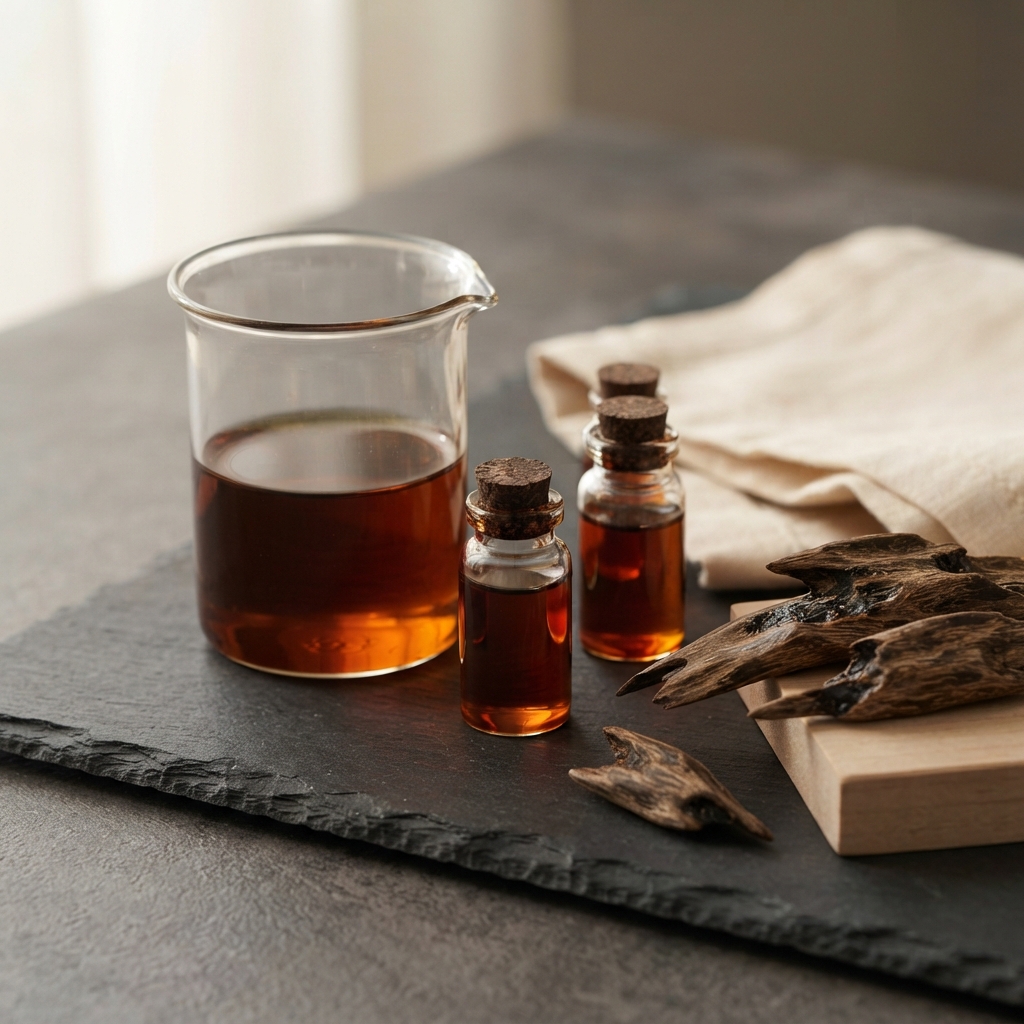
An oud oil manufacturer is the party that converts agarwood raw material into oil: it selects the wood, runs the extraction and holds the batch record that ties a drum back to a lot. A trader or broker resells oil it did not produce, so the evidence available to you stops at its own paperwork. The useful sourcing question is therefore not "who sells oud oil" but "who can prove they made this batch, to this specification, and can repeat it on the next order."
This guide is written for importers, perfume houses, fragrance traders, incense manufacturers and private-label brands that buy oud oil in bulk — whether you are re-evaluating an oud oil supplier you already use, meeting a wholesale oud oil trader at a trade fair, or testing an agarwood oil manufacturer that claims its own plantation. It sets out how to separate a producer from a reseller, which records to demand, how to sample without wasting money, and how to compare three quotations on something more honest than the headline price.
Why "Oud Oil Manufacturer" Is a Claim, Not a Category
Every seller in this trade describes itself as a manufacturer. The word costs nothing to use and, in most markets, nothing enforces it. What differs is who owns the material, who runs the equipment and who can answer a technical question about one specific drum.
That matters because oud oil is a low-volume, high-value material. A single extraction batch may be only a few litres, and the aromatic character of a batch depends on the species, the age and resin load of the wood, the extraction route and the drying and storage between them. When the seller is a reseller, none of those variables sit inside its control, and a quality conversation becomes an exercise in repeating what someone upstream said.
The practical test is simple: a real oud oil manufacturer answers a process question with a date, a lot number and a yield. A reseller answers with adjectives.
The Three Supplier Types You Will Actually Meet
| Criterion | Grower-distiller (true manufacturer) | Trader or broker | Repackager / filler |
|---|---|---|---|
| Owns or contracts the raw material | Usually yes: plantation, contracted growers or a named wood supplier | No: buys finished oil to resell | No: buys bulk oil and fills retail units |
| Runs extraction | Yes, on its own or a named toll site | No | No |
| Can describe a specific batch | Wood lot, date, yield, equipment | Purchase date and supplier name, at best | Purchase date and drum number |
| Where answers stop | At the limit of its own process data | At its purchase invoice | At the brand owner's specification |
| Real strength | Traceability, allocation, custom specification | Range and speed, small lots, mixed containers | Retail packaging and low unit quantities |
| Real risk | Narrow product range, longer lead time | Grade drift between shipments, thin records | No influence on oil quality at all |
None of these three is automatically the right partner. A good trader with a long relationship to one distillery can be more reliable than a weak manufacturer with an irregular wood supply. The point is to know which one you are talking to, because it decides which questions are answerable and which are theatre.
What Changes When the Seller Does Not Produce the Oil
- Allocation. A producer can tell you what it can reserve for you and when. A reseller can only tell you what it hopes to buy.
- Specification. A producer can adjust cut, filtration, maturation or packing. A reseller passes the request upstream and reports back.
- Consistency. Repeatability is a function of controlled input. Without control of the wood, "same as last time" is an intention, not a process.
- Claims handling. If a shipment deviates, the producer can investigate its own batch. The reseller can only forward your complaint.
This is the part of due diligence that a first conversation with a bulk agarwood oil supplier usually skips, because these questions expose the gap fastest. It is also why buyers who intend to use oud oil for perfume manufacturing ask for the batch record before they discuss the fragrance brief — the record sets the limits of what the brief can promise.
For a one-off purchase of a small quantity, this may not matter. For a fragrance programme that must smell the same in eighteen months, it usually decides the outcome.
Oud Oil and Agarwood Oil: One Material, Several Names
"Oud oil", "agarwood oil", "dehn al oud" and "gaharu oil" are commercial names for aromatic material derived from Aquilaria and related genera, and naming practice differs by market and by seller. A name is a label, not a grade, and it tells you nothing about species, origin or extraction. What it should do is point to a defined product: species, origin, extraction route, batch and specification. If a quotation uses an evocative name and no definition, ask for the definition before you discuss price. We cover the naming conventions in more detail in our guide to oud oil versus agarwood oil.
Raw Material Source and Extraction Route Set the Ceiling
What a source claim should contain
"Wild" and "plantation" are the two words most used and least documented in this trade. A verifiable source statement names the country and region, the species if known, whether the wood is cultivated or wild-collected, and how resin formation was induced. Cultivated material from managed plantations is now the mainstream supply route, and buyers increasingly ask whether chemical resin-induction agents were used, because that choice affects how the material behaves in extraction.
For reference, the supplier behind this site states that it works from a managed plantation base in Jiangmen, Guangdong, of more than 1,000 mu (roughly 160 acres), with more than ten years of cultivation experience, and that its cultivation approach does not use chemical resin-induction agents. Those are company statements you can test in a supplier conversation: ask for the same three facts, in writing, from every candidate.
Distilled versus supercritical extract
Extraction route changes yield, cost and the aromatic profile, so it must be part of the specification rather than a marketing adjective. Steam or water distillation produces a different material from supercritical CO2 extraction, and the two are not interchangeable in a formula. Ask which route was used, on what equipment, at what batch size and with what yield per kilogram of wood. Our comparison of steam-distilled and supercritical agarwood oil covers the development implications.
Why a Scent Description Cannot Prove Purity
Buyers often approve material on the nose alone, and that is where most disputes begin. A scent description is a subjective report of one sample, assessed on one day, by one person, at one dilution. It cannot distinguish a pure distillate from one extended with a carrier oil, blended with a synthetic oud accord, or coloured to match an expectation.
Several factors weaken the nose as an instrument: olfactory fatigue after repeated smelling, the effect of dilution strength, the temperature of the room, and the fact that aged material naturally darkens and thickens. An experienced evaluator is still valuable, but the nose should confirm a decision that rests on records, not replace it.
What does strengthen a purity decision:
- A batch-linked reference sample that both parties seal and keep, so "this is not what we approved" becomes a measurable statement.
- Basic physical data the supplier reports for the batch, such as appearance, density or refractive index where available, recorded rather than described.
- Independent laboratory testing that you commission on a sample you drew yourself, from a drum whose seal and batch number you recorded. Tests commissioned by the seller prove that some sample passed; they do not prove that your drum is that sample.
Verifying Production Capability in Six Steps
- Match the legal entity to the brand. Ask for the registered company name, address and business licence, and check that the name on the quotation, the invoice and the export documents is the same one. A brand name is not an entity.
- Ask for the source, not the slogan. Region, species if known, cultivated or wild, and resin-induction method. Vague answers here predict vague answers everywhere else.
- Ask what happens between wood and bottle. Cleaning, drying, extraction, filtration, maturation and storage. A producer will describe its own sequence and its constraints; a reseller will describe the industry in general.
- Test capacity against your own forecast. Give the supplier your expected annual volume and ask what share of a single batch that represents. A producer will answer in batches and months. A reseller will answer in availability.
- Request one batch record and read it. A usable record names wood lot, extraction date, equipment, yield and the person responsible. Our guide to batch consistency for perfume manufacturing shows how far that record should reach.
- Check who holds the export paperwork. The party named on the permit and on the phytosanitary or origin documents should be a party you can trace back to the quotation.
The Document Set to Request Before a Bulk Order
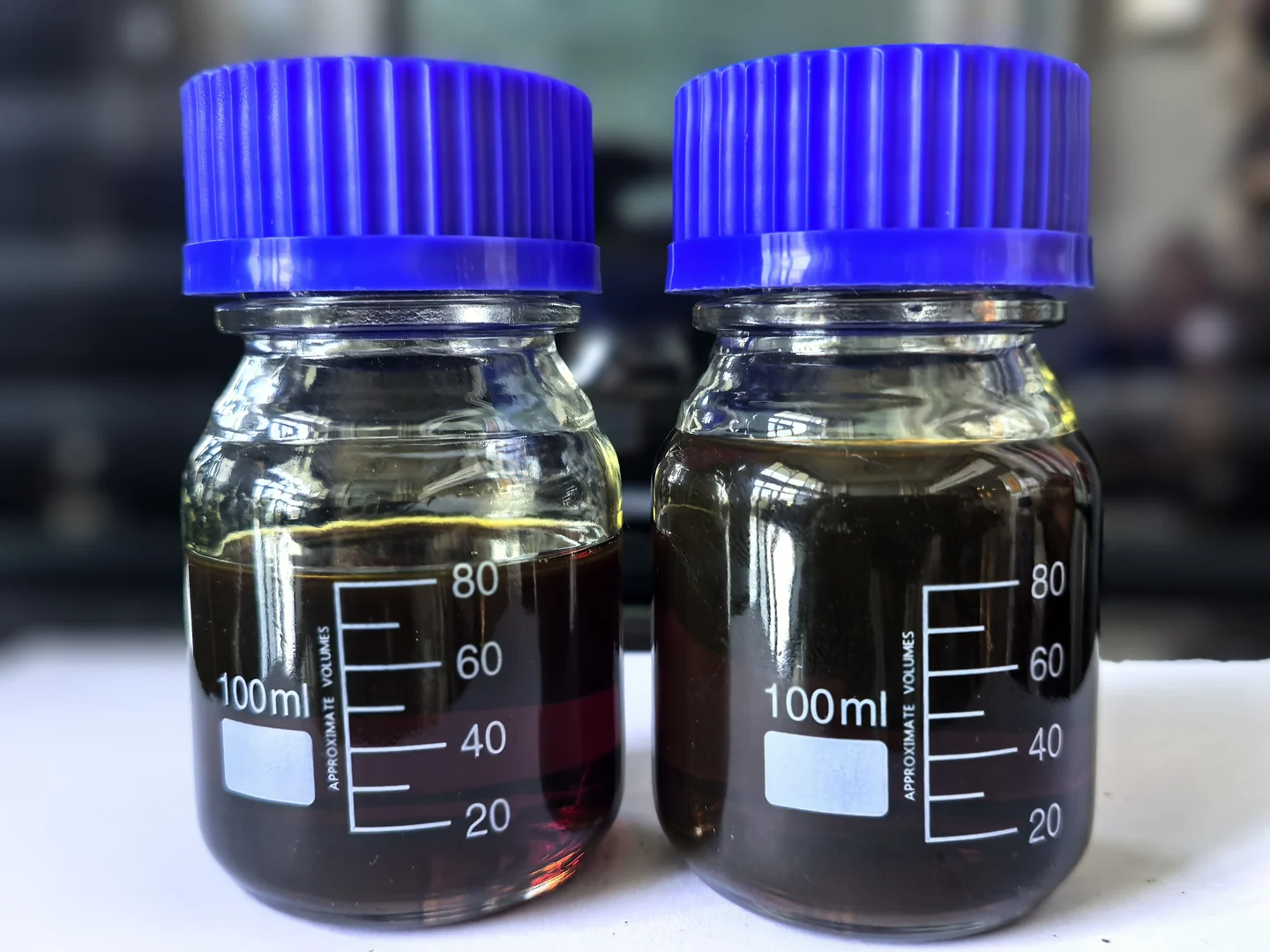
| Document | What it can evidence | What it does not prove |
|---|---|---|
| Batch record or production sheet | Wood lot, date, equipment, yield, operator | That the drum you receive came from that batch |
| Certificate of analysis, if the supplier issues one | The values measured on a named sample | Independent verification, unless the laboratory is accredited and you can check the report reference |
| Safety data sheet (SDS) | Hazard classification, handling and transport information for the material as supplied | Purity, origin or sensory quality |
| Ingredient or composition statement | What the material is declared to contain, including any carrier or additive | That the declaration is complete |
| CITES documentation, where applicable | That trade in the listed species is authorised under the permit described | Quality, and it is not a universal certificate for every oil shipment |
| Certificate of origin and packing list | Consignment route, quantities and declared contents | Production capability |
| Sealed reference sample per batch | The physical standard your claim will be judged against | Anything about batches other than the one sampled |
Ask for this set as one list at the RFQ stage. The records an oud oil manufacturer keeps for its own production are usually the same records it can release to you; where they do not exist, no amount of negotiation will create them after the shipment.
CITES: A Species Listing Is Not a Uniform Certificate
Agarwood-producing species of Aquilaria and Gyrinops are listed in CITES Appendix II, as the CITES Secretariat's own working document for CoP20 sets out. That is a statement about species, not a statement that every oil shipment needs the same document.
Whether a permit is required for your consignment depends on how the listing annotation treats the form you are importing, on your destination country's implementing rules, and on whether the material was produced from cultivated stock under an approved system. Some routes require export and import permits; others are treated differently. Two consequences follow for buyers:
- Do not accept "we have CITES" as an answer. Ask for the species, the permit type, the permit number, the holder and the validity dates, and check them against your own import authority's requirements before the order is placed.
- Do not assume a permit covers your product form. Confirm the description on the permit matches what is in the drum and on the packing list, because a mismatch at customs is your delay, not the supplier's.
SDS, Composition Data and Labelling for Your Market
Regulatory obligations attach to what you sell, where you sell it and how it is classified, and they differ by destination. As a buyer you need the SDS in the language and format your market requires, a composition statement that is specific enough for your own hazard and allergen assessment, and label copy that matches the declared material. Where a supplier cannot provide these, that is a signal about documentation depth generally.
Nomenclature is a small but practical point: ISO 3218:2014 sets out principles for designating essential oils in English and French for labelling and marking purposes. A product described consistently — botanical name, plant part, origin and process — is easier to clear, label and defend than one described by trade nickname alone.
Designing a Sample Evaluation That Survives Scale-Up
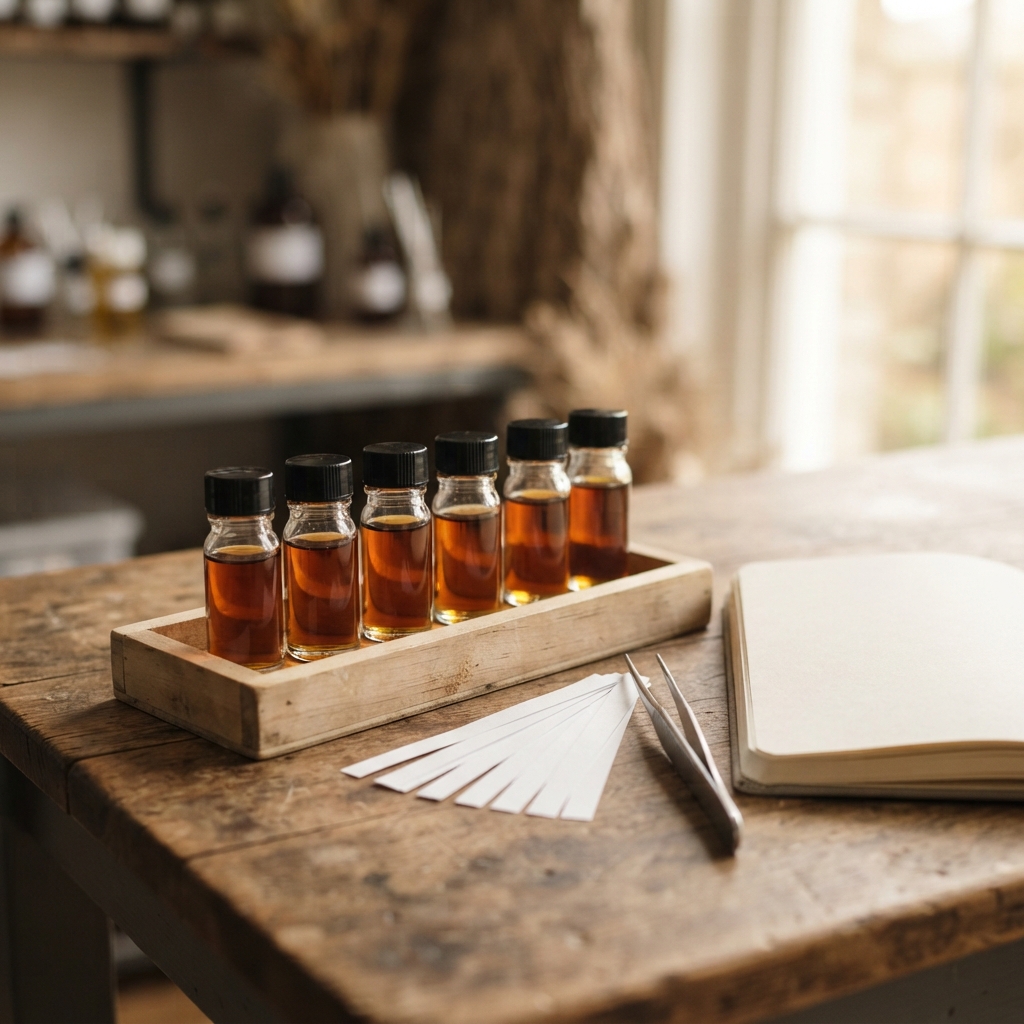
Samples are cheap; a misjudged bulk order is not. Structure the trial so the result is comparable and repeatable:
- Brief every supplier identically. Same application, same dilution, same questions, same documentation request. Our wholesale agarwood oil sample evaluation record is built for this.
- Request samples from a named lot, not from a showroom bottle, and label each vial with supplier, lot and date received.
- Evaluate blind and coded where possible, on blotter and in your actual application, at the same concentration.
- Re-test after two weeks and after storage, because top notes fade and differences between batches appear with time.
- Record the decision — approved, approved with conditions, rejected — and attach the sealed reference sample to it.
Oud Oil Supplier Evaluation Checklist
| Checklist item | What to ask for | Evidence that counts as an answer |
|---|---|---|
| Raw material source | Country and region, species if known, cultivated or wild, resin-induction method, harvest or purchase period | A written source statement that matches the batch record and the origin document |
| Sample performance | A sample drawn from a named lot, tested blind in your application at your dilution | Your own signed evaluation sheet plus a sealed retained sample |
| Batch documentation | Batch record, yield, equipment, date, and any analysis with method and laboratory named | A record that is internally consistent and specific to the drum you are buying |
| Quotation conditions | Unit, quantity basis, Incoterm, currency, validity, what is included and what is extra | A quotation you can convert to landed cost per litre without assumptions |
| Packaging | Container type and material, fill volume, closure and seal, headspace, labelling, outer carton | A written pack specification, plus a photo or sample of the actual pack |
| Lead time | Allocation, extraction or filling time, documentation time, booked freight | A dated schedule with milestones, not a single number of days |
| Verifiable documents | Business licence, SDS, composition statement, CITES permits where applicable, origin and packing documents | Documents whose holder name matches the entity that quoted you |
Score each supplier on the same sheet. A supplier that scores well on price and poorly on three evidence rows is not a cheaper supplier; it is an unpriced risk.
Comparing Three Quotations on More Than Unit Price
Three offers at different prices are rarely three offers for the same thing. Normalise before you compare: fix the unit (per kilogram or per litre), the quantity basis, the fill size, the packaging, the Incoterm, the currency and the validity period, and state whether documentation and testing are included. Then convert every offer to a landed cost per delivered litre, including freight, insurance, duties, documentation and any testing you will commission yourself.
A worked comparison usually shows that the cheapest quote stops being cheapest once a smaller fill size, a shorter price validity, an FOB term and an excluded permit are added back in. Our guide to comparing bulk oud oil quotations sets out the conversion in full.
Sourcing From a China-Based Oud Oil Manufacturer
The phrase "oud oil manufacturer China" covers several different business models, and the sequence above is what separates them. Some operations process plantation material grown locally; others process wood bought in from producing regions; others assemble finished fragrance lines from imported oil. None of these is disqualifying, but each produces a different document trail, and you should know which one you are dealing with before you ask for a specification.
Two questions do most of the work. First, where is the wood processed, and by which legal entity — the name on the business licence, the invoice, the bank account and the export documents should converge. Second, which documents can that entity issue in the language your customs broker needs? Our checklist for verifying a factory in China applies the same entity-matching logic to wood supply.
MOQ, Custom Packaging and OEM/ODM
Minimum order quantity in oud oil is set by real constraints: the smallest extraction batch the producer will commit, the smallest packing run, and the cost of the export documentation per shipment. That is why MOQ is usually negotiable in structure rather than in number — a smaller first order may be possible if you accept a standing lot, a larger fill size or a longer lead time.
For packaging and private label, be explicit about who supplies what: bottle, cap, dropper, label artwork, carton, and who owns the tooling if a custom mould is involved. Ask for a written confirmation that your label artwork and the declared product name will be checked against the composition before filling. If you are appointing an oud oil private label supplier for the first time, our notes on oud oil private label programmes cover the briefing sequence, and the site's OEM and private label pages describe the services offered here.
Lead Time, Inspection and Claims
Treat lead time as a schedule, not a promise. Allocation of material, extraction or filling, documentation and freight each run on their own clock, and the documentation step is the one most often omitted from a quoted date. A manufacturer's date is built from those four steps; a trader's date often starts at the moment it finds the material.
Write three things into the order before it is confirmed: a pre-shipment inspection step with the photos or measurements you will accept, the seal and batch number recorded on the packing list, and a claims window measured from arrival with a defined evidence pack. Agree what remedy applies to which defect — a documentation error, a fill shortfall, an appearance deviation and a sensory deviation should not all resolve the same way. An approved sealed sample is the only thing that makes a sensory claim arguable.
What NanjaOud Supplies
NanjaOud is the trading identity of Jiangmen Nangjiaxiang Agarwood Development Co., Ltd., which states that it combines agarwood cultivation, raw material supply and in-house processing, and supplies buyers in the Middle East, Southeast Asia, Europe and North America. As an agarwood essential oil supplier working from its own plantation base, it sits on the grower-processor side of the table described above — which is the side that keeps the batch records.
The site's agarwood and oud oil range presents three distinct formats: distilled oud oil, supercritical agarwood extract, and finished fragrance directions. The supercritical agarwood oil product is supplied for fragrance manufacturers, incense producers, perfume brands, aroma product companies, wholesalers, distributors and private-label buyers; its listed characteristics are a dark amber to reddish-brown appearance and suitability for fragrance blending and aromatic product development, with bulk wholesale supply and ODM or private-label cooperation available. The site does not publish a specification sheet, price or stock level for it, so treat appearance and application as the limits of what is stated and ask for the batch-level detail you need.
On quality, the site is deliberately narrow: its quality and supply pages describe visual and format checks, weight and packaging confirmation, batch and order records where applicable, and pre-shipment confirmation, and state that this framework is not a certified quality system and does not include laboratory testing of every batch. Read that as an accurate scope statement and plan your own verification around it — commission the tests you need, on samples you draw.
Frequently Asked Questions
Is an oud oil manufacturer always cheaper than a trader?
Not always. A producer may charge more for a small, specified batch than a trader charges for surplus stock. The producer's advantage is allocation and traceability, not a guaranteed lower price.
How can I tell a manufacturer from a trader in one conversation?
Ask what happens to the wood between drying and filling, then ask what the constraint was on the last batch. A producer answers with its own process and its own bottleneck. A reseller answers in general terms or offers to check.
Which documents should arrive with a bulk oud oil order?
At minimum: a batch record, a packing list, a certificate of origin and a safety data sheet for the material as supplied. Add a composition statement and, where the species and destination require it, the applicable CITES permits. Ask what the supplier issues before you order, not after.
Does every oud oil shipment need a CITES permit?
No. Aquilaria and Gyrinops species are listed in Appendix II, but the documentation required depends on the form of the material, the listing annotation and your destination country's rules. Confirm with your own import authority and ask the supplier for the species, permit type and permit holder.
Can I judge purity from the scent?
Only partly. The nose can detect a clear fault, but it cannot establish that a drum is free of carrier oil, synthetic accords or colour. Pair sensory evaluation with a sealed batch reference and testing you commission yourself.
How many samples should I test before a bulk order?
Test at least one sample per candidate supplier from a named lot, and ask for a second draw from a different lot before you scale. Two lots tell you more about repeatability than two suppliers tell you about quality.
What if the bulk delivery does not match the approved sample?
That is a contract question, so it has to be answered in the contract. With a sealed reference sample, a recorded batch number and a defined claims window, the comparison is factual. Without them it becomes a negotiation about memory.
Can packaging change the oil I receive?
Yes. Headspace, closure integrity, light exposure and temperature during transit all affect aromatic material over time. Specify container material, fill volume and seal in writing, and record them on arrival.
Conclusion
Choosing an oud oil manufacturer comes down to evidence rather than adjectives. Establish which kind of seller you are dealing with, ask for the source and the process in specific terms, take samples from named lots, demand records whose holder name matches the entity that quoted you, and compare quotations on landed cost per delivered litre. Then hold the approved sample and the batch number as the reference for everything that follows.
If you are preparing a first or repeat order, send us your application, target market, estimated volume, packaging requirement and sample request through our contact page. We will confirm which formats we can currently supply and what documentation accompanies them, so you can compare our offer against your own checklist rather than against a slogan.


