

An oud chips manufacturer can only hold your price and aroma if your order is written as a blend ratio, not a single grade. Grade letters are seller-relative and drift between lots, so the buyers who keep a stable product are the ones who specify component shares, tolerance bands, a moisture basis and a reference sample — then test the ratio on arrival. This guide shows how to build that specification, verify it with a mass-balance test, keep the CITES paperwork consistent, and price the result per usable kilogram.
Why a single grade label cannot hold a price point
Most first orders are written as one line: "Grade AA oud chips, 200 kg." That line looks precise and is almost impossible to enforce. It names a seller's own label rather than a measurement, and it leaves the three things that actually decide your cost — resin share, moisture and piece-size distribution — completely open.
Buyers usually arrive at an oud chips manufacturer with a grade name because that is what the last supplier used. The name then travels through the quotation, the purchase order and the label, and by the second shipment nobody can say what it was supposed to mean.
Grade letters are relative to the seller
There is no international grade standard for oud chips. One factory's "AA" can be another factory's "A", and a third supplier may use "super" or "sinking" as a marketing layer on top. The letters are useful shorthand inside one supply relationship and almost useless across three quotations. The phrase best oud wood chips is the same kind of shorthand: it describes a preference, not a specification you can reject a lot against. If you are still comparing letters, convert them into written fields first: how to turn A, AA and AAA labels into a purchase order.
The three variables that drift between lots
Even with one honest supplier, a second lot is not a copy of the first. Three measured properties move:
- Resin share. The proportion of dark, resin-bearing wood to pale wood changes with the harvest block and the sorting pass. A 5% shift in resin share changes both the burn and the price you should be paying.
- Moisture. Water is bought at the price of resinous wood. A lot that arrives 4 percentage points wetter contains less wood per kilogram, and the loss appears when you dry or store it. See moisture content and what it does to price and claims.
- Size fraction and fines. The same tonnage can arrive as intact pieces or as pieces plus a heap of dust. Fines are paid for and partly unusable in burning applications. The yield gap between a kilogram bought and a kilogram sold is where margin quietly disappears.
A blend specification does not remove that variation. It gives you a fixed recipe in which variation is bounded, measurable and priced.
What an oud chips blend specification contains
A blend is a small set of components bought as one line item. The specification below is the minimum that lets two oud chips manufacturers quote the same thing and lets you reject a lot on evidence rather than opinion.
| Field | What to write | How it is checked |
|---|---|---|
| Component list | Two to four named components, each with its own grade definition and lot code | Component lot codes appear on the packing list and the blend record |
| Share by weight | Percentage of each component on a stated moisture basis, with a tolerance established by an approved trial | Mass-balance test on a 100 g drawn sample |
| Species and origin | Species and origin stated per component, not only for the blend as a whole | Supplier declaration matched to CITES permit descriptions |
| Moisture | Target and maximum, on a named basis (as-received or oven-dry) | Meter reading on sealed sub-samples at goods-in |
| Size fraction | Screen openings for the main fraction, plus a maximum fines percentage | Sieve or hand-screen the drawn sample; weigh each fraction |
| Reference sample | Sealed, signed sample of the approved blend with an ID and date | Visual and burn comparison at each arrival |
| Burn behaviour | Short protocol: piece mass, heat source, observation window, what is recorded | Same protocol on reference and arrival sample, scored side by side |
Two fields are often left out and both cause disputes: the moisture basis (a share of 30% is meaningless if one side means dry weight) and the tolerance (a ratio with no band is either unenforceable or unreasonably strict). Write both before you ask for a quotation.
Building the blend from a target, not from available stock
The common mistake is to let an oud chips manufacturer build the ratio from whatever is in stock this month. That produces a recipe you cannot repeat, because the stock changes. Work backwards from what your market will pay for and what your customers will smell.
Set three targets first
- Aroma on the burner. Describe the experience, not the grade: opening note, sweetness or smoke, how long the piece keeps giving, how the room smells an hour later. Oud chips for burning are judged at the burner; there is no other test that matters as much.
- A price tier per retail unit or per kilogram sold. This is the constraint that decides how much top-grade material the blend can carry.
- Behaviour in your process. Direct burning, bakhoor paste, milling into powder or repacking into retail pouches each tolerate different size fractions and fines levels. Oud chips for bakhoor can carry a higher fines share than a pack sold for open burning. If your process is still open, compare chips against shavings for your process before fixing a recipe.
The five-step ladder
- Reference pack. Buy or keep a sealed pack of the product you are trying to match, and record its measured properties, not just its smell.
- Component trials. Request small, lot-linked samples of each candidate component separately. Score each one alone, so you know what it contributes.
- Three candidate blends. Ask the oud chips manufacturer for three ratios around your target — for example 20/60/20, 30/50/20 and 40/45/15 — made from the same component lots. Three is enough to see the direction of cost and aroma.
- Pilot batch. Produce a small commercial batch of the chosen ratio, packed as it will ship, and approve it with a signed record.
- Container order. Only now set volume, with the ratio, tolerance and reference sample written into the purchase order.
Steps 1 to 3 usually fit inside one sampling round if your questions are specific. The protocol for making that approval enforceable is set out in oud chip sample approval.
Verify the ratio with a mass-balance test
You do not need a laboratory to check whether a blend is what was ordered. You need a scale, a screen and a record sheet — and a manufacturer willing to put its blend record next to your result.
- Draw a sample from at least three positions in the lot — top, middle and bottom of different cartons — and combine them.
- Weigh 100 g of the combined sample. This is your test mass, and it must be recorded.
- Separate by the property that distinguishes the components: screen size if the grades differ in fraction, hand-sorting by resin darkness if they differ in quality, or both if they differ in both.
- Weigh each separated fraction and convert to a percentage of the test mass.
- Compare against the declared shares. Set the accepted tolerance from a representative trial and state the sampling and separation method in the order record.
- Record the result against the lot code, photograph the separated fractions next to the scale reading, and keep the sheet with the reference sample.
If you also count piece defects rather than weight, an attribute sampling table such as ISO 2859-1 gives you a defensible sample size instead of an improvised handful. Whatever table you use, fix it in the purchase order so both sides count the same way.
What blending changes in your documents
This is the part buyers underestimate. A blend is one product commercially and several regulated components on paper, and the paperwork has to reconcile the two. An oud chips manufacturer that has sold blends before will already have a way to describe them; one that has not will improvise at the port.
CITES descriptions must cover every component
All Aquilaria and Gyrinops species are listed in CITES Appendix II with annotation #14, as recorded in the CITES CoP20 working document on agarwood (Doc. E-CoP20-093, cites.org). In practice that means a permit travels with a shipment and describes the goods. If your blend mixes species or origins, ask the manufacturer — before production — how each component is covered by the permit description and which permit reference applies to which component lot. A blend that is easy to make but hard to describe at the border is not a saving.
Species and origin claims on a blended pack
A blended pouch that carries a single-origin claim is a claim your own paperwork may contradict. Decide deliberately whether the pack states one origin, a list of origins, or no origin at all, and make sure the internal component record still identifies every input. The distinction between what a manufacturer can prove and what is trade convention is covered in species and origin claims and in the wider document families behind "certified" agarwood.
Classification follows the form, not the blend
Customs classification depends on what the goods are and how they are prepared, so a mixed lot does not automatically share the code of its dominant component. Confirm classification with your broker using the actual composition and form: HS code and import documents.
Pricing a blend per usable kilogram
A blended quotation is comparable only when every offer is converted to the same unit: cost per usable kilogram of finished blend, including preparation and documents. That is also the only way to read an oud chips price sensibly, because a headline figure hides whether fines, moisture and preparation are already paid for. Published agarwood chips price per kg figures rarely state their basis, which is why they mislead buyers comparing three offers.
Use an index rather than absolute prices so the model travels between suppliers:
Blended index = Σ (component share × component price index per usable kilogram) + preparation and packing allowance.
| Component | Share | Price index per usable kg | Weighted contribution |
|---|---|---|---|
| A — top grade | 30% | 100 | 30.0 |
| B — mid grade | 50% | 60 | 30.0 |
| C — filler grade | 20% | 35 | 7.0 |
| Blend as specified | 100% | — | 67.0 |
| Alternative: shift 10 points from A to B | 20 / 60 / 20 | 100 / 60 / 35 | 63.0 |
Read the table as a model, not as market prices. Its value is that it makes trade-offs visible: moving ten points of share from the top grade to the mid grade lowers the index by about 6%, and the question becomes whether the aroma difference is worth that. Then test the assumption that usually breaks the model — that each component's usable kilogram is equal. Apply each component's own fines and moisture loss, and a cheap filler can cost more per usable kilogram than it looks.
Hidden costs of a blended line
- Minimum component lots. Buying four components means four minimum quantities, so inventory rises even when total volume does not.
- Preparation labour. Weighing, blending, re-checking and re-packing is work that a single-grade order does not need.
- Separate SKU and documentation. Each blend needs its own lot coding, reference sample and, where relevant, permit mapping.
- Longer lead time. Components must be available at the same time; one late component delays the whole blend.
- Repack loss. Every extra handling step produces dust. Measure it instead of assuming it away.
What an oud chips manufacturer must be able to do
A blend is only as repeatable as the factory's lot discipline. Before you commit, confirm that the supplier can hold component lots separately, weigh and blend to a written ratio, record the blend on a batch sheet, and seal a reference sample per blend version. If any of those four is missing, the ratio exists only in the quotation.
Questions worth putting in writing:
- Can you supply each component as a separately coded lot, with its own declaration?
- Who weighs and blends, and on what equipment — and is the blend record available at pre-shipment?
- What tolerance do you hold on component share, and how do you verify it?
- Will you seal a reference sample of each blend version and keep it for the duration of the contract?
- How do component lot codes appear on the packing list and on the permit description?
- What happens to the ratio if one component is short — do you substitute, delay, or ask?
- Can you pack the blend to our retail unit weight, and what is the fill tolerance?
- Can you hold a second approved blend version for a different price tier, with separate samples?
If you also want the factory's own process controlled rather than just documented, pair these questions with a factory audit scoped to what you will actually buy.
Common mistakes buyers make with blended orders
- Writing a ratio without a tolerance. The clause becomes either unenforceable or a trap for an honest supplier.
- Mixing moisture bases. One party quotes dry weight, the other as-received, and both think the other is cheating.
- Approving a blend made from lots that will not be used in production. The approved sample must be traceable to the component lots in the order.
- Blending to a grade name instead of a measured target. The label survives, the aroma does not.
- Discovering the document problem after production. Permit descriptions and origin claims are decided before the blend is made, not at the port.
- Comparing quotations per kilogram of blend. Without usable-yield and preparation costs, the cheapest blend is often the most expensive line in the file.
Compare the Chip Forms Before Specifying a Blend
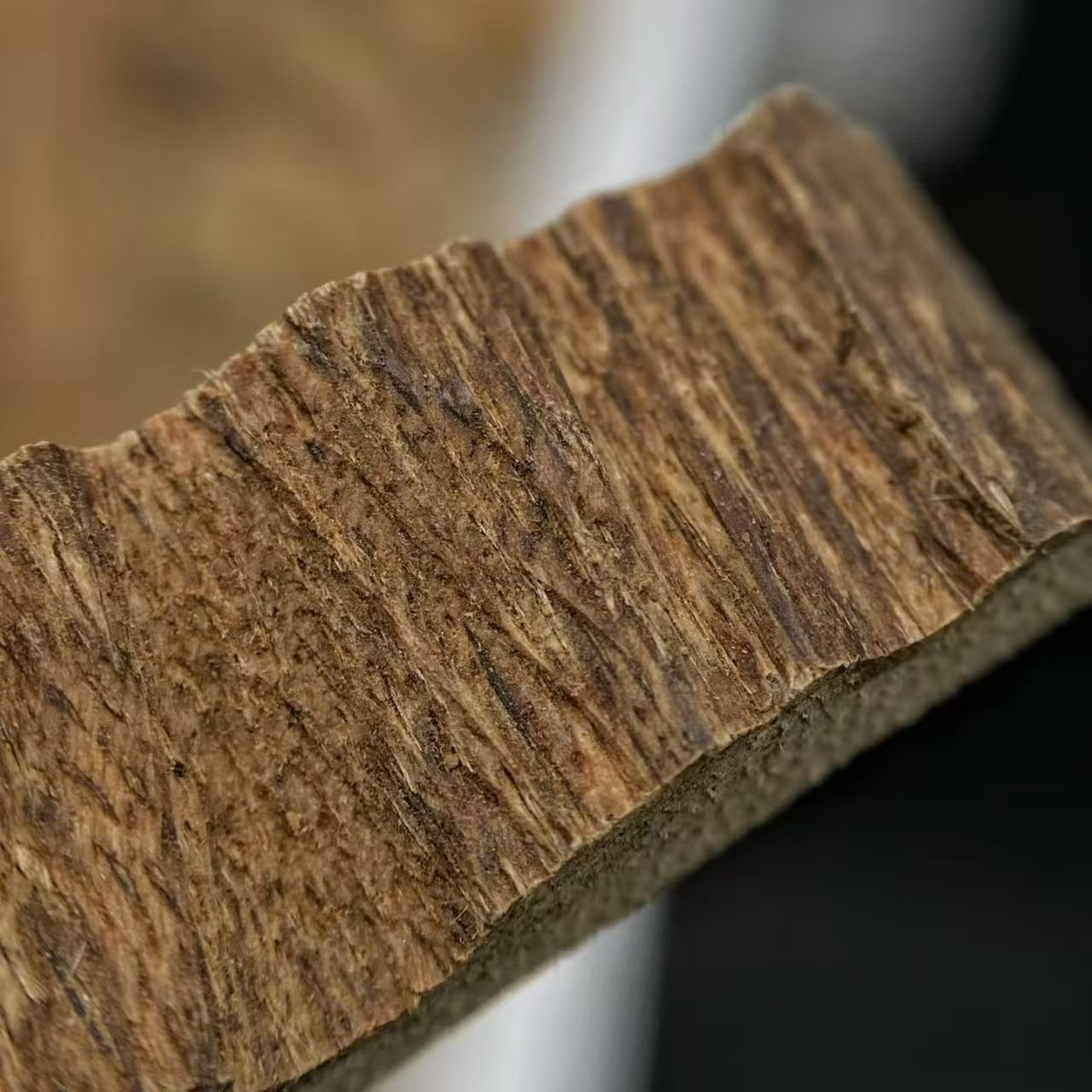
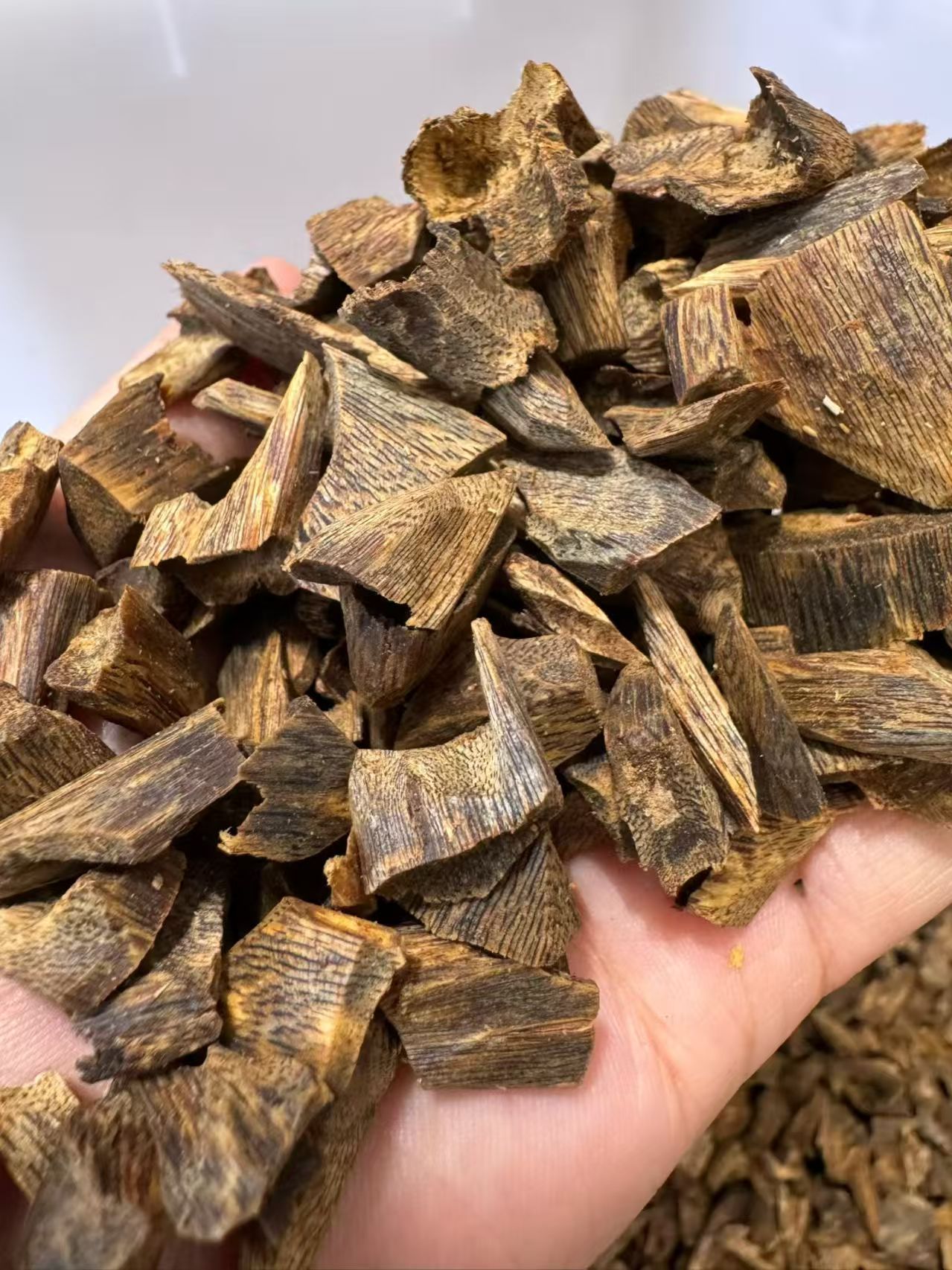
NanjaOud lists natural large agarwood chips and natural small agarwood chips. These listings help define the visible forms you want to sample. They do not establish a fixed blend recipe, available lot, target cost or processing capability for a particular order. Send the intended use, component definitions, sample size, destination and packaging requirements, then request a written specification and quotation for the proposed lot.
FAQ
Can an oud chips manufacturer guarantee the same blend twice?
No factory can guarantee identical wood, because the raw material varies. A manufacturer can guarantee the same written recipe, the same tolerance bands, separately coded component lots and a sealed reference sample — which is what makes a repeat order comparable.
How do I verify a blend ratio without a laboratory?
Draw a multi-position sample, weigh 100 g, separate the components by screen size or resin darkness, and weigh each fraction. Record the percentages against the declared shares with photographs. Repeat the check on samples taken from different positions in the lot.
Does blending change CITES requirements?
The species involved decide the requirement, not the fact of blending. If every component is Aquilaria or Gyrinops, the shipment still moves under Appendix II documentation; the practical problem is that the permit description and component lots must reconcile. Agree that mapping with the supplier before production.
What tolerance is realistic on component share?
Agree a tolerance only after a representative trial. Record the sample mass, sampling positions, separation method and measurement uncertainty, then use those observed results to set a commercial band that both parties can verify.
Should the blend be mixed at the factory or at my warehouse?
Factory blending gives you one lot code, one reference sample and one inspection. Warehouse blending gives you flexibility and lower component minimums, but you carry the labour, the dust loss and the responsibility for documentation. Choose based on which risk you can control better.
How do I price a blend per usable kilogram?
Convert every component to cost per usable kilogram after its own fines and moisture loss, multiply by its share, add preparation, packing and document costs, then divide by the finished weight. Compare all suppliers on that single number.
Does every blend version need its own reference sample?
Yes. A sample that represents version one cannot approve version two, even if only one component share changed. Label each version with an ID and date, and keep the superseded samples for the life of the contract.
What can I print on a blended retail pack?
Print only what your records can support. If the pack states a species or origin, every component must be consistent with that statement, or the label should describe the blend honestly. Check destination-market labelling rules before artwork is printed.
Conclusion
A blended oud chips order is not a compromise; it is the format that makes aroma and price controllable at the same time. Write the components, shares, tolerance, moisture basis, size fraction and reference sample into the specification, verify the ratio with a mass-balance test, and reconcile the component lots with the permit description before production starts. Do that, and a repeat order becomes a comparison instead of a gamble.
If you are building a first blend or replacing one that drifted, send the target aroma, the price tier and your pack format through our contact page, and our team will tell you which of our chip forms can carry it.


