

An oud chips manufacturer can hand you a folder of certificates and still leave the only question that matters unanswered: is this lot legal, consistent, and worth the price? Certification in agarwood is not one status. It is a stack of separate documents, each issued by a different body, each proving a narrow fact. Buyers who treat the folder as a single pass-or-fail item usually discover the gap at customs, or later, at the claim.
This guide splits that folder into six document families, sets out what each one actually proves, and gives you a verification routine any oud chips supplier should be able to satisfy before you release a deposit.
Why "Certified Oud" Is Not a Single Status
Agarwood certification is fragmented because the risks are fragmented. A customs authority cares whether the wood left the country legally. A plant health inspector cares whether it carries pests. A retail buyer cares whether the scent and appearance repeat. A perfume house cares whether the batch record matches the sample. No single certificate covers all four, and no manufacturer can be "certified" in a general sense.
The result is that two suppliers can both describe themselves as certified and be describing completely different things. One may hold a CITES export permit for a specific shipment. Another may hold a management system certificate for its factory. A third may be quoting a laboratory report on a single sample. All three statements are true, and none of them transfers the assurance you thought you were buying.
The practical fix is to stop asking "are you certified?" and start asking "which document, for which lot, issued by whom, valid until when?" That question is answerable, and any oud chips manufacturer serious about wholesale trade should be able to answer it in writing.
The Six Document Families to Request
1. CITES Permits and Certificates
Aquilaria and Gyrinops species are listed in CITES Appendix II, which means cross-border trade is regulated through permits issued by the exporting country's management authority. The U.S. Fish & Wildlife Service notes that the annotation attached to each listing determines which parts, derivatives and products need permits — so the same species can require different paperwork depending on whether it ships as chips, powder or oil. A CITES permit for agarwood is therefore a shipment document, not a company credential.
What a CITES permit proves: that a defined quantity of a defined species was authorised to leave a named country during a stated validity window, for a named importer. What it does not prove: that the wood is high grade, that it matches your sample, or that the permit will still be valid when your container actually sails. Permits expire, quantities are consumed, and a permit issued for one shipment cannot be reused for the next.
Two checks matter here. First, the permit description must match the commercial invoice description — species, form, and net weight. A permit that says "agarwood chips" against an invoice that says "agarwood powder" invites a question at the border. Second, the permit holder must be the same legal entity that is invoicing you. This is the single most common discrepancy when buyers source from an oud chips manufacturer in China, where a trading office and a processing plant often share a brand but not a legal name.
2. Phytosanitary Certificates
A phytosanitary certificate is a plant health document, issued by the exporting country's national plant protection organisation. It addresses pests and diseases, not legality of trade and not quality. Many destinations require one for wood products; some require specific treatment declarations such as heat treatment or fumigation, and the requirement can change with the destination's own regulations.
What it proves: that a designated inspector examined the consignment or its treatment record and found it consistent with the importing country's plant health requirements at the time of issue. What it does not prove: anything about resin content, moisture, or grade.
Buyers routinely confuse phytosanitary certificates with CITES permits. They are separate documents from separate authorities, and a shipment can be perfectly legal under CITES while still being held for a missing plant health certificate. Confirm both, in writing, against your destination's current requirements — this is a question for your customs broker, not for the supplier's sales team.
3. Management System Certificates (ISO 9001 and Similar)
ISO 9001:2026 is the current edition of the quality management system standard. ISO has withdrawn the 2015 edition; if a supplier presents a certificate citing 2015, check its validity and transition arrangements with the issuing certification body. It sets requirements for how an organisation plans, controls and improves its processes. It is not a product standard, and it says nothing specific about agarwood.
What a valid certificate proves: that an accredited certification body audited the organisation's management system against those requirements and found it conforming, within a defined scope and validity period. What it does not prove: that any particular lot meets any particular specification. A factory with a certified system can still ship you the wrong grade — the system is supposed to catch that, but the certificate is not evidence that it did.
The value of a management system certificate is diagnostic rather than decisive. A manufacturer who can produce a certificate, a scope statement and a recent audit summary is signalling that documented process exists. A manufacturer who cannot explain what their scope covers is telling you the certificate is decorative. For an oud chips wholesale supplier, that is a reasonable first filter — but it is a filter, not an approval. Check the certificate number with the issuing body, confirm the scope covers the actual production site, and note the expiry date.
4. Product Test Reports
Test reports are the documents buyers most often misread. A laboratory report describes one sample, tested by one method, on one date. It is a snapshot, not a guarantee.
For oud chips, the reports that carry real weight are narrow and specific: moisture content determined on a stated basis, resin-related measurements with the method named, and where relevant, microbiological or contaminant testing for destinations or applications that require it. A report that states a resin percentage without naming the method, the moisture basis, or the sample identity is not a specification — it is a number.
Three questions convert a report into usable evidence. Which lot was sampled, and can the sample be traced to the shipment? What method was used, and is it one your own laboratory or customer would accept? And what does the report say about sampling — a single grab sample from the top of a pallet tells you very little about a tonne of chips. If you are comparing resin claims across suppliers, the method and moisture basis must match before the numbers mean anything; our guide to verifying resin content claims walks through that comparison. Ask any agarwood chips supplier to state the sampling plan, not only the result.
5. Facility and Social Compliance Audits
Third-party factory audits — social compliance, ethical sourcing, or customer-specific quality audits — are increasingly requested by retail and brand buyers who face their own supply chain reporting obligations. These audits examine working conditions, record keeping, and in some schemes, environmental controls.
What they prove: that an auditor visited a site on a date and reported against a defined standard, subject to the audit's scope and any announced or unannounced protocol. What they do not prove: product quality, or that conditions on the audit day are conditions on a normal day.
Ask for the audit type, the standard, the date, the site address, and whether it was announced. An audit report for a different address than the one producing your goods is not evidence about your goods.
6. Traceability and Commercial Records
The least glamorous family, and the one that decides most claims. Traceability is the link between the material you receive and the material that was authorised, sampled and invoiced. In practice it means lot or batch codes on the packing list, a retained sample tied to that code, and internal records that let the manufacturer answer "where did this kilogram come from?" without reconstructing it from memory. In wholesale oud chips, where one lot is often split across several buyers, that code is the only thing tying your cartons to the documents.
What it proves: that the supplier can follow a consignment backwards. What it does not prove: that the wood is good — but it is what makes every other document enforceable. Without a lot code, a test report and a CITES permit describe material you cannot identify.
What Each Document Proves: A Comparison Table
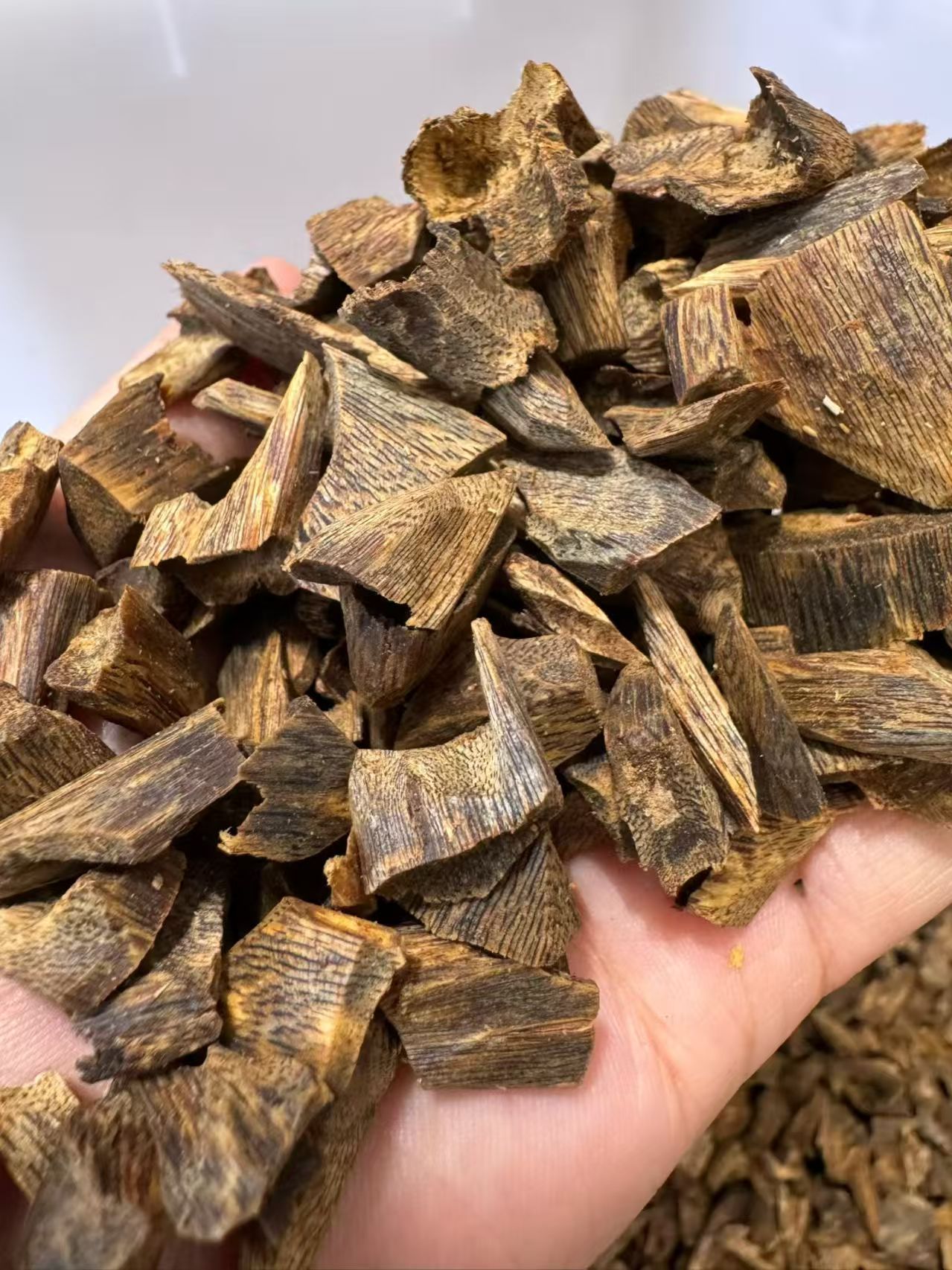
Use this table as a working reference the first time you review a supplier's document pack.
| Document | Issued by | What it proves | What it does not prove |
|---|---|---|---|
| CITES export permit / re-export certificate | Exporting country's CITES management authority | Authorised quantity of a named species may leave for a named importer within a validity window | Grade, scent, moisture, or that the permit covers your shipment |
| Phytosanitary certificate | National plant protection organisation | Consignment or treatment record meets destination plant health requirements at issue | Legality of trade, quality, or resin content |
| ISO 9001 certificate | Accredited certification body | A management system was audited and found conforming within a stated scope | That any individual lot meets any specification |
| Product test report | Accredited or in-house laboratory | Results for one identified sample, by one named method, on one date | That the shipment matches the sample |
| Facility / social audit | Third-party audit firm or customer | Site conditions assessed against a defined standard on a given date | Product quality, or conditions on other days |
| Lot code and retained sample | Manufacturer | The consignment can be traced back to a specific production lot | Anything at all, unless the other documents reference the same code |
How to Verify a Certificate Pack in Under 30 Minutes
Run this routine before you approve an oud chips supplier, and again before each shipment. It is deliberately mechanical.
- List every document you received and write the issuing body, reference number, issue date and expiry date next to it. If a document has no reference number, treat it as a brochure.
- Check the legal entity name on every document against the name on the proforma invoice and the bank account. Three different names is a finding, not a formality. Our guide to verifying an oud chips manufacturer in China covers how to reconcile entity, permit holder and bank account.
- Verify the CITES permit against the invoice: species, form, net weight, importer name, validity window, and whether the remaining quantity covers your order.
- Verify the phytosanitary certificate against your destination's current requirements, through your broker, in writing.
- Verify the ISO certificate with the issuing certification body's public register. Confirm the scope names the production site, not a trading office.
- Read the test report's sampling section before the results. Note the lot, the method, the moisture basis and the sample size.
- Ask for the retained sample reference and confirm it matches the lot code on the packing list.
- Record the pack — a dated file per supplier, per shipment. When a claim arises, the buyer with the file wins.
If a supplier cannot complete steps 1 to 4 within a few working days, that is itself the answer. Document handling speed is a reasonable proxy for how the company will handle a problem later.
Red Flags That Show Up in Real Certification Packs
- Certificates with no scope statement. A certificate without a defined scope cannot be checked, which is usually why it was sent without one.
- Permits for a different product form. A permit describing blocks against an invoice for chips is a mismatch waiting for a customs officer.
- Expired documents presented as current. Common with management system certificates, which run on multi-year cycles with surveillance audits.
- Test reports with no sample identity. If the report cannot be tied to a lot, it describes someone's sample, not yours.
- Photographs offered in place of documents. A photo of a certificate is not a certificate; ask for the PDF and the certificate number.
- Reluctance to name the certification body. The body is public information. Refusal to share it is a choice.
- One document doing the work of six. Any supplier who claims a single certificate covers legality, quality and origin is either confused or hoping you are.
None of these is fatal on its own. A pattern of them is a reason to keep looking.
Match the Evidence to Your Sales Channel
Not every buyer needs the same depth. The right question is what your own customer will ask you.
| Your channel | Evidence that carries the most weight | Why |
|---|---|---|
| Incense manufacturing | Lot-linked test reports, retained samples, moisture specification | Your process is sensitive to moisture and particle form; you need repeatability more than paperwork |
| Retail repacking and private label | Traceability records, pack and label specification, facility audit | Your brand carries the complaint, so you need to trace and to show due diligence |
| Perfume and fragrance houses | Batch records, method-stated test reports, sample approval trail | Formulation consistency depends on documented batch control |
| Distribution and import | CITES permits, phytosanitary certificates, customs documentation | Your exposure is at the border and in resale liability |
If you sell into more than one channel, specify to the strictest one. Upgrading a document pack later is slower and more expensive than starting with it — and a wholesale oud chips order rarely gets a second chance at the border.
Four Gaps Certification Never Closes
Even a complete, verified document pack leaves four things unresolved. Plan for them explicitly.
Grade is not certified by anyone. There is no shared agarwood chips grading standard. Terms like super, A+ or sinking are commercial shorthand, and they mean different things at different traders. You close this gap with a written specification and an approved sample, not with a certificate. Our comparison framework for oud chips manufacturers sets out how to normalise those definitions across bidders.
Consistency across shipments is not certified. A certificate describes a moment. Repeatability is proved by measurement on arrival, shipment after shipment, using the same method each time.
Usable yield is not certified. A kilogram on the packing list is a weight of wood. What you can sell or process from it depends on fines, moisture and trim — and that number is yours to measure, not theirs to certify.
Remedy is not certified. No certificate tells you what happens when the goods are wrong. That comes from the contract. If your purchase order has no inspection window, no defect classes and no remedy ladder, the document pack protects the supplier, not you. Our guide to inspecting an arrival and documenting a quality dispute includes the evidence pack a manufacturer will actually answer.
Writing Certification Into the RFQ and the Purchase Order
Document requirements belong in the commercial documents, not in email history. Three clauses do most of the work.
- Document clause: "Supplier shall provide, before shipment: valid CITES permit naming [importer] for the species, form and net weight invoiced; phytosanitary certificate; lot code on all packing lists; and test reports for the shipped lot stating method and moisture basis."
- Sample clause: "The approved sample reference [ID] is the quality standard for this order. Retained sample to be held by supplier for 12 months from shipment and made available on request."
- Remedy clause: "Buyer may inspect within [X] days of arrival. Non-conforming lots are subject to replacement, credit or rejection per the defect classes in Schedule [Y]."
Keep the wording specific enough to be checkable. "All necessary certificates" is not a clause; it is an argument waiting to happen. The same discipline applies to the oud chips MOQ: state the unit, the grade reference and the lot basis, so the minimum is a quantity you can actually use rather than a number that only looks negotiable. Before you sign, it is worth running the same discipline over sampling — our four-stage sample approval protocol is designed to produce exactly the reference ID these clauses depend on.
Where Our Agarwood Chips Fit
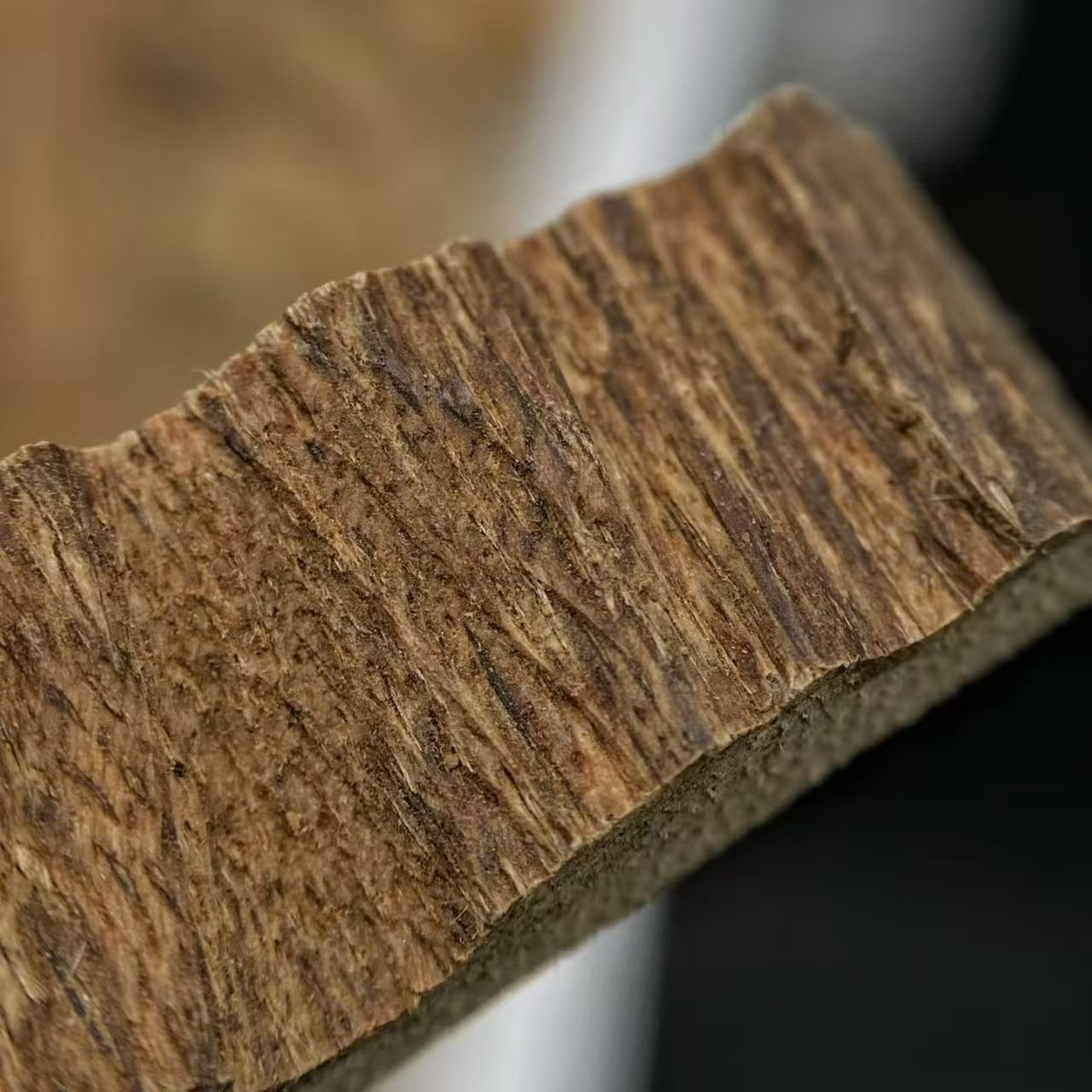
We are Jiangmen Nangjiaxiang Agarwood Development Co., Ltd., and we supply natural agarwood chips to importers, wholesalers, distributors, incense manufacturers, fragrance companies and agarwood brands. As an oud chips manufacturer working directly from plantation and factory, our raw material comes from more than 1,000 mu of standardized agarwood plantation resources, and we operate our own processing factory, so cultivation, processing and finished-product supply sit within one operation rather than across a chain of traders.
Two chip formats cover most B2B requirements:
- Natural large agarwood chips — comparatively large, intact pieces with clearly visible natural wood grain and resinous streaks. Suited to incense and traditional fragrance use, further cutting or grinding, fragrance development, and presentation-grade repacking.
- Natural small agarwood chips — smaller, irregular pieces that retain the natural wood structure and resin-bearing grain. Easier to portion, blend, pack and process, which suits incense manufacturing, blending with other materials, and private-label repacking.
Our small-chip product page describes natural cultivation without chemical agents used to accelerate resin formation. Treat that as a product-page statement to verify for the particular lot, not as a third-party certification. Discuss current formats, processing, packaging and documentation against your purchasing brief. Browse the agarwood raw materials and chips range or read about our quality and supply approach.
On documentation: tell us the destination country, the product form and the intended use, and we will set out which documents can be provided for that shipment so you can check them against your broker's requirements before you commit. We will not claim a certification we do not hold, and we would rather you verify than assume.
Frequently Asked Questions
Is oud chips certification required to import agarwood?
Most destinations regulate Aquilaria and Gyrinops species under CITES Appendix II, which generally requires an export permit from the country of origin and, depending on the destination, an import permit. Many countries also require a phytosanitary certificate for wood products. Requirements vary by country and change, so confirm the current list with your customs broker before the shipment is booked.
Does a CITES permit guarantee the wood is legal?
It evidences that the exporting authority authorised that quantity of that species to leave for that importer. It does not independently verify the origin claim behind the permit, and it does not cover any quantity beyond what it states. Match it to the invoice, check the validity window, and confirm the permit holder is the entity invoicing you.
What does an ISO 9001 certificate tell me about an oud chips manufacturer?
That the organisation's management system was audited against the edition named on the certificate within a stated scope. It is evidence of documented process, not evidence of product quality on your order. Verify the certificate number with the issuing body and confirm the scope covers the production site.
How do I check a certificate is genuine?
Use the issuing body's public register, not a link the supplier sends you. Certification bodies publish certificate numbers and scopes; CITES authorities publish permit verification routes. A supplier who cannot name the issuing body has not given you a verifiable document.
Can a supplier send certificates before I place an order?
Sample-level documents and system certificates, usually yes. Shipment-specific documents such as CITES permits and phytosanitary certificates are issued per consignment, so they cannot exist before an order. Ask for the format, the issuing authority and a recent example with commercial data redacted.
What is the difference between a phytosanitary certificate and a CITES permit?
They come from different authorities and answer different questions. A phytosanitary certificate addresses plant health and pest risk; a CITES permit addresses whether trade in a regulated species is authorised. A shipment can need both, and one does not substitute for the other.
Do I need a laboratory test report for every oud chips order?
Not necessarily every order, but you need a defined testing frequency written into the agreement, and you need the report to identify the lot and the method. For moisture-sensitive processes, testing on arrival is usually more useful than a supplier's report from an earlier lot.
Who is responsible for import documentation, the buyer or the manufacturer?
It depends on the Incoterm and on the destination's rules. As a rule, the exporter arranges export-side documents and the importer is responsible for import permits and clearance. Write the split into the purchase order rather than assuming it, and confirm it with your broker.
What should I do if the documents arrive after the goods?
Treat it as a contract failure, not an inconvenience. Late documents can trigger storage charges, inspection holds and, in some jurisdictions, penalties. Make document delivery a condition of shipment release, and keep the evidence in a dated file.
How long should a manufacturer retain samples and records?
Long enough to cover your claim window and your customer's expectations. Twelve months from shipment is a common commercial baseline; longer may be needed for retail or brand customers with their own traceability obligations. Put the period in the purchase order.
Conclusion
Certification in the oud chips trade is a set of narrow, separate documents, and the buyer who understands what each one proves is the buyer who does not get surprised at the border or at the claim. Ask any oud chips manufacturer for the document, the issuing body, the lot and the validity date. Verify each one independently. Then close the four gaps no certificate covers — grade, consistency, usable yield and remedy — with a written specification, an approved sample and a contract that says what happens when the goods are wrong.
If you are building a document pack for an upcoming order, send us the destination country, product form and intended use through our contact page, and we will tell you which documents we can provide for that shipment so you can check them against your broker's requirements before you commit.


