

An oud chips manufacturer lead time is never one number. It is the sum of four separate clocks — raw material allocation, processing and drying, export documents, and freight booking — and usually only one of them appears on the quotation. Buyers who plan a launch date against that single figure discover the gap in the week the container was supposed to sail.
This guide breaks the schedule into its parts, gives you a planning table to complete with every shortlisted supplier, and shows the delivery clause that keeps a retail or production date realistic.
Why an Oud Chips Lead Time Is Never One Number
Agarwood is not a catalogue item pulled from a shelf. Even a manufacturer holding standing stock is allocating a specific lot of resin-bearing wood, and that lot has to be cut to your size, dried to your moisture basis, graded to your definition, packed, documented and booked. Each of those steps has its own clock, and they run in sequence rather than in parallel.
Clock 1: Raw material allocation
Before anything is cut, the factory has to commit a lot to your order. That commitment depends on grade, form and volume: large, visually intact pieces are a smaller share of any harvest than small chips or fragments, so a specification calling for large pieces narrows the pool of lots that can fill it. Ask which lot is being reserved and whether it is already graded, because "we have material" and "we have your material" are different answers.
Clock 2: Processing and drying
Cutting, cleaning, screening and drying all sit here. Drying is the step buyers underestimate, because agarwood is bought on weight and shipped on weight, and a lot that leaves the factory too wet loses mass — and gains mould risk — in the container. A manufacturer that controls drying to a stated basis needs time to do it; one that quotes an impossibly short processing window is usually skipping the step rather than saving you days.
Clock 3: Export documents
Agarwood-producing species of Aquilaria and Gyrinops are listed on CITES Appendix II, so a shipment normally travels with a permit that must match the goods, the quantity and the destination. Permit processing is handled by authorities, not by the factory floor, and it is the clock a supplier controls least. Any lead time that does not mention documentation is incomplete.
Clock 4: Packing, booking and transit
Packing specification, carton count, palletisation, booking space and inland haulage all consume calendar days after the goods are ready. This is the clock that varies most by destination and season, and the one most often quoted as a vague "shipping time".
| Clock | What it covers | What to request in writing | Where it usually slips |
|---|---|---|---|
| Raw material | Lot reservation and grading to your definition | Lot reference, grade definition, quantity reserved | Grade renegotiated after the sample is approved |
| Processing | Cutting, cleaning, screening, drying | Cut size, screen fraction, moisture basis and target | Drying extended by weather or by a wet lot |
| Documents | CITES permit, phytosanitary, commercial documents | Which documents, issued by which authority, in whose name | Permit quantity or description not matching the invoice |
| Packing and freight | Packing spec, cartons, booking, transit | Pack specification, carton count, Incoterm, port pair | Space unavailable in peak weeks; packing changed late |
How to Read an Oud Chips Manufacturer Lead Time on a Quotation
Most quotations give one phrase — "25–35 days" — with no start date and no scope. Convert it into something you can manage by asking six questions before you compare suppliers.
- Does the clock start at deposit, at order confirmation, or at sample approval? These can be weeks apart, and the difference decides whether the date is real.
- Is documentation inside or outside the quoted window? If it is outside, ask for the document timeline separately.
- Is the quantity in the quote the quantity the permit will cover? A permit issued for a different tonnage, form or destination is a delay, not a formality.
- What is the drying basis? A moisture figure without a method and a basis is not a specification, and it is the most common source of weight disputes on arrival.
- Which production slot is being reserved? Ask whether your order is scheduled against a confirmed slot or is "in the plan".
- What happens if the date is missed? A lead time with no consequence attached is a forecast, not a commitment.
If you are still deciding how much to commit on a first order, the analysis in oud chips manufacturer MOQ explains why the minimum is driven by lot size, cleaning batches and per-shipment documents rather than by sales pressure.
Build the Schedule Backwards From Your Launch Date
Start at the date the goods must be sellable or feed your production line, then subtract transit, then documentation, then processing, then allocation. Working backwards exposes the real decision point: the date you must approve the sample.
| Step (worked example — replace with written figures) | Planning assumption | What it tells you |
|---|---|---|
| Retail or production start | Day 0 | Fixed by your business, not by the supplier |
| Inland delivery and customs clearance | 5–10 days | Varies by port and by document accuracy |
| Ocean transit | Quoted per port pair | Ask for the sailing schedule, not an average |
| Documentation | Quoted separately | Runs partly before and partly after production |
| Processing and drying | Quoted per lot | Depends on cut size, quantity and starting moisture |
| Sample approval | Your own review time | The date you actually control |
Two rules make the table useful. First, put an owner against every row, because a schedule with no owner is a wish. Second, keep one week of buffer at the document step rather than at the end — buffer at the end gets consumed silently, while buffer at the document step forces an early conversation about a permit that is running late.
Documents That Gate the Shipment
Document problems are the most expensive kind of delay, because the goods exist and cannot move. Three checks prevent most of them.
Permit description versus invoice description
The species, form and quantity on the CITES permit must agree with the commercial invoice and the packing list. A permit describing "chips" against an invoice describing "powder" is a mismatch, and mismatches are resolved at the border, on your time. The document families behind a "certified" supplier are separated in oud chips manufacturer certifications.
Classification consistency
Classification follows the form and treatment of the material, and it has to be consistent with the permit description. The field-by-field check is set out in oud chips HS code and import documents.
Destination requirements
Import requirements differ by market, and some destinations ask for additional plant-health documentation. Confirm the destination's requirements with your own broker before production starts, not after the goods are packed.
The CITES species checklist at checklist.cites.org is the reference to use when you need to confirm the listing status of the species named in a quotation.
Peak Season, Holidays and Calendar Risk
Lead times are quoted as if the calendar were flat. It is not. Three recurring windows compress capacity across the whole chain:
- Pre-Ramadan and pre-Eid demand. Gulf and Southeast Asian buyers concentrate orders ahead of these periods, which tightens both factory slots and container space at the same time.
- Chinese New Year. Factory output falls for a period before and after the holiday, and the weeks immediately before the break are the worst time to start a lot that needs drying and documentation.
- Monsoon and humid shipping windows. High-humidity transit raises the risk of mould and weight change on a lot that was dried to a tight basis, which is why packing specification matters as much as lead time.
None of these are reasons to accept a vague date. They are reasons to place a firm order earlier and to write the packing specification properly — the liner, seal, desiccant and carton decisions covered in oud chips packaging and storage.
Weight, Moisture and Container Reality
Agarwood is bought by weight and shipped by volume, so the schedule and the cost interact. A lot dried to a tighter moisture basis weighs less at the same resin content, and a packing specification that fills the container efficiently may need a different carton size than the one assumed at quotation.
Before you fix a shipment date, confirm three physical facts with the supplier: the packed weight per carton, the number of cartons per pallet or per cubic metre, and the moisture basis the weight refers to. If those three numbers are not in the quotation, the landed cost per usable kilogram is still unknown, and the date is being planned against a weight that may not exist on arrival.
Delivery Clause Checklist
Put these clauses into the purchase order rather than into an email thread. Each one converts a promise into something enforceable.
| Clause | What it should say |
|---|---|
| Clock start | The date from which the production lead time is counted, and what must be received by then (deposit, approved sample, artwork) |
| Production window | A start and end date for processing, with the lot reference and quantity stated |
| Document window | Which documents are supplied, by when, and who bears the cost of re-issue after an error |
| Shipment window | Earliest and latest shipment date, port pair and Incoterm |
| Delay remedy | What happens if a window is missed — notice period, revised date, and the remedy ladder |
| Inspection right | Pre-shipment inspection and the acceptance criteria it will be measured against |
The payment, inspection and remedy mechanics are covered in more depth in oud chips supplier contracts, and the on-site version of the same checks in oud chips manufacturer factory audit.
Common Mistakes Buyers Make With Lead Time
- Comparing a production lead time with a delivered lead time. One ends at the factory gate, the other at your warehouse; they are not alternatives.
- Approving a sample without linking it to a lot. If the approved sample is not tied to a lot reference, the production clock has no baseline and any later date discussion restarts from zero.
- Leaving documentation out of the schedule. It is the step with the least supplier control and the most border friction.
- Booking freight before the goods are documented. Space is lost, and the rescheduled sailing lands after your launch.
- Assuming a repeat order runs on the first order's timeline. Repeat reliability is a separate question, examined in oud chips manufacturer capacity.
- Adding buffer only at the end. End buffer is invisible until it is gone; step-level buffer creates early warnings.
How to Use NanjaOud Listings in a Lead-Time Brief
NanjaOud lists natural large agarwood chips and natural small agarwood chips. Use these listings to identify the form you want, then send a written request for the current lot, cut-size tolerance, packaging, destination and required documents. Ask for a dated production and dispatch schedule for your actual order. A product listing alone does not establish current inventory, capacity or a guaranteed lead time.
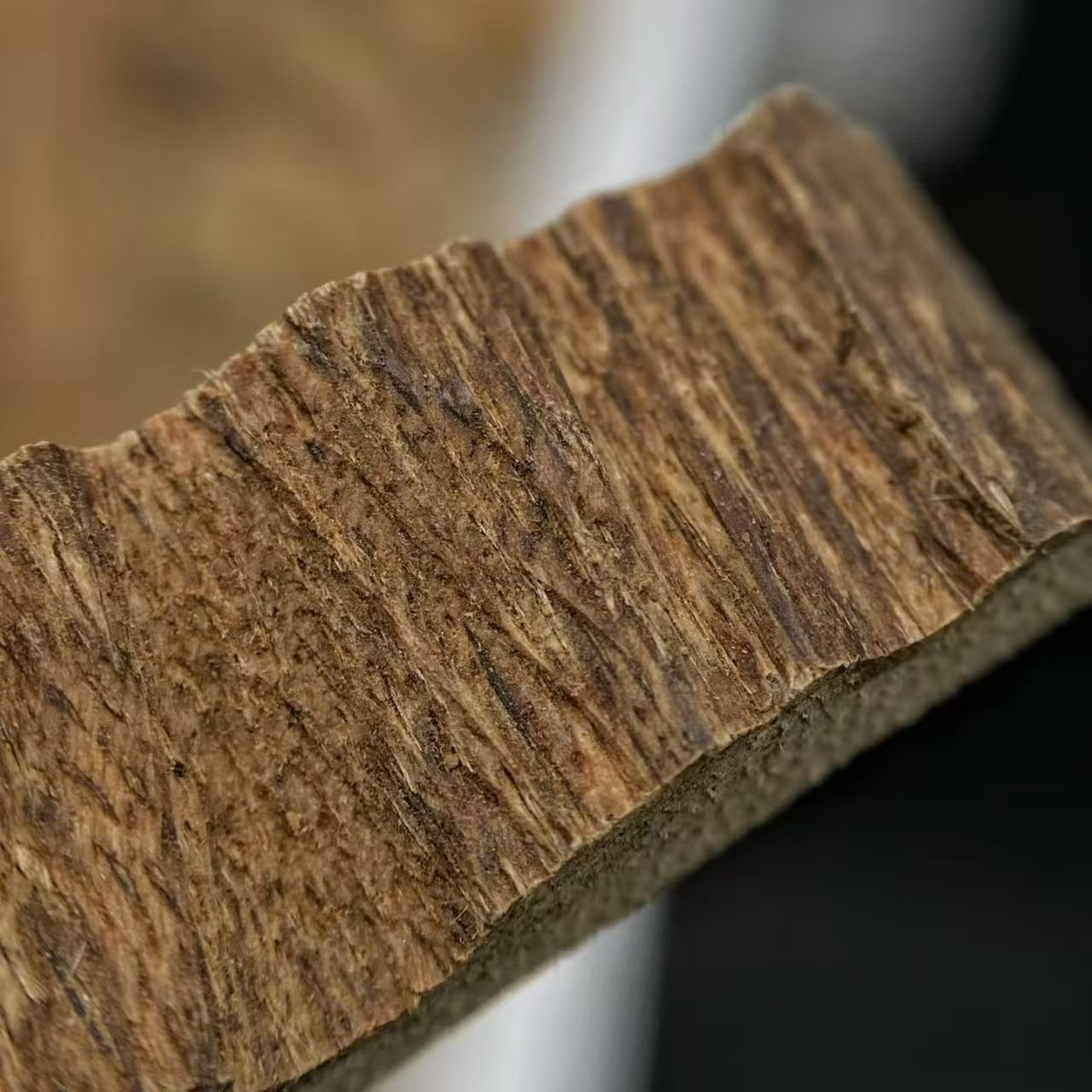
For smaller pieces, compare sample size distribution and handling against your intended process rather than assuming the two forms share a production schedule.
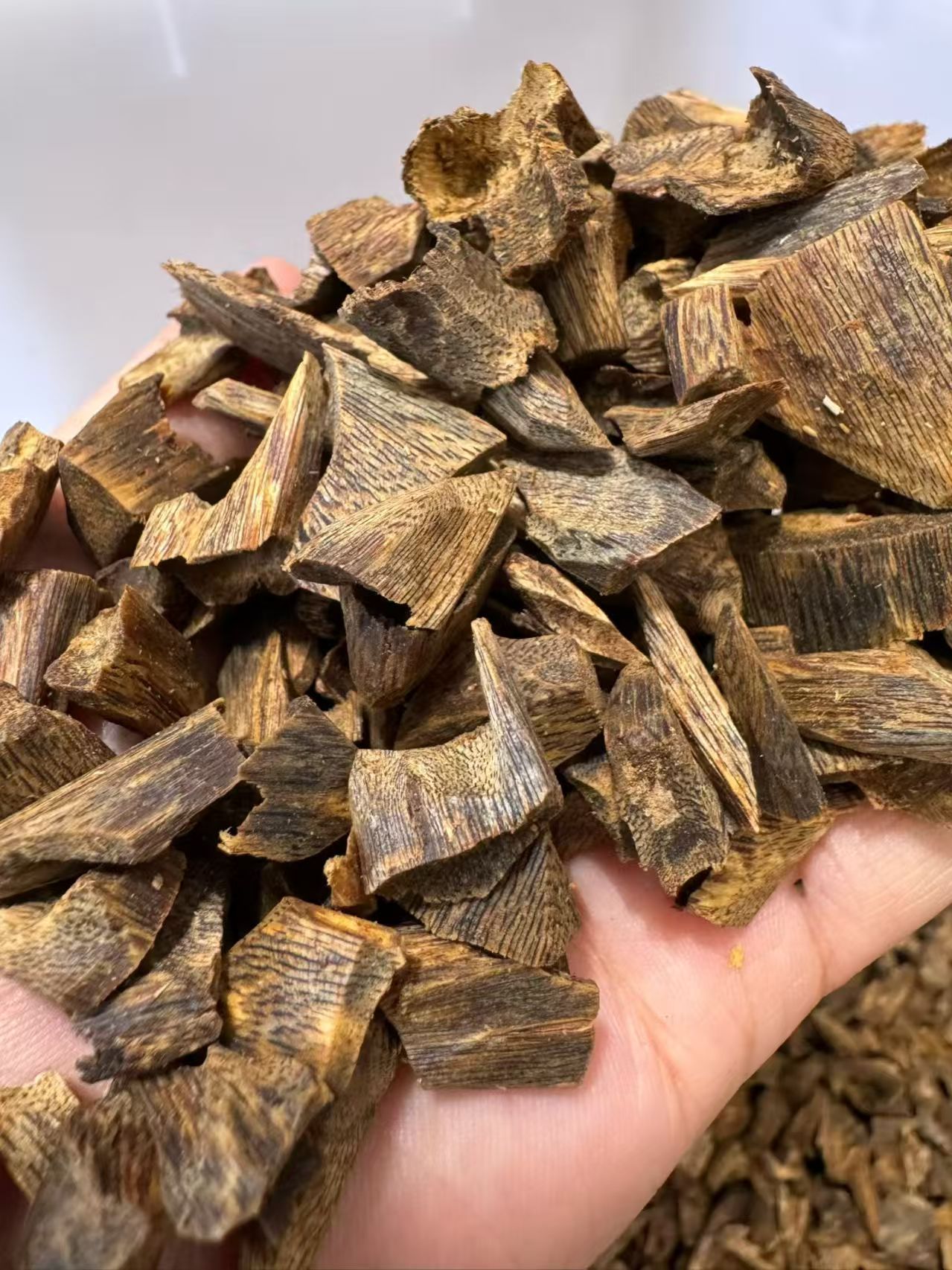
Confirm quality criteria, documents, packing, inspection milestones and shipment responsibility in the order record. Ask NanjaOud to confirm what it can provide for the particular lot and destination.
Frequently Asked Questions
What is a normal lead time for an oud chips manufacturer?
There is no industry-standard figure. A defensible quotation states the clock start, the production window, the document window and the shipment window separately, because the total depends on grade, quantity, cut size, drying basis and destination.
Does the lead time include CITES documents?
Only if the supplier says so explicitly. Permit processing is handled by authorities and should be quoted as its own window, with the issuing authority and the name on the permit confirmed in advance.
Why does a large-chip order take longer than small chips?
Large, visually intact pieces are a smaller share of a graded lot, so fewer lots can fill a given quantity. Allocation, not cutting speed, is usually the constraint.
Can I shorten the schedule by accepting a higher moisture content?
You can move the drying step, but you take on the risk: weight that changes in transit, mould exposure in humid conditions, and a claim conversation on arrival. Specify a moisture basis and a method instead of shortening the step.
Should I book freight before production finishes?
Book provisionally, and confirm once the documents are drafted and the packing count is final. Booking against an undocumented shipment is how space gets lost and dates get renegotiated.
How do I compare two suppliers quoting different lead times?
Normalise both to the same four clocks and the same Incoterm. A shorter production window with an unstated document timeline is not a faster supplier; it is an incomplete quotation.
What should the purchase order say about delays?
A notice period, a revised date mechanism, and a remedy ladder agreed in advance. Without a consequence, a lead time is a forecast.
Does a repeat order follow the same schedule?
Not automatically. Repeat orders depend on raw-material access and processing throughput at the time of the order, which is why capacity should be checked as its own question.
Conclusion
An oud chips manufacturer lead time becomes manageable the moment it is split into allocation, processing, documents and freight, each with a start date, an owner and a written window. Build the schedule backwards from your launch date, put the clauses in the purchase order, and keep the buffer at the document step where it can still change the outcome.
If you are planning a chip order, send your intended form, cut size, target quantity and destination through our contact page and we will confirm what the schedule looks like against the material you actually need. You can also review the full agarwood raw materials and chips range before you write the brief.


