
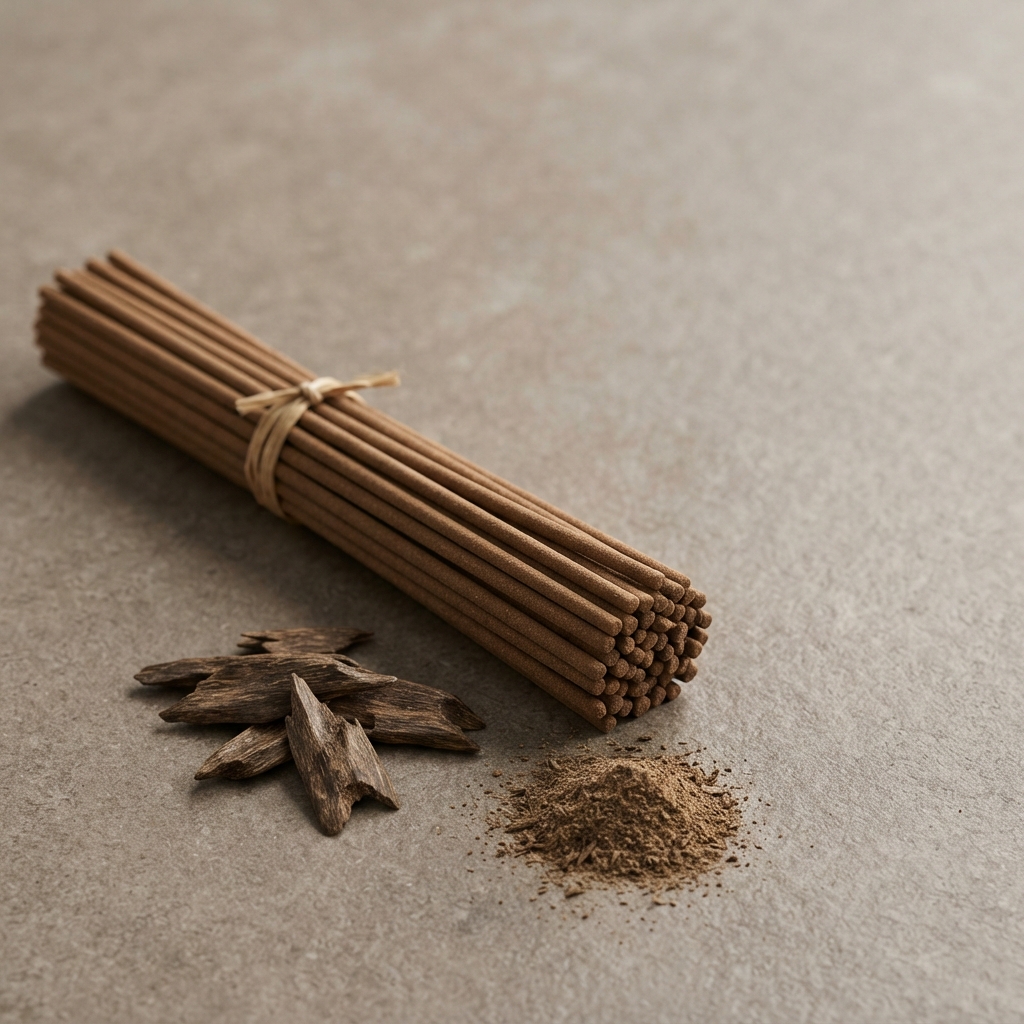
Choosing an agarwood incense sticks manufacturer for wholesale orders is a comparison problem before it is a price problem. Two suppliers can quote the same carton count and still be selling different products: different stick construction, different material disclosure, different packing protection and different documents. This guide sets out the comparison framework — what the stick must specify, how to test samples repeatably, which commercial terms to normalise, which compliance questions to ask, and a weighted checklist that turns several quotations into one defensible decision.
Why an Agarwood Incense Sticks Manufacturer Comparison Starts With the Specification
Most wholesale incense disputes are not arguments about quality. They are arguments about an undefined product. A buyer approves a sample that smells right, then receives a bulk lot with a different diameter, a different wrapper material, a different packing count or a different burn behaviour, and there is no written document that says which version was bought.
The fix is procedural rather than technical. Before you compare prices, force every agarwood incense sticks manufacturer on your shortlist onto the same specification sheet. A quotation that cannot fill in the fields below is not cheaper — it is simply unmeasured.
| Specification field | Why it changes the comparison | What to write in the RFQ |
|---|---|---|
| Stick construction | Cored and coreless sticks behave differently in burn, ash and breakage | State one construction; do not accept "either" as an answer |
| Length and diameter | Sets burn duration, carton count and retail format | Millimetres, with a stated tolerance |
| Material and blend disclosure | Decides what the claim on the pack can legally say | Named components, and which are agarwood-derived |
| Scent basis | Distinguishes agarwood material from added fragrance | Whether scent comes from the wood, an oil, or both |
| Stick weight | Drives cost per stick and burn expectation | Grams per stick, measured on a stated number of pieces |
| Burn time | The single most quoted and least defined figure | Minutes, with test conditions and sample size |
| Packing count | Changes unit price without changing the product | Sticks per bundle, bundles per box, boxes per carton |
| Batch identification | Makes a repeat order and a claim possible | Lot code on every carton and on the packing list |
Product Selection: What the Stick Itself Has to Decide
Agarwood Incense Sticks Are Not Ordinary Incense Sticks
Mass-market incense is usually built around a combustible base with fragrance added. An agarwood stick is bought for the agarwood material in it, so the purchasing questions shift: which part of the wood, in what form, at what share of the blend, and how is the scent carried. A supplier who cannot separate "agarwood" from "agarwood-scented" in writing is telling you something about the documentation you will receive later. Buyers comparing material forms in depth can work through the differences between agarwood chips, granules and powder, because the form chosen upstream sets what a stick can contain.
Cored Versus Coreless Construction
A cored stick is wound or pressed around a thin bamboo or wooden core; a coreless stick is extruded or rolled from the blend alone. Cored sticks tend to hold a straighter line and resist snapping in transit, and the core leaves a rigid remnant in the ash. Coreless sticks give a cleaner burn-down and a finer ash, but they are more sensitive to moisture and to packing pressure. Neither is better in the abstract — the cored vs coreless incense sticks decision belongs to the market you sell into and the retail format you pack. The construction trade-offs, including how each behaves in a drop test, are set out in the cored versus coreless construction guide.
Dimensions, Material and Scent by Use Case
Length and diameter should be chosen from the use case, not from the catalogue. A short, slim stick suits a sampler or a gift set; a longer, heavier stick suits a burn that has to fill a room for an extended period. Scent intensity is a function of material share and stick mass together, so a supplier who increases length without increasing mass is selling a slower burn, not a stronger one. Ask for the intended application in writing — meditation, tea room, retail gifting, hospitality — and check that the specification you approve is the one that application needs.
Supply Models: Factory, Trader and Custom Manufacturer
Before comparing prices, establish which model you are buying. A factory that processes its own material controls grade and timing; a trader buys finished goods and can move faster on small quantities but rarely controls the blend; a custom incense sticks manufacturer builds to a written brief and needs a longer lead time in exchange for a repeatable product. Buyers sourcing an incense sticks manufacturer in China should expect to see the legal entity, the production site and the permit holder as three separate facts that may or may not be the same company. For oud incense sticks wholesale programmes where the wood itself is the selling point, ask directly whether the supplier grows, processes or simply resells the material.
Quality and Sample Evaluation
Verify the Material and Formula Disclosure
Request a written component list for the exact SKU, not for the factory's range. It should name the agarwood form used, any binder, any combustible base and any added fragrance, and it should state whether the scent is wood-derived or added. If a supplier will not disclose components, ask what they will put in writing for your importer or your labelling review — an answer of "natural" is a marketing word, not a disclosure. Where a claim such as natural or additive-free will appear on the pack, test it against the disclosure before artwork is printed; the private-label claim audit shows how label wording and ingredient declarations are matched.
Inspect Appearance, Straightness and Packing
Lay the sample out on a plain surface and check four things: colour consistency across the bundle, straightness along the stick, surface finish (no cracking, no loose powder, no visible core exposure on a coreless stick) and the neatness of the bundle wrap. Then inspect the packing itself. A perfect stick in a soft box arrives as a broken stick. Record the carton grade, the inner protection, the bundle tie and whether the box is printed or plain.
Test Burn Time, Smoke, Scent and Ash
Burn testing only produces evidence if the conditions are fixed. Use the same room, the same holder, the same distance from the observer and the same number of sticks per test, and record everything on a sheet that both parties sign. Log ignition time, burn duration, visible smoke density, scent development from first minute to last third, and the character of the ash — whether it holds shape or falls, and whether the remnant is rigid. A single stick proves nothing; three to five per sample is the minimum for a figure you can quote back to a supplier.

A Repeatable Sample Comparison Method
Code every sample with a neutral identifier before anyone on your team sees the supplier name, so the evaluation is blind. Score each coded sample on the same five criteria — appearance, straightness, burn duration, smoke and scent — and keep the raw observations rather than only the score. Then run the test a second time, at least a week later, with the samples re-sealed in between. A sample that changes on the second test is telling you about moisture and packing, which is exactly the failure mode that shows up in a container.
Confirm the Sample Matches the Bulk Order
An approved sample is only useful if the purchase order ties the bulk lot to it. Write the sample reference, the approval date, the measurements taken and the burn result into the order, and require the pre-shipment check to be run against that same sheet. The wholesale specification guide covers the clause structure; the practical point is that a sample with no recorded measurements cannot be used to reject a shipment.
Wholesale and Commercial Terms
MOQ and What a Sample Request Should State
Minimum order quantities are set per SKU and per packing format, and they move with stick size, print setup and material grade — so an MOQ quoted for one stick tells you nothing about another. A sample request should state the intended order volume, the target market, the stick type and size, the packing format and the acceptance criteria you will test against. Suppliers quote more accurately when the brief is specific, and a vague brief produces a sample that cannot be compared to anything.
Compare Unit Price, Packing and Freight Together
Convert every offer to a landed cost per stick before you rank anything. That means adding the packing cost, the carton configuration, the freight and the documentation to the unit price, then dividing by the number of saleable sticks after expected breakage. In agarwood incense wholesale, a cheaper stick in a heavier carton can land more expensive than a dearer one packed efficiently. The quotation comparison walkthrough breaks the number into its parts.
Packaging Customisation, OEM and Private Label: What to Verify
Private label is a document exercise as much as a production one. Verify who approves artwork, who owns the printing plates or dies, what the print proof process is, and what happens to stock if artwork changes after production starts. An OEM incense sticks supplier that produces the stick itself and one that buys finished sticks and prints boxes are different businesses with different lead times and different quality control. A private label incense sticks programme also needs an approved sample that the bulk lot is measured against, which is the sequence described in the private-label OEM guide.
Delivery, Protective Packing and Batch Records
Ask for the packing specification in writing: inner liner, bundle tie, desiccant where used, carton grade and unit weight. Then ask for the batch record that travels with the lot — material reference, production date, packing date and lot code. Without a lot code, a repeat order is a new product, and a claim has no reference point.
Breakage, Quality Drift and Non-Conforming Goods: The Claims Route
Agree the claims route before the first shipment, not after the first problem. It should define the inspection window after arrival, the defect classes (broken sticks, diameter out of tolerance, weight shortfall, scent deviation, packing failure), the evidence required (photographs, counts, retained samples, lot code), and the remedy ladder — replacement, credit, or price adjustment. A supplier who will not name a remedy in advance is unlikely to offer one later.
International Sourcing and Compliance
Market Requirements for Materials, Burn Products, Labels and Packaging
Requirements are set market by market, and no single certificate covers every destination. In the European Union, incense sold to consumers falls within the scope of the General Product Safety Regulation (EU) 2023/988, which places obligations on economic operators along the supply chain; the regulation text is published on EUR-Lex. Label language, importer identification and packaging obligations differ between jurisdictions, so confirm the destination rules with your own compliance adviser rather than accepting a supplier's summary. Where the product will be burned indoors, buyers should also be able to explain ventilation and use instructions honestly — the US EPA notes that burning incense indoors is a source of indoor particulate matter and recommends adequate ventilation.
Documents to Request: Composition, Safety and Test Reports
Build a document pack per SKU: component disclosure, material safety data where the supplier holds one, any heavy-metal or burn-emission test reports with the laboratory and sample identified, and the packing specification. Read each report for the sample it describes — a test on a different stick is not evidence about yours. If a report cannot be tied to a lot or a sample reference, treat it as background information rather than proof.
CITES and Regulated Agarwood Species
Identify the species and material in the proposed sticks, then check the current CITES listing, annotations and export and import requirements with the competent authorities and your customs broker. Ask the supplier which documents can be linked to the offered lot and confirm that their description matches the invoice and packing list. Requirements for finished products can depend on material and route, so a general certificate claim cannot replace an order-specific check.
Multi-Supplier Comparison: The Wholesale Agarwood Incense Supplier Comparison Checklist
Score every candidate on the same ten dimensions, using evidence rather than impressions. Weight the dimensions to your own business — a gift-set brand will weight packing and appearance heavily, while a distributor will weight lead time and claim handling — and keep the weighting fixed for the whole comparison so the ranking is not quietly adjusted to fit a preferred supplier.
| Dimension | What to ask | Evidence that counts |
|---|---|---|
| Raw material | Which agarwood form and species is in the stick? | Written component list tied to the SKU |
| Formula transparency | What carries the scent — wood, oil or added fragrance? | Disclosure you can put in front of a labelling reviewer |
| Product specification | Length, diameter, weight, construction, tolerance | Signed specification sheet, not a catalogue page |
| Burn performance | Duration, smoke, ash behaviour, test conditions | Test sheet with sample size and conditions |
| Sample stability | Does a re-tested sample still match after a week? | Two dated test rounds on sealed samples |
| MOQ | Minimum per SKU and per packing format | Written MOQ that survives a format change |
| Packaging | Carton grade, inner protection, print proof route | Packing specification and a physical sample carton |
| Quotation | Landed cost per saleable stick | Itemised quote including packing and freight |
| Lead time | Production, packing, documents, freight booking | Dated schedule with each stage named |
| After-sales | Inspection window, defect classes, remedy ladder | Claims clause in the order, not a verbal promise |
How to Weight and Score Without Fooling Yourself
Give each dimension a weight that sums to 100, score each supplier out of five, and multiply. Then look at the two or three dimensions where the scores are furthest apart and ask whether the gap is evidence or impression. A supplier who scores badly on formula transparency will usually score badly on claims handling too, because both depend on the same record-keeping habit. If two candidates finish within a few points of each other, the decision should turn on the sample you can re-test, not on the price difference.
Incense Stick References in the NanjaOud Range
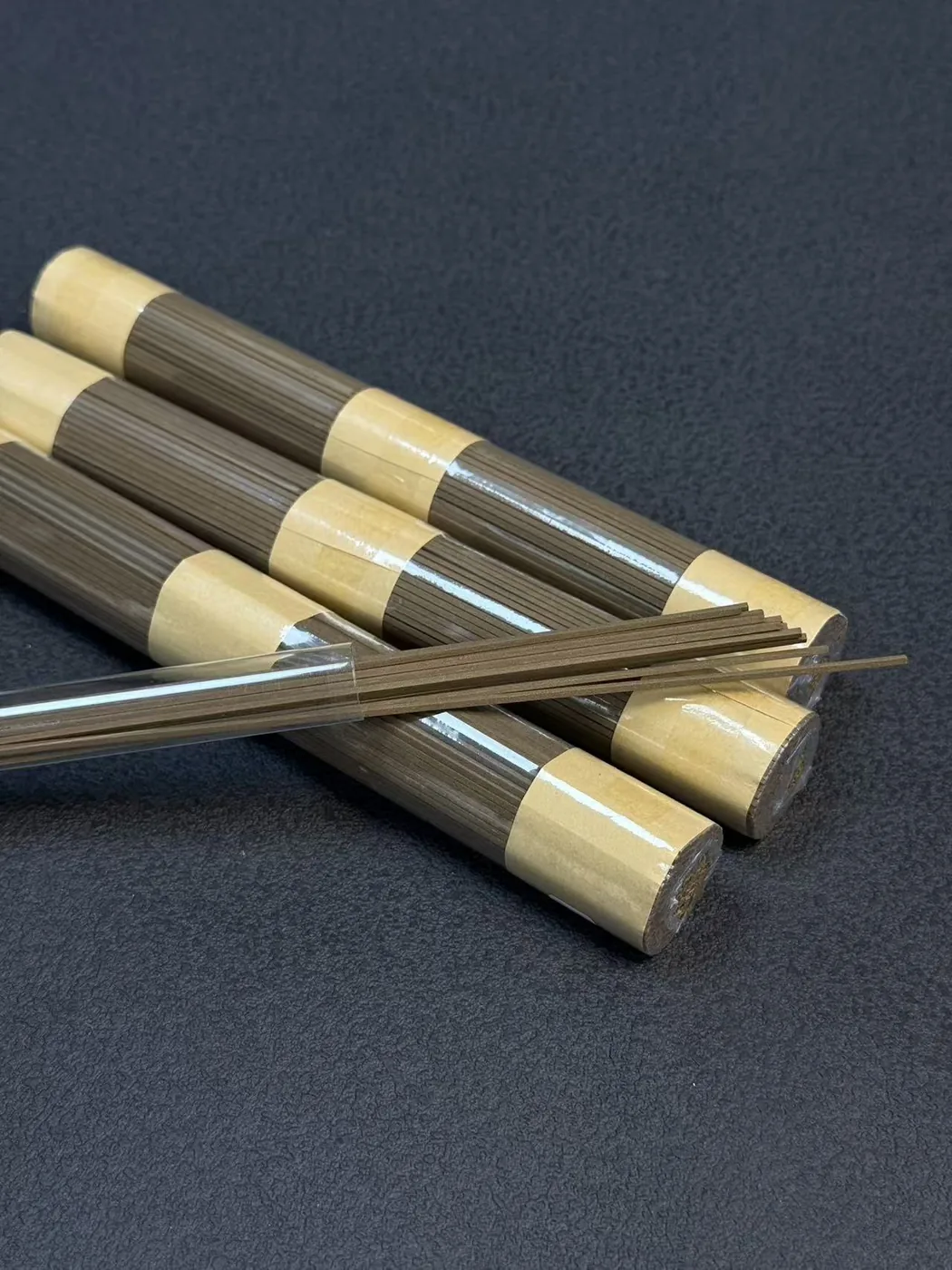
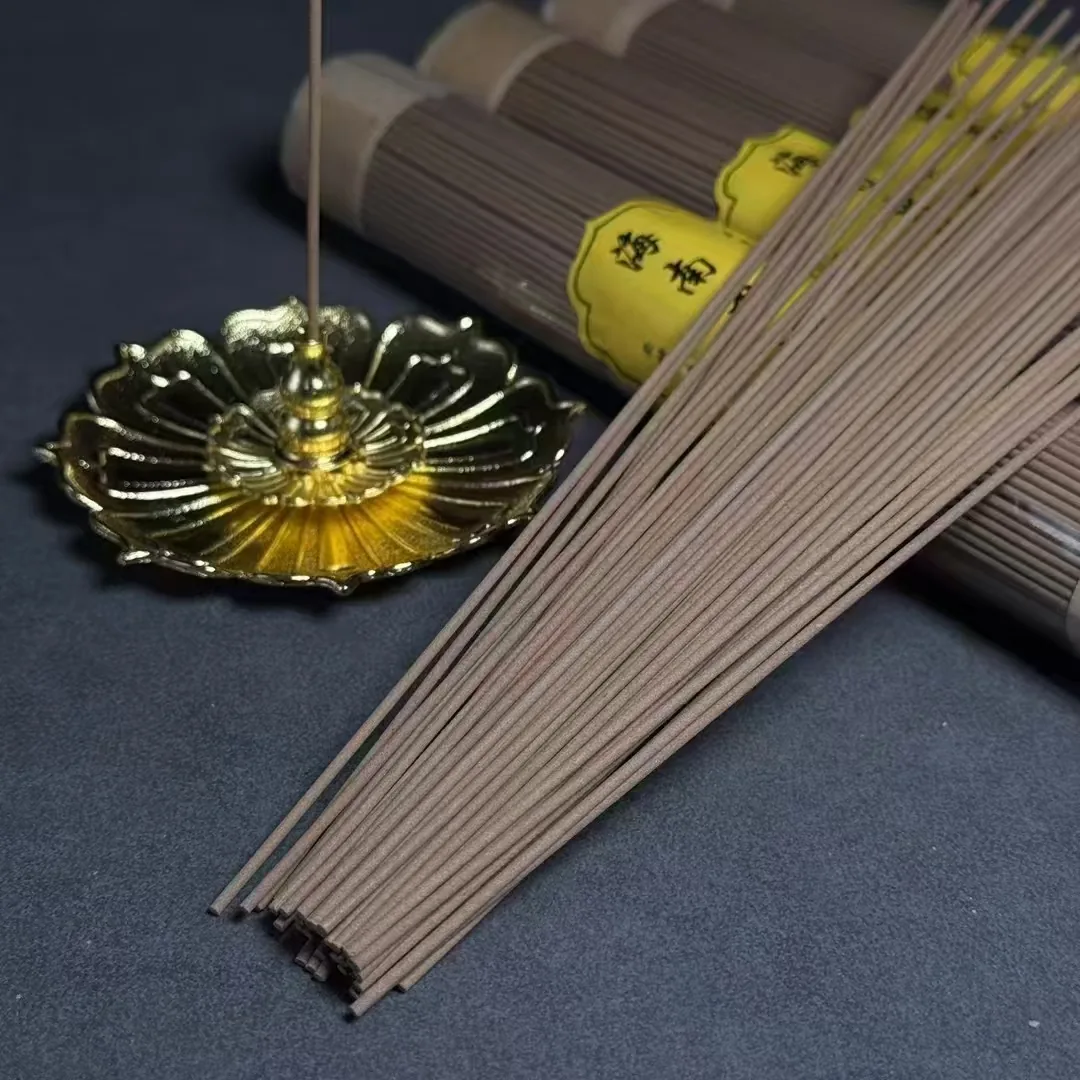
NanjaOud lists Hainan agarwood incense sticks and Kynam agarwood incense sticks. Use the listings to identify the product references you want to compare. Request the current SKU specification, composition statement, coded sample, dimensions, burn-test method, packing unit and destination-market documents for the actual order. A catalogue image does not establish these parameters or guarantee that a pictured batch is available.
Common Mistakes That Distort a Manufacturer Comparison
- Comparing a sample to a quotation. The sample was made under different conditions; only a lot-linked sample is evidence about a bulk order.
- Accepting "natural" as a specification. It is a claim, not a component list, and it needs a disclosure behind it.
- Ranking on unit price. Landed cost per saleable stick is the only figure that compares like with like.
- Skipping the second burn test. One test measures a stick; two tests a week apart measure the packing.
- Leaving the claims route to be agreed later. The remedy ladder is cheapest to negotiate before the deposit.
- Assuming one certificate covers every market. Destination requirements differ, and the permit description has to match the goods.
Frequently Asked Questions
How do I choose an agarwood incense sticks manufacturer for wholesale orders?
Fix a written specification first, then require every candidate to quote against it. Compare the offers on landed cost per saleable stick, on two rounds of burn testing, and on the documents that travel with the lot. The supplier that can answer all three consistently is the one to shortlist.
What is the difference between cored and coreless agarwood incense sticks?
A cored stick is built around a thin bamboo or wooden core, which improves straightness and resistance to snapping but leaves a rigid remnant. A coreless stick is formed from the blend alone, giving a cleaner burn-down and finer ash but more sensitivity to moisture and packing pressure.
What MOQ should I expect for private-label incense sticks?
MOQ is set per SKU and per packing format, and it moves with stick size, print setup and material grade. Ask for the minimum in writing for the exact format you want, and check whether it changes when the packing format changes.
How many sticks should I burn to test a sample properly?
Three to five sticks per sample, under identical conditions, is the practical minimum for a figure you can quote back to a supplier. Record ignition time, duration, smoke density, scent development and ash behaviour on a sheet both parties sign.
Do agarwood incense sticks need CITES documents?
Agarwood-producing species in Aquilaria and Gyrinops are listed in CITES Appendix II, so international trade in the material is regulated. Whether a specific finished stick shipment needs permits depends on the material and the destination; confirm with your customs broker and the relevant management authority.
How do I check that the bulk order matches the approved sample?
Write the sample reference, approval date, measurements and burn result into the purchase order, and require the pre-shipment check to be run against that same sheet. A sample with no recorded measurements cannot support a rejection.
What should a wholesale incense quotation include?
Unit price, packing cost, carton configuration, freight, documentation and lead time by stage. Convert the total to landed cost per saleable stick so that breakage and packing weight are reflected in the comparison.
Conclusion
An agarwood incense sticks manufacturer is best judged by what it is willing to put in writing: the specification, the disclosure, the burn result, the packing standard and the claims route. Build the comparison sheet once, score every candidate against it, and the decision stops depending on which sample smelled best in the room. Buyers who want to take the next step can send their intended order volume, target market, stick type and size, packing requirements and sample acceptance criteria through the contact page to discuss the listed agarwood incense formats.


