
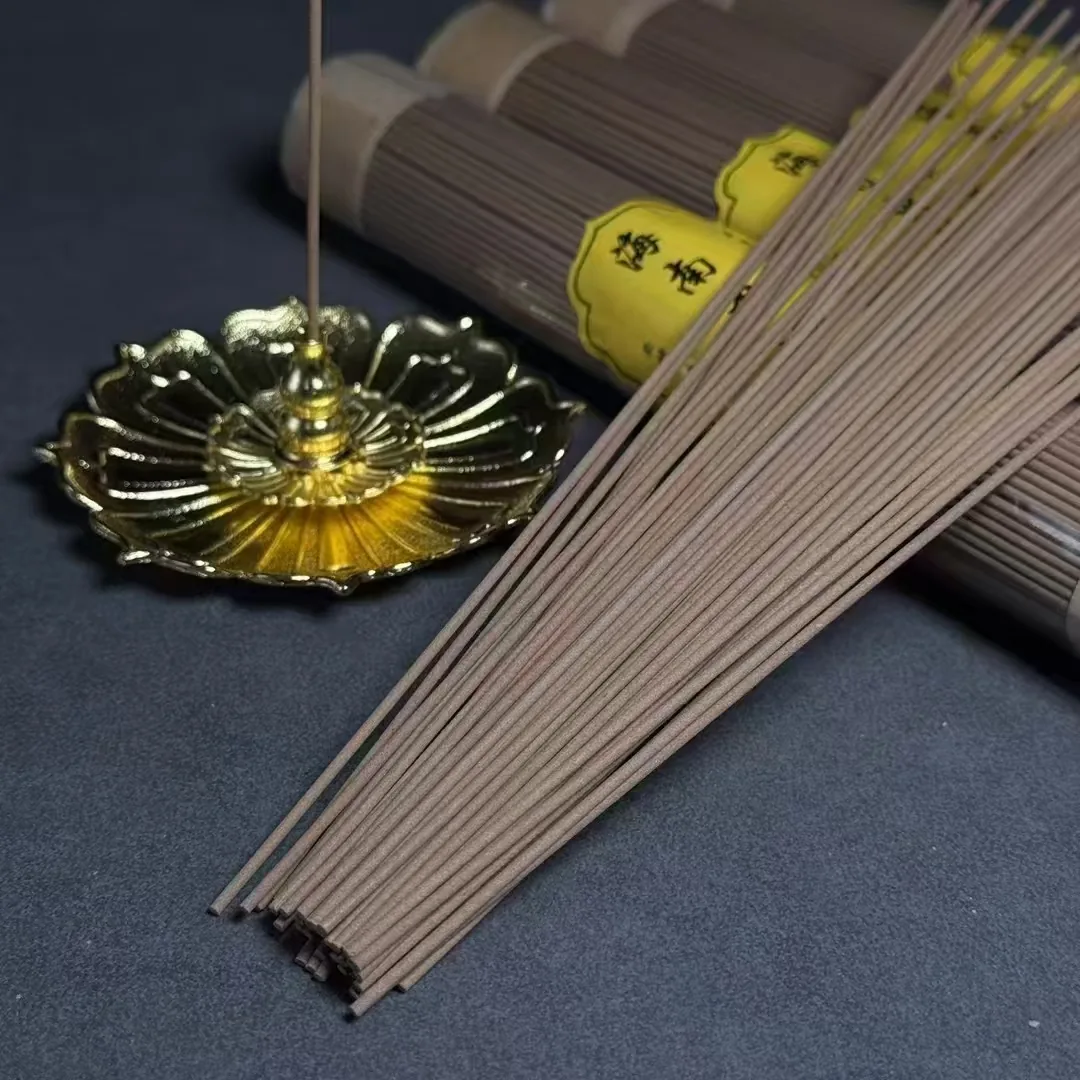
Short answer: a private label incense sticks project is a product specification with a brand attached, not a packaging order. Before you compare suppliers, write down what the stick is made of, how it is built, what it must do when burned, and who is responsible for each line on the label — then hold every quotation against that document.
This guide is written for brands, distributors and importers briefing an agarwood or oud incense program in Europe, North America, the Gulf or Asia. It covers the decisions that decide whether a container matches the sample: construction, sampling, commercial terms, documents and a supplier comparison checklist you can score. If you are weighing a custom incense sticks manufacturer against an OEM incense sticks supplier for the first time, the sequence below is the same.
Why private label incense sticks are a different buying project
Most incense on a wholesale price list is a bamboo or charcoal splint coated in a fragrance compound, where the aromatic load is a perfume oil. An agarwood stick is bought partly for the wood: resin-bearing heartwood of Aquilaria or Gyrinops species, ground and bound into a stick, sometimes with resins or oils added. At agarwood incense sticks wholesale, that difference is commercial. You are either paying for a named raw material whose species and share in the blend can be described, or you are paying for a scent name any factory can reproduce from a compound.
Two quotations for "agarwood incense sticks" can therefore differ by a factor of five and both be honest, which is why the cheapest quotation for bulk agarwood incense sticks is usually the one with the least defined product behind it. Decide first which product you are launching: a predominantly agarwood-powder stick, a blend where agarwood is one component, or an agarwood-scented stick with little wood content. Ask each supplier to place their offer in one of those three categories in writing. If you need a broader comparison of manufacturers rather than a private-label program, our guide to shortlisting an agarwood incense sticks manufacturer covers supplier qualification in more depth.
1. What a private label incense sticks brief must fix before design
Cored and coreless sticks behave differently on a shelf
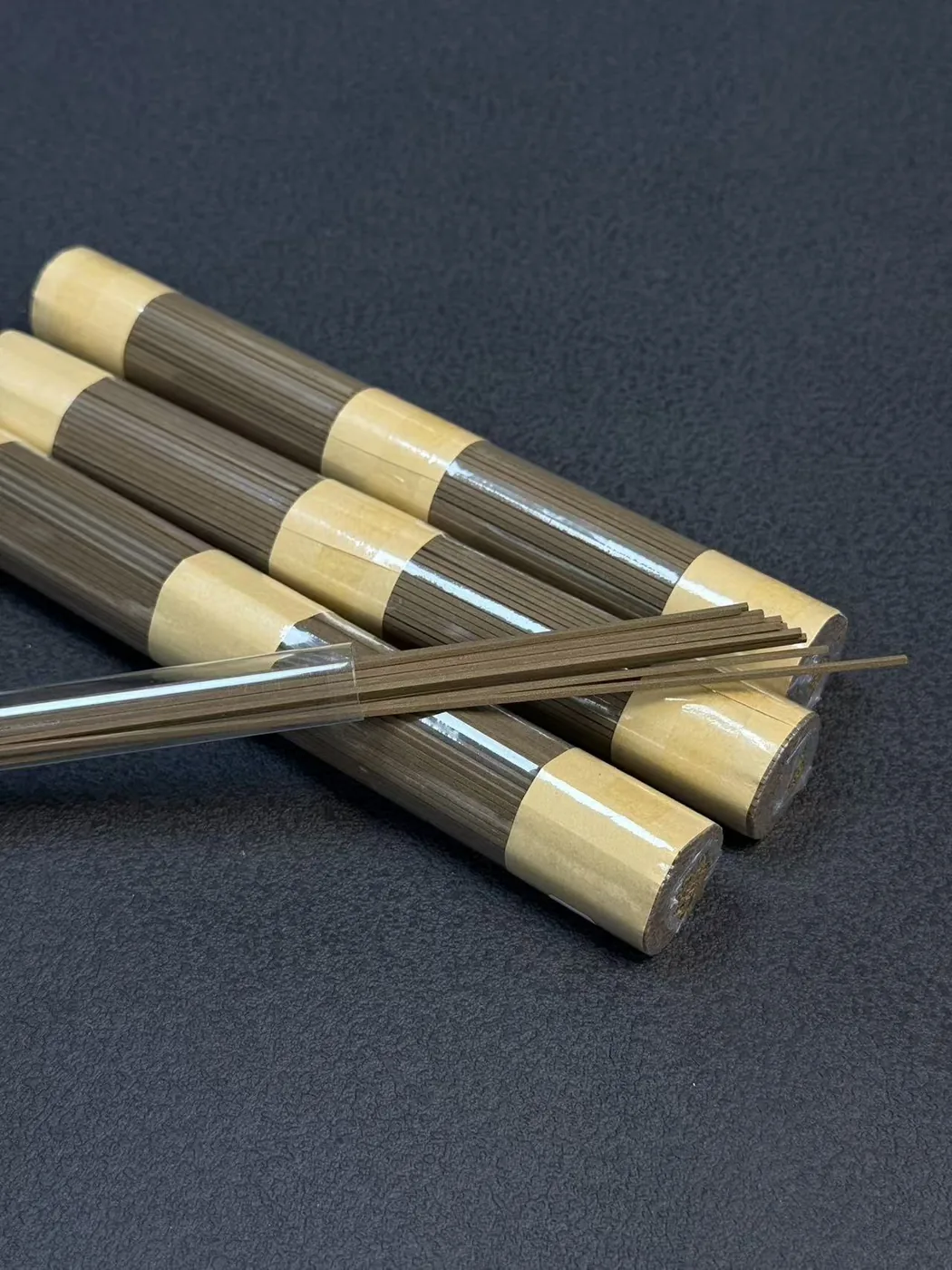
Construction is the specification most private-label buyers forget to write down, and it changes the aromatic share, smoke, breakage rate and packaging of every unit you sell.
| Decision point | Coreless (solid) stick | Bamboo-core stick |
|---|---|---|
| Construction | Aromatic paste extruded as a solid stick, no splint | Aromatic paste coated onto a thin bamboo splint |
| Aromatic share | The full cross-section carries the blend | Part of the cross-section is bamboo and adds little scent |
| Handling | More brittle before aging; needs firmer inner packing | Splint adds rigidity; typical failures are coating cracks and splinters |
| What to specify | Diameter, length, grams per stick, straightness, dryness at packing | Splint diameter, coating thickness, exposed splint length, adhesion |
| Typical channel fit | Premium gifting, meditation, boutique retail, tea and spa | Traditional and ritual markets, volume retail, long formats |
Neither construction is better in the abstract; a well-made cored stick beats a badly made coreless one. What matters is that construction is written into the specification and does not change between the approved sample and the bulk run. If you sell both, keep them as separate SKUs with separate approval samples, and refuse substitution when stock runs short.
Size, material and scent have to match the room and the price point
Burn time scales mainly with length, diameter and how densely the stick is packed, so a longer stick is not a better one — it is a different product with different packaging, freight weight and retail price. Decide the holder, the room size and the occasion first, then ask for sticks that fit. Treat any burn time printed on a supplier website as a claim to test, not as your purchase specification. Describe the scent in a written brief instead of adjectives such as "sweet" or "deep"; our scent profile brief for custom agarwood incense shows the format.
2. Qualifying samples and bulk consistency
The goal of sampling is not to decide whether a stick smells pleasant. It is to build evidence you can compare across suppliers and later hold one supplier to.
What a formula disclosure should cover
Ask for the wood species or trade name and the part used, the approximate agarwood share as a band rather than an exact recipe, the binder type, whether fragrance oils, resins or colorants are added, and the moisture level at packing. A supplier protecting a formula can still disclose categories and percentage bands. A refusal to describe anything at all is also information, and it belongs in your risk assessment rather than your marketing copy.
Appearance, count and packaging
Check straightness, surface cracks, diameter consistency along each stick, color variation between sticks, loose dust in the bag, actual bundle count against the stated count, seal quality and carton condition. Photograph the opened bundle as received; that image is your baseline when a bulk shipment arrives with more dust and more broken tips.
One repeatable burn record, used for every candidate
Take three to five sticks from different positions in the bundle, burn them in the same room away from drafts in the same holder, and record ignition time, whether the stick flames before settling, total burn time, smoke appearance, ash color and whether ash curls or falls, self-extinguishing events, and how the scent develops from first third to last. Code the samples, remove brand names, run all candidates on the same day and score each attribute with short notes. Our burn performance test sheet for incense samples gives you the record to send suppliers.
Tie the bulk order to the sample
Seal and sign an approval sample both sides keep, reference it on the purchase order, and require a pre-shipment sample drawn from finished bulk rather than from the sample room. Ask for photographs of the actual cartons before loading. That single step resolves most later arguments about "the sample was better".
3. Wholesale terms inside a private label incense sticks program
MOQ, samples and what to confirm before you brief
Send the format, first-order and estimated annual quantity, target market, intended use, packing direction and brand stage. Ask for the incense sticks MOQ per SKU rather than per order, because a supplier quoting one number for a mixed container is often quoting the smallest line they would prefer to run. Also ask what kind of sample you are receiving: production stock, a charged sample credited against the first order, or a made-to-specification trial. A trial stick tells you about capability; a stock stick tells you about consistency.
A usable brief sent to any agarwood incense sticks supplier should state:
- Product category, species or trade name, and intended agarwood share as a band
- Construction, length, diameter and approximate grams per stick
- Intended holder, room size and occasion, so burn behavior has a reference
- Pack count, primary packaging format and retail or bulk presentation
- Estimated first-order and annual quantity, destination market and target retail price
Convert every quotation to cost per sellable stick
Confirm the price basis — per stick, per bundle, per inner box or per carton — how many sticks each unit contains, whether packing and printing are included, the Incoterm, who books freight, currency, validity and payment terms. Then convert each offer to a landed cost per sellable stick, allowing for the breakage rate you measured in transit. Packing and freight lines usually reorder a shortlist built on unit price alone.
Custom packaging, OEM and white label: four things to verify
Ask who owns and approves the artwork, whether a dieline proof is signed before mass printing, what the minimum is per SKU rather than per order, who pays for plates or setup, and which label content is legally the buyer's responsibility in the destination market. Private label incense packaging is a project bolted to a product specification, and both need sign-off. White label incense sticks sit at the other end of the range: a ready product you brand with minimal change, which means less control over composition. ODM work goes further than either, because the supplier develops the stick to your brief, so the brief, the sample version and the approval record become the contract.
Delivery, protective packing and batch records
Incense is brittle and picks up moisture, so inner protection matters more than carton print. Specify the inner packing method, carton board grade, whether a moisture barrier is used, pallet pattern, lot or batch code on each carton, production date and loading photographs. Keep the lot code in your own records so a complaint six months later traces to a production window instead of a vague shipment.
Write the claims route before you need it
Agree the notice window after arrival, the evidence pack you will send (photographs of the sealed carton, the opened bundle, broken-stick counts, a burn comparison against the retained sample), the defect classes and the remedy ladder: replacement, credit, price adjustment on the next order, or return. Decide in advance who pays return freight on a rejected lot.
4. Documents and compliance for import
Requirements are not uniform across markets
No single certificate makes incense sellable everywhere, and a supplier who says otherwise is simplifying a question that belongs to your importer of record. Labeling language, importer identity, warnings, age or use instructions and packaging duties are set per market. In the European Union, for example, the General Product Safety Regulation (EU) 2023/988 has applied since 13 December 2024 and places traceability and labeling duties on manufacturers and importers, including an EU-based responsible person for many products. Confirm label content for your market before artwork is approved, not after the cartons are printed.
Ingredient and test documents to request
Ask for a full component declaration, a safety data sheet where the product or its fragrance components require one, an allergen statement for the fragrance portion, and any test reports with the laboratory name, method, sample reference and date visible. A report without a method and a batch reference proves very little. Where a supplier claims laboratory verification, ask which batch the document refers to.
CITES: the question that stops shipments
Commercial agarwood comes mainly from Aquilaria and Gyrinops species, and both genera are listed in CITES Appendix II. The FAO's review of CITES and sustainable forest management notes that agarwood and its products, including perfume and incense, fall under that listing, and CITES itself documents the Appendix II status of agarwood-producing species. International trade therefore generally requires export documentation from the country of origin plus whatever the importing country requires. Whether a specific finished incense shipment needs permits depends on the species, the form of the material and the destination, so ask the supplier to name the species and provide permit copies that match the shipment, then confirm the position with your customs broker. For the document flow around a wood shipment, see our import document checklist; the structure transfers to sticks even though the classification differs.
Burning incense also produces particulate matter, and published indoor-air studies recommend ventilating a room during and after use. Treat that as a use instruction and a label consideration, not as a basis for health claims in either direction.
5. Comparing private label incense sticks suppliers on one page
Score each candidate from one to five on every row and keep the evidence column filled. A supplier who scores well on price but leaves the evidence column empty is one you cannot audit later.
| Wholesale Agarwood Incense Supplier Comparison Checklist | What to score | Evidence to request |
|---|---|---|
| Material | Species or trade name, part used, plantation or wild origin stated | Written material declaration on the quotation |
| Formula transparency | Agarwood share as a band; binder, oils, colorants disclosed | Component list, allergen statement |
| Product specification | Coreless or cored, length, diameter, grams per stick, pack count | Specification sheet with tolerances |
| Burn performance | Burn time, smoke level, ash behavior, self-extinguishing rate | Your test sheet completed on their sample |
| Sample stability | Two samples ordered weeks apart behave the same | Two coded samples, retained approval sample |
| MOQ | MOQ per SKU, mixed-container rules, reorder minimum | Written MOQ table, not a verbal range |
| Packaging | Inner protection, carton grade, dieline and proof readiness | Packing specification, printable dieline |
| Quotation | Price basis, Incoterm, packing and freight included or not | Itemized quotation with validity |
| Lead time | Sample, production, print and documentation windows | Written schedule on the order confirmation |
| After-sales | Notice window, defect classes, remedy ladder, named contact | Claims clause in the contract |
Agarwood incense supply at NanjaOud
NanjaOud, operated by Jiangmen Nangjiaxiang Agarwood Development Co., Ltd. in Jiangmen, Guangdong, supplies agarwood incense for wholesale and private-label programs. The company states more than ten years of agarwood cultivation experience and a managed plantation base, with in-house processing and no chemical agents used to induce resin formation. Its current stick listings include Hainan agarwood incense sticks and Kynam agarwood incense sticks, both described as a slim coreless format in compact bundles, presented for traditional incense use, meditation, tea rooms, home fragrance, gifting and boutique retail, with private-label and ODM cooperation supported. The agarwood incense range lists the current formats.
The site is deliberately specific about what it does not publish: dimensions, burn times, smoke levels, recipe ratios, MOQ, lead time and freight terms are confirmed per project against an approved sample and quotation. Its quality and supply page states that grade labels A, B and C are internal supplier references rather than a universal standard, and that the framework does not imply a certified quality system or laboratory testing of every batch. Buyers should read that as a scope statement, not a gap to be filled by assumption — ask for the documents your market requires. The OEM and private label page sets out the confirmation points used from brief to shipment.
Conclusion
Choosing a manufacturer for wholesale incense under your own brand comes down to five decisions you can document: the material category, the construction and dimensions, an approved sample tied to the order, a landed cost per sellable stick, and a claims route agreed before the container ships. Buyers who settle those five argue less after arrival, because the evidence already exists. If you are preparing a first or repeat program, send your estimated quantity, target market, stick type and dimensions, packing direction and sample standard to our contact page and ask which current formats can be confirmed for your project.
Frequently asked questions
What does private label mean for incense sticks?
The stick is produced to an agreed specification and sold under your brand, with your artwork, packaging and label content. You approve the product sample and the packaging proof; the supplier produces to both. It is not the same as buying stock and applying a sticker, because the specification, not the label, is what makes the batch repeatable.
What is the difference between OEM, ODM and white label?
OEM usually means the supplier manufactures to your specification and design. ODM means the supplier develops the product to your brief, often from an existing platform. White label generally means a ready product you brand with minimal change. The three carry different sample, tooling and minimum-order implications, so name the model in the quotation.
How much does a private label order cost?
Cost depends on the wood category and share, construction, dimensions, packaging format, print setup, quantity and destination. Ask for an itemized quotation rather than a single unit price, and convert it to landed cost per sellable stick including packing, freight, duty and an allowance for breakage.
How many samples should I test before approving?
Enough to show variation: several sticks from different positions in the bundle, and ideally two samples ordered weeks apart. One stick can reveal an obvious fault but cannot describe consistency. Record the count and conditions so the result is comparable with the next supplier.
Do agarwood incense sticks need CITES documents?
It depends on the species, the form of the material and the destination. Aquilaria and Gyrinops are listed in CITES Appendix II, so ask the supplier to name the species and provide permit copies matching the shipment, then confirm with your customs broker before ordering.
Who is responsible for label compliance?
Usually the importer or brand owner in the destination market, with the supplier providing the product information needed to complete it. Agree in writing who supplies which data — composition, warnings, importer identity, language — before artwork is approved.
Why do sticks break in transit, and who pays?
Most breakage comes from weak inner packing, over-dry sticks or cartons compressed on a pallet. Agree a packing specification and a breakage allowance in writing, photograph cartons on arrival, and use the claims clause rather than an informal message to the sales contact.
Sources: FAO, CITES, trade and sustainable forest management; CITES CoP20 working document on agarwood-producing species, 2022.


