
Short answer: approve an incense sample only after testing an identified stick under a written, repeatable method that resembles its intended use. Record ignition, continuity, smoke appearance, aroma progression, ash behavior and the condition of the remaining sticks. Note the room, holder, stick dimensions, sample code and number tested. A good result from one stick is a reason to run a small repeat trial, not proof that every future lot will behave the same way.
This is a buyer's method for comparing samples, not a claim that any NanjaOud product has passed a burn test. NanjaOud's public incense range presents sticks and other forms, and says dimensions, burn times, smoke levels and recipe ratios are confirmed through sampling and quotation. The wholesale incense-stick listing is a useful starting point for requesting a specific format. It does not replace an approved physical sample and order specification.
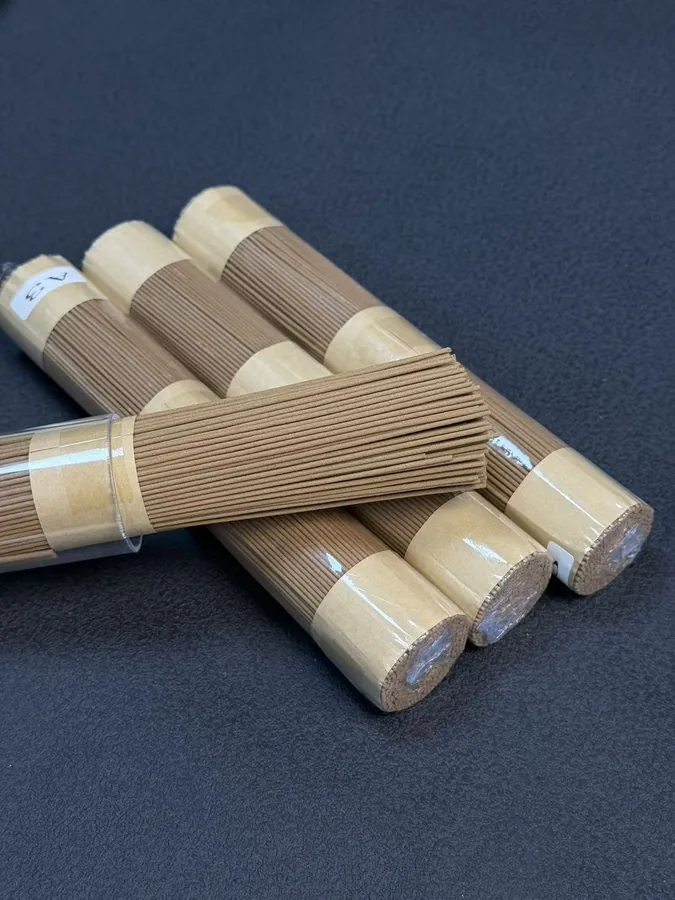
NanjaOud site implementation image used as a format reference. The picture does not show a burn trial, measured smoke level, approved batch or guaranteed product specification.
Begin with the decision, not a stopwatch
Ask why the product is being purchased. A retailer may care about clean presentation when a customer opens a pack, consistent lighting and an aroma that matches the label description. A distributor may need samples from more than one carton to compare repeatability. An OEM brand needs a signed reference that the supplier can identify during later production discussions. Those are related decisions, but they require different observations.
Write the intended use before testing. Is the stick for a short daily ritual, a larger room or a gift set? Will the end user use a narrow holder or a sand bowl? Is the stick sold individually, in a tube or in a set? Test with the likely holder and pack so the decision reflects the actual offer.
Separate performance from commercial acceptance. A buyer can like the aroma and still reject a sample because many sticks arrive broken. A stick can burn continuously but have a scent that changes sharply halfway through. Record each dimension separately, then decide which differences matter to the target product. Do not compress the result into a single unsupported label such as “premium grade.”
Identify the sample so the result can be reused
Before lighting anything, photograph the unopened pack and its label, and record who supplied it, the sample code, date received and any lot or prototype status given by the supplier. Measure the length and diameter of several intact sticks using a stated method. Describe whether the stick has a core, the visible surface, bending, cracks and loose powder. If the pack lists a material or scent name, copy the wording as a supplier description rather than treating it as verified composition.
Ask whether the sample represents a current lot, a development prototype or a future production target. The answer changes what approval means. A prototype approval can authorize the next development step; it cannot automatically approve an unidentified bulk lot. Keep unburned reference sticks in their original protection and record storage conditions. If the supplier later changes the formula, geometry or packaging, the reference needs reconsideration.
For a comparison, use the same sample count, holder type and observation sheet for each candidate. Code the candidates if several people judge aroma, and disclose supplier identity after the first notes are written. A small buyer trial still needs a traceable decision.
| Trial field | Record before or during the test | Why a buyer needs it |
|---|---|---|
| Sample identity | Supplier description, code, version and received date | Connects observations to the offered material |
| Stick and pack | Dimensions, core description, count, breakage and photographs | Separates manufacturing and transit issues |
| Setting | Room, ventilation, holder, distance and date | Makes later comparisons less misleading |
| Lighting | Time and method needed to establish a stable ember | Reveals practical use difficulty |
| Burn behavior | Stops, relights, bending and ash fall | Captures more than elapsed time |
| Sensory notes | Aroma at lighting, middle and later stages | Shows whether the profile changes |
| Decision | Accept, revise, retest or reject, with reason | Creates a usable supplier instruction |
The table intentionally sets no universal pass limit. Define the acceptance range for the actual product, holder and market with a buyer-approved sample. If the test is part of a formal claim, agree on a suitable method and competent reviewer before using the result in marketing.
Run the burn observation consistently
Test on a stable, nonflammable surface under supervision. Keep combustible materials away, follow local fire precautions and ventilate the space appropriately. Do not put a burning stick in a closed chamber merely to make smoke easier to see. A casual room test cannot establish health safety or a quantified emissions claim.
Light each sample using the same procedure and note when a steady ember forms. Start the timer at the defined point, not at whichever moment feels convenient. Observe without moving the holder unless the intended use requires it. Record any self-extinguishing event, relight and unusual change in the burning end. Photograph the stick before and after, with a scale when documenting ash or curvature.
Burn time is useful only with context. A longer stick, different diameter, core construction or room airflow can change the time. State whether the measurement is for the whole stick or a defined portion. If a pack promises a particular duration, test that claim against a specified method; do not copy a number from a catalogue image. NanjaOud's category page does not publish a universal burn-time value for the range.
Observe ash behavior where it matters to the end user. Does ash remain attached for a while or fall in large pieces? Does the holder catch it in the intended configuration? A photograph of a neat ash column from one stick cannot prove a whole batch will behave that way. Record the sample count and the range of outcomes. If one stick behaves differently, preserve the note rather than averaging away the problem.
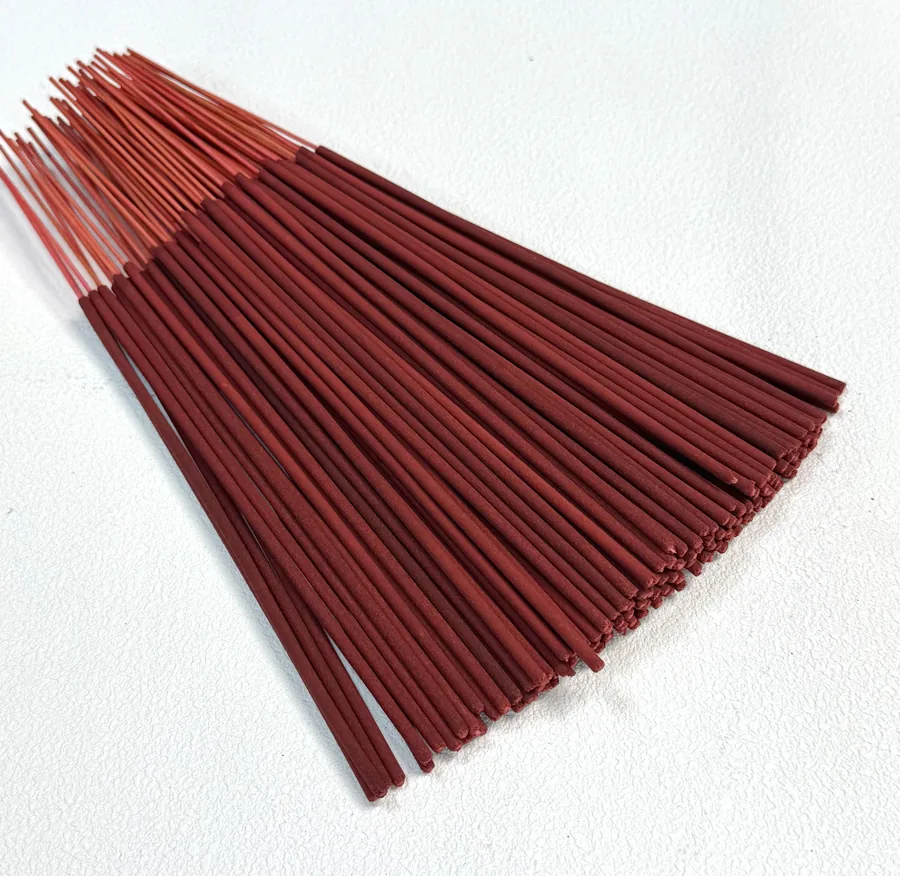
NanjaOud site implementation image showing a different stick presentation. It is a visual format comparison, not evidence of burn behavior or recipe.
Evaluate aroma without inventing a laboratory score
Give reviewers a simple vocabulary: first impression, dominant character, intensity, change over time and any off-note they can describe. Ask for plain observations rather than a number such as “9/10 quality.” A buyer can compare whether the sample fits a brand brief, but a small sensory panel does not establish chemical composition, authenticity or consumer preference across a market.
Use the same observation intervals for candidate samples and avoid burning several different sticks in one small room at once. Previous scents can linger. Record who evaluated the samples and whether they knew the supplier identity. If the target market spans different fragrance preferences, collect actual buyer or user feedback rather than assuming a regional preference from geography alone.
Keep smoke appearance distinct from air-quality testing. Visible smoke varies with background, light and ventilation. A “low smoke” positioning needs a separately defined measurement and claim review. The NanjaOud OEM page describes a requirement-to-sample process; it does not publish an emissions result for a new brief. Use the trial to decide what to ask for next, not to make a health promise.
Turn observations into an approval gate
After several sticks, write a decision for each field: accepted as sampled, acceptable with a documented change, or needs a new sample. Identify who approved it and what the approval covers. Attach the sample code, photos, test sheet, product brief and proposed packaging artwork. If the supplier offers a revised stick, give it a new version and repeat the affected checks. “Same scent” is not enough to prove that a changed diameter or binder direction will burn the same way.
Send the supplier a concise discrepancy report. “Two of five sticks stopped before the marked midpoint in the stated holder” is more useful than “burns badly.” Keep the test count and conditions visible. This is an illustrative way to word a report, not a result for NanjaOud material. Request the supplier's proposed explanation and a new representative sample when a change is needed.
For an OEM project, discuss which sample becomes the pre-production reference and how later production or incoming inspection will compare with it. NanjaOud's public OEM process identifies sampling, packaging and inspection as separate stages. Actual tolerances, sample quantities and commercial terms must be confirmed in the quotation and order documents.
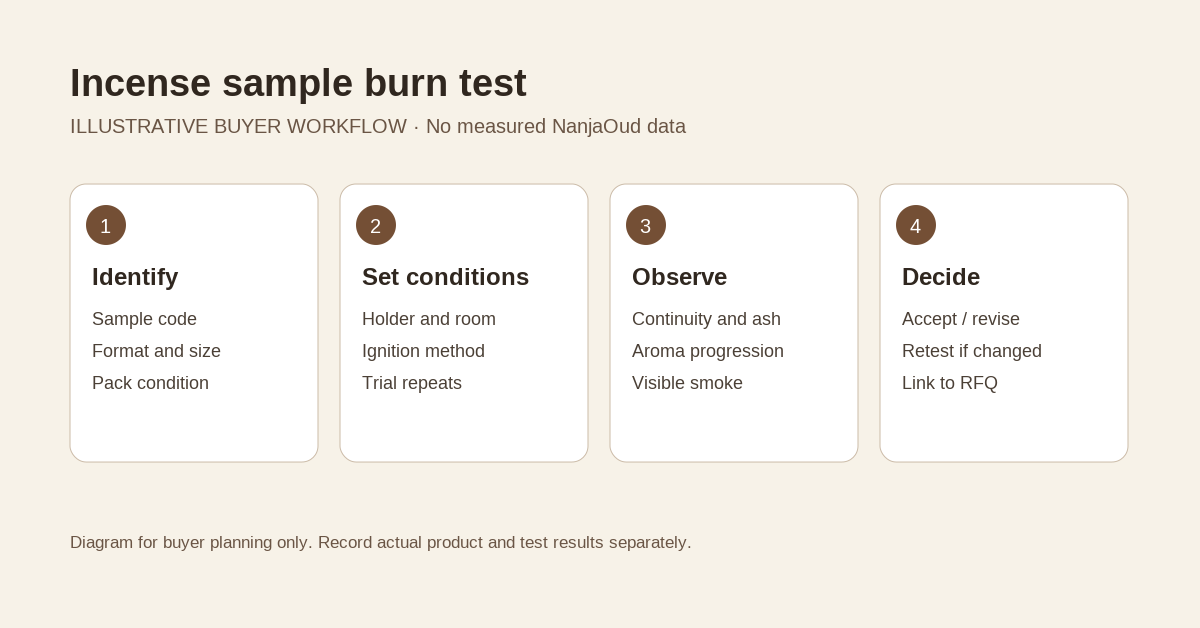
Illustrative buyer worksheet only. It contains no NanjaOud test result or certified measurement.
Buyer FAQ
How many incense sticks should I test?
Choose a count that fits the decision and the risk; record it. One stick may reveal an obvious problem but cannot describe variation. A larger or repeat purchase may justify samples from several packs or lots under an agreed sampling plan. There is no universal count published for every NanjaOud format.
Is burn time alone enough to approve a sample?
No. Record how the stick lights, whether it stays lit, ash behavior, scent progression and pack condition. A duration without geometry and test conditions is hard to compare.
Can I call a stick low smoke after a visual room test?
No. A room observation can inform development, but a quantitative or health-related claim needs an appropriate method and review for the target market. Do not infer safety from a faint-looking plume.
Should a revised sample keep the old approval code?
Give a material change its own version. Link the new sample to the previous one and record what changed. That preserves a clear decision trail for both buyer and supplier.
What belongs in the RFQ after a successful trial?
Include the approved sample code, stick format, intended use, dimensions or measurement method, sensory brief, pack direction, quantity estimate, destination and acceptance observations. Ask the supplier to confirm feasible specifications, documents and commercial terms for the actual item offered.
If you are comparing agarwood incense formats, send NanjaOud your brief, sample code and test sheet. Ask which current stick direction and sample can be discussed for your market. Keep the final approval tied to what you actually receive and test.


