
An agarwood chips supplier can only be compared on three things you can verify: the species and origin behind the wood, the physical specification both sides signed, and the documents that travel with the shipment. Everything else — grade letters, photographs, aroma adjectives, the word "wild" — is the start of a conversation, not a purchasing decision. This guide turns those three things into clauses you can put in front of three suppliers and compare on equal terms.
Why "grade A agarwood chips" cannot be your specification
There is no international grading standard for agarwood chips. Grade letters are set by the seller, and the same letter means different things in Vietnam, Indonesia and China. A supplier's "A" may describe piece size in one house and resin visibility in another, and neither definition has to be disclosed.
That is not a sales trick; it is simply how the trade works. Our own grading page states the position plainly: A, B and C labels are internal supplier references where listed, and are not presented as a universal or international standard. Any supplier who tells you otherwise is either new to export or overselling.
The practical consequence is simple. If the only thing fixed in your purchase order is a grade letter, the seller decides at loading what that letter means. If the purchase order carries measurements, both sides know before production starts. Resin content claims are the clearest example: a percentage without a method, a moisture basis and a sample reference cannot be tested by anyone.
The species behind the quotation
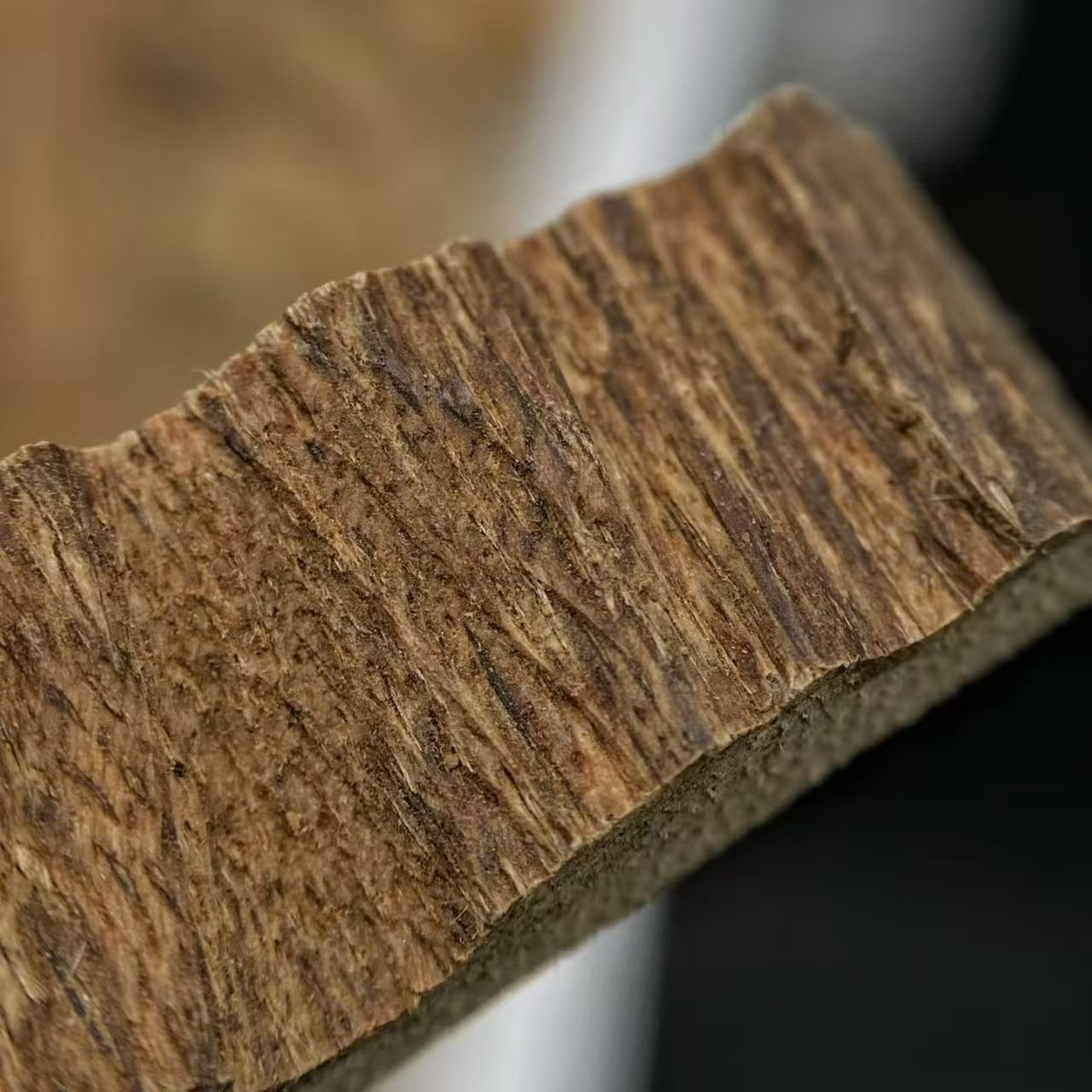
"Agarwood" is a trade name covering several species. Three of them account for most of the chips that move internationally, and each carries a different commercial profile. Species is worth asking about because it drives the aroma expectation your customers will judge, the piece sizes that tend to be available, and which export authority issues the permit.
Aquilaria malaccensis
Widely distributed across South and Southeast Asia, including Malaysia, Indonesia, Thailand, India and Bangladesh. It is the species most associated with large-volume traded material and with the heaviest export flows: a CITES review of the two agarwood-producing genera notes that Indonesia, Malaysia and Thailand are major exporters, with almost all material from Malaysia and Indonesia historically coming from wild stock. If a quotation says only "Indonesian chips" or "Malaysian chips", malaccensis is the species you should ask them to confirm in writing.
Aquilaria crassna
The species most buyers meet under the label "Vietnamese oud". It is native to Vietnam, Cambodia and Laos, and it is the reference point for a large part of the Gulf and Japanese incense trade. Vietnamese suppliers often build their entire identity on this species, which is useful — it makes the species question easy to answer and easy to audit against the permit.
Aquilaria sinensis
The species commonly planted in southern China, including Guangdong and Hainan. China's plantation sector has expanded over the past two decades, which is why Chinese material is increasingly quoted alongside Southeast Asian lots. Plantation origin changes the supply argument — consistency and volume rather than wild scarcity — but it does not remove the documentation requirement.
Gyrinops species
A second agarwood-producing genus, concentrated in eastern Indonesia and Papua New Guinea. It is quoted less often for chips than Aquilaria, but it appears in mixed lots and in oil feedstock. Ask which genus is in the bag; the answer belongs on the permit and on your specification.
| Species | Usual origin | What buyers typically notice | Documentation note |
|---|---|---|---|
| Aquilaria malaccensis | Malaysia, Indonesia, Thailand, India, Bangladesh | Broad range of piece sizes; heavy variation between lots | Confirm species on the permit, not just the country |
| Aquilaria crassna | Vietnam, Cambodia, Laos | Often sold as a defined regional product with a strong aroma identity | Species naming is usually explicit; verify permit holder |
| Aquilaria sinensis | Southern China (Guangdong, Hainan, Guangxi) | Plantation material, more repeatable grading between lots | Plantation and processing records matter more than "wild" claims |
| Gyrinops spp. | Eastern Indonesia, Papua New Guinea | Frequently blended or sold as generic agarwood | Ask for genus-level identification |
What origin actually changes — and what it does not
Origin is a real commercial variable, but it is often asked to carry more weight than it can.
What it changes: the aroma character buyers expect, the piece sizes and density ranges that typically appear in a lot, the harvest calendar and therefore availability, the export authority and permit route, and the freight lane and transit time to your market.
What it does not change: the need for a written physical specification, a stated moisture basis, a defined sampling method, or CITES documentation. A premium origin with no specification is still an unmeasured purchase, and a modest origin with a tight specification is often the easier material to build a product on.
Useful rule for a first RFQ: fix species, form and measurement first; treat origin as the explanation for price differences, not the justification for them.
Translating grade labels into testable clauses
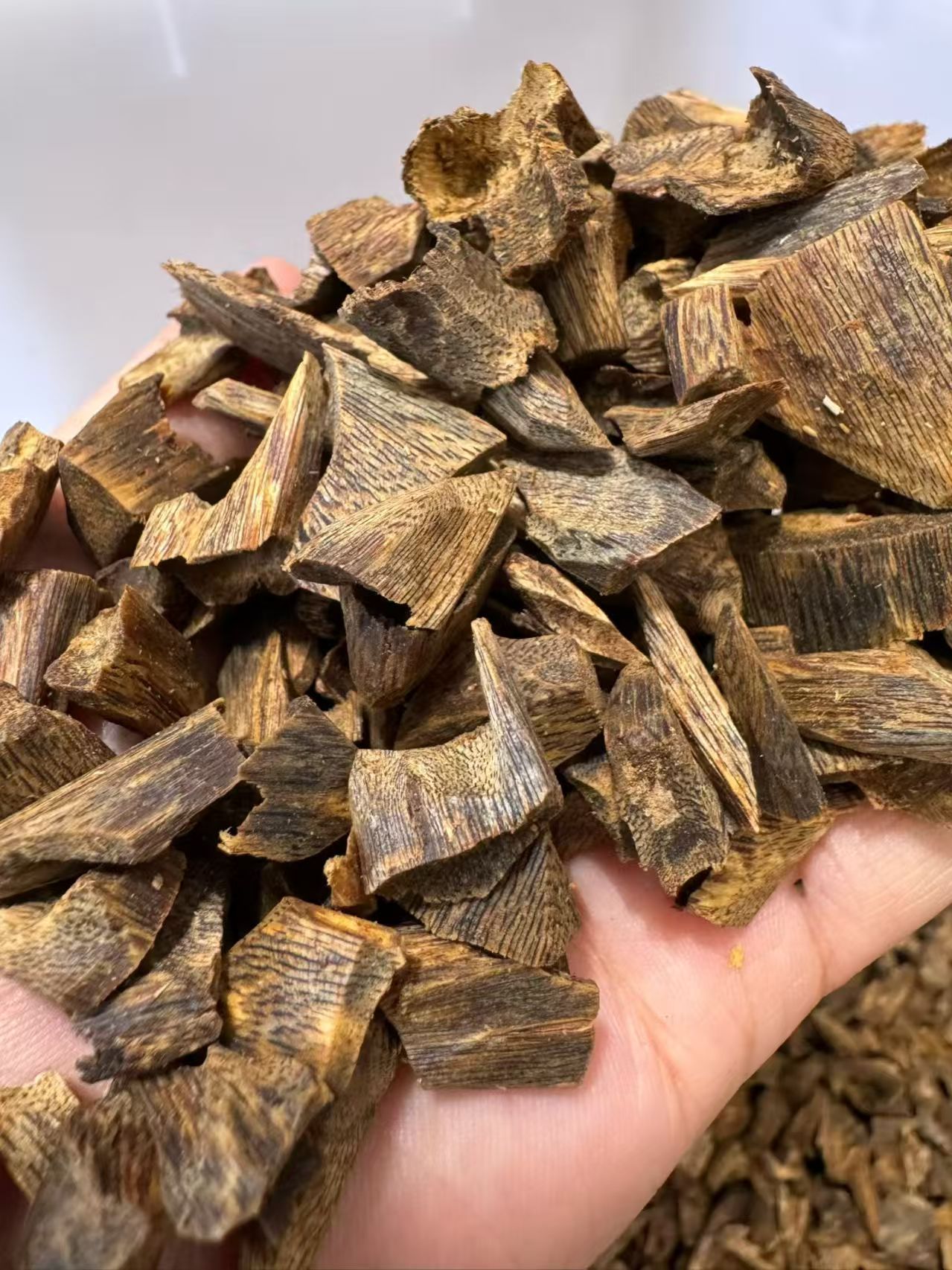
Grade language is not useless — it is shorthand. The mistake is leaving it as shorthand in the contract. The table below converts the labels buyers see most often into the clause that should replace them.
| Label you will be quoted | What it usually implies | Clause to write instead |
|---|---|---|
| "Grade A" / "AAA" | Top of that supplier's own range | Minimum piece size, visible resin criteria described in words, maximum fines share, moisture limit on a stated basis |
| "Sinking grade" | High density, sinks in water | Density test method, water temperature, sample size and pass/fail rule |
| "Super" / "King" / "Royal" | Marketing tier with no fixed definition | Lot reference plus an approved reference sample both parties keep |
| "Wild" | Harvested from natural forest rather than planted | Harvest documentation and permit description that supports the claim |
| "Plantation" | Grown on managed land | Plantation region, tree age band if disclosed, and whether chemical resin-induction agents are used |
| "Clean" | Free of bark, soil and debris | Written defect list with visual acceptance criteria and a rejection threshold |
The last row matters more than it looks. "Clean" is the word that produces most arrival disputes, because one buyer's acceptable bark margin is another buyer's contamination. Write the defect list, photograph the approved sample, and keep both.
The one-page specification that makes three quotations comparable
Most quotation comparisons fail because each supplier priced a different product. The fix is a single specification sheet sent with the RFQ, identical for every supplier, with the same fields filled the same way.
| Field | What to state | Why it changes the price |
|---|---|---|
| Species and genus | Exact species name, plus country and region of harvest | Sets the material pool and the permit route |
| Form and cut size | Chips with defined screen openings, oversize and fines tolerance | Cutting time and yield loss move directly into the unit price |
| Lot reference | Supplier lot or batch code for the quoted material | Prevents quoting one lot and shipping another |
| Moisture | Limit stated on a wet or dry basis, plus test method | Water is paid at the price of resinous wood |
| Visible quality | Resin streak description, foreign matter limits, colour range | Drives the share of pieces that survive your own sorting |
| Reference sample | Sealed sample, dated and signed by both sides | Converts adjectives into a physical benchmark |
| Packing unit | Net weight per carton, liner, seal, desiccant, carton grade | Affects freight volume, damage rate and repacking labour |
| Documents | CITES permit, phytosanitary certificate, commercial invoice, packing list | Decides whether the container clears at all |
| Delivery term | Incoterm, named port, and who pays which leg | Makes landed cost comparable across suppliers |
| Inspection | Pre-shipment check, sampling plan, who attends | Moves dispute resolution before payment, not after |
Once those ten fields are identical, a quotation becomes a number you can defend internally. Until then, the lowest price usually reflects the least material in the bag. The same logic applies to particle size definitions — "small chips" is a form name, not a testable size.
The document reality: CITES Appendix II
Every commercial species in both agarwood-producing genera is listed in CITES Appendix II. That is not a detail to settle at the port. A CITES working document for the Conference of the Parties defines agarwood-producing species as Aquilaria spp. and Gyrinops spp., all listed in Appendix II, and international trade in them requires the corresponding permits.
The FAO's overview of CITES and forest trade records the history: Aquilaria malaccensis was listed in Appendix II in 1995, and the remaining agarwood-producing species were listed at CoP13. The listing is not new, and it is not optional.
For a buyer, three things follow:
- The permit must describe what is in the box. Species, form and quantity on the permit should match the invoice and packing list. A permit that describes logs while the carton holds chips is a customs problem, not a paperwork detail.
- The exporter is usually the permit holder. If your contact cannot say who holds the permit, you are dealing with a broker, not the exporter. That is a legitimate model, but it changes your risk.
- Ask before the deposit, not after. Permit timing affects the shipping schedule, so it belongs in the lead-time calculation. What each certificate proves is worth reading before you accept a folder of documents as reassurance.
Manufacturer, trader or plantation processor: three supplier models
Buyers often use "agarwood chips supplier" and "manufacturer" interchangeably. They are not the same, and each model carries a different failure mode.
- Plantation processor. Grows or manages the trees and processes the wood in-house. Strength: control over material and repeatability. Question to ask: which processing steps happen on site, and who signs the batch record?
- Independent processing factory. Buys raw material, cuts and grades to order. Strength: flexibility on specification and cut size. Question to ask: where does the raw material come from, and can you see the incoming lot?
- Trader or broker. Aggregates from several sources. Strength: breadth of stock. Question to ask: who physically holds the goods, and whose name is on the permit?
None of these is disqualifying. The mistake is paying factory prices to a party that never touches the wood. The verification method — matching legal entity, bank account and permit holder — is set out in our guide to comparing oud chips manufacturers and in the factory audit walk-through.
Common mistakes in agarwood chip sourcing
- Approving a photo instead of a lot-linked sample. A photograph shows the best pieces; a sample shows a random draw.
- Comparing price per kilogram across different moisture bases. Convert both offers to the same basis before comparing.
- Letting the supplier choose the grade letter. Define measurements, then let them label it however they like internally.
- Treating a permit as a quality document. CITES proves legality of trade, not resin content or cleanliness.
- Ordering a full container on a first purchase. Qualify on a trial lot, then scale.
- Ignoring repacking cost. Loose bulk chips that arrive as fines cost more to fix than a better-packed lot costs to buy.
Two of these deserve a full clause in the purchase order rather than a verbal agreement: the moisture basis and the fines tolerance. Both are cheap to write and expensive to argue about later.
How our agarwood chips are supplied
NanjaOud is operated by Jiangmen Nangjiaxiang Agarwood Development Co., Ltd., based in Jiangmen, Guangdong. Based on company information, we have more than ten years of agarwood cultivation experience and manage a plantation base of more than 1,000 mu (about 160 acres) in Jiangmen, with our own processing factory handling material from raw wood through to finished formats.
Our cultivation approach does not use chemical resin-induction agents, and we describe material by what is actually in the lot rather than by an invented grade standard. Two chip formats are offered in our agarwood raw materials and chips range:
- Natural large agarwood chips — comparatively large, intact pieces with visible natural wood grain and resinous streaks, suited to incense use, further cutting or grinding, display, and wholesale distribution.
- Natural small agarwood chips — smaller irregular pieces that keep the natural wood structure, easier to portion, blend, repack and process, and suited to incense manufacturing, fragrance processing and private-label packing.
Both are supplied for importers, wholesalers, distributors, incense manufacturers and fragrance companies, with ODM coordination available for specification, packaging and presentation work through our OEM and private-label program. MOQ, lead time, freight terms and stock are not published as fixed figures — they are confirmed in the quotation against the actual product, quantity and destination, which is the only honest way to quote a material this variable. Our quality and supply framework sets out what we check and, just as importantly, what we do not claim.
FAQ: agarwood chips supplier questions
Which agarwood species is best for wholesale chips?
There is no best species, only a best fit. Aquilaria crassna is the usual choice when the product identity is Vietnamese oud. Aquilaria malaccensis dominates large-volume trade from Malaysia and Indonesia. Aquilaria sinensis is common in southern Chinese plantation supply. Choose by the aroma and price point your market expects, then verify the species in writing.
Are Vietnamese oud chips better than Thai chips?
They are different, not ranked. Origin sets aroma expectation and typical piece characteristics; it does not guarantee quality. A well-specified lot from any origin will outperform an undefined lot from a fashionable one. Compare identified samples in your own application rather than comparing countries.
What does grade A agarwood chips actually mean?
It means whatever the seller's internal system says it means. There is no universal definition. Ask for the measurements behind the letter — piece size, resin visibility criteria, fines share, moisture basis — and write those into the order instead.
Do agarwood chips need CITES documents?
Yes, for international trade. Aquilaria spp. and Gyrinops spp. are listed in CITES Appendix II. Commercial wood-chip shipments generally require an export permit or re-export certificate; an import permit depends on the destination country's rules. Check the current listing and annotation, and confirm the documents describe the species, form and quantity on the invoice.
How do I compare three agarwood chips suppliers fairly?
Send one identical specification sheet to all three, require the same lot reference and the same delivery term, then convert every offer to landed cost per usable kilogram. Compare the documents each can produce and the sampling method each accepts. The supplier who answers precisely is usually the one who can repeat the lot.
What is a sinking-grade agarwood chip?
It is a density claim: the piece is dense enough to sink in water. The claim is only meaningful with a stated test method, water temperature and sample size, because all three change the result. Ask for the rule in writing before you pay a premium for it.
Can a supplier's grade letter be verified on arrival?
Not directly, because there is no standard behind it. What you can verify is your own specification: measure piece size distribution, check moisture, count fines, compare against the sealed reference sample, and record the results within an agreed inspection window.
What should a first sample request include?
Your intended application, target market, expected order volume, the specification fields you care about, and the destination country. A supplier who knows the application can send a relevant lot instead of a showcase piece, and the sample becomes the reference for the bulk order.
Conclusion
The difference between a good and a bad agarwood chips supplier rarely shows up in the quotation. It shows up in whether the species can be named, the specification can be measured, and the permit can be produced. Fix those three before you discuss price, and the comparison becomes straightforward: you are no longer choosing between stories, but between lots you can test.
If you are building a first or repeat program, send us the product format, estimated quantity, target market and the specification fields you already know. Our team will confirm what can be sampled and quoted against that requirement — start from the contact page.


