

An oud chips wholesale order is scheduled backwards from your launch date, not forwards from a price list. Before wood ships, a buyer may need to allow time for material allocation, processing and moisture checks, the documents required for the species and route, and freight booking. Ask the supplier to date each step for the specific order. This guide turns that sequence into a 12-month planning calendar you can adapt to your market, so a quote accepted in March does not become a stock-out in September.
Why the order calendar matters more than the quotation
Two buyers can accept the same unit price from the same oud chips manufacturer and still end up with very different delivery dates. The difference is rarely the factory's speed; it is where each order sits in the year. Material that is already graded and stabilised can be packed quickly. Material that still needs cutting, drying and grading cannot be pulled forward without changing the specification.
That is why an oud chips supplier quoting "ex works" is describing a product, while the calendar describes a schedule. For an agarwood chips wholesale programme that runs to several shipments a year, timing decides something more valuable than freight: whether you can keep one grade definition across lots. Buyers who plan annually avoid competing for capacity in the weeks when everyone else orders, and they can test an alternative specification in a low-pressure window instead of during a launch.
The 12-month sourcing calendar at a glance
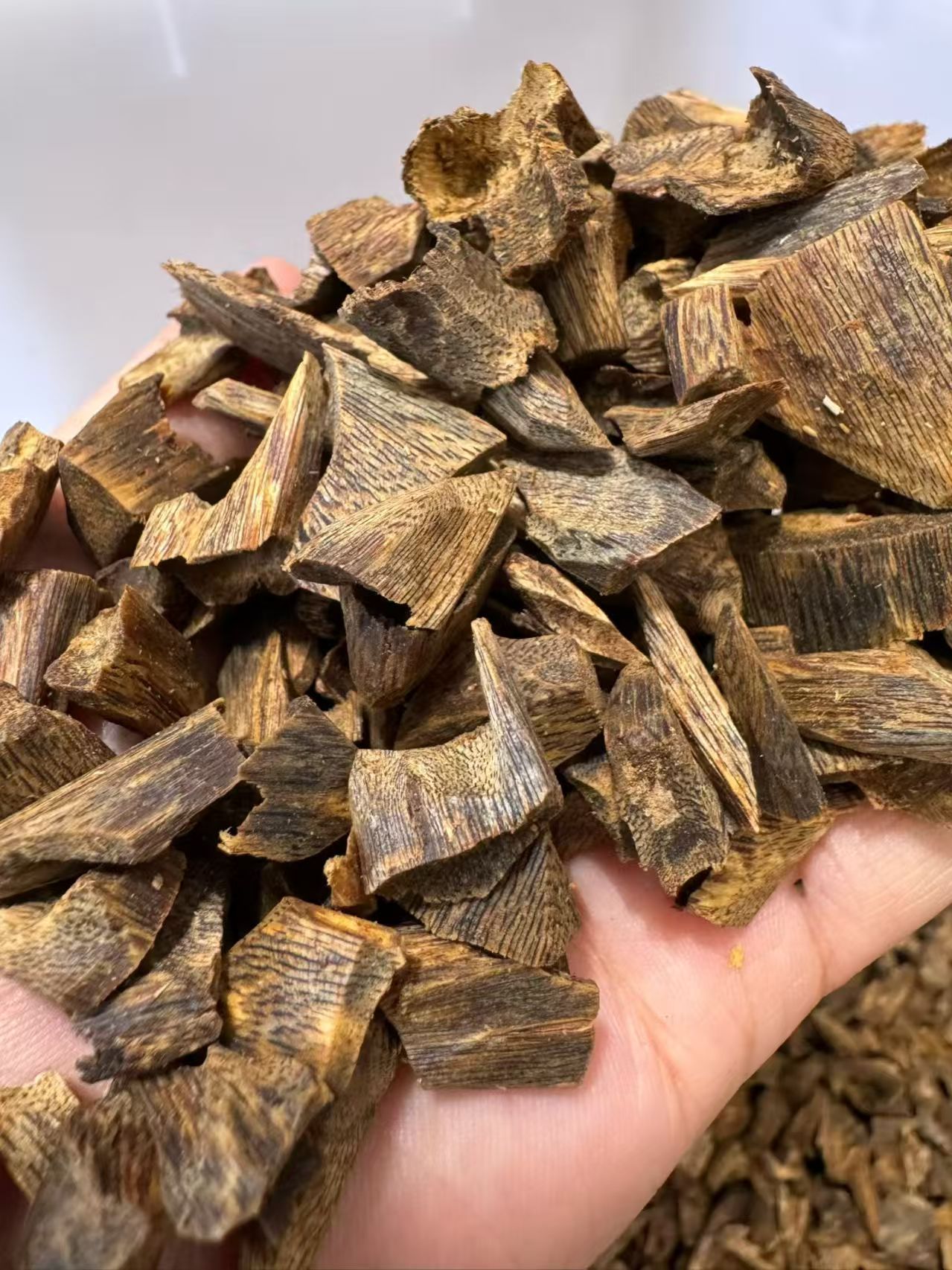
Reference photo from NanjaOud's listed small-chip product; confirm the material offered for each shipment separately.
Use this as a buyer planning framework, not a claim about NanjaOud capacity, a fixed shipping season or a quoted lead time. Check the current year's holiday dates, supplier schedule, permit requirements and freight options for your route.
| Period | What to verify | Buyer action |
|---|---|---|
| January–February | Whether Lunar New Year changes production, permit-office or forwarder schedules for this order | Confirm actual closure dates and move sample approval and document requests earlier if needed. |
| March–April | Available lots and the status of prior sample approvals | Review the previous lot, agree a specification and ask for a current lot-linked sample. |
| May–June | Moisture condition, test method and packaging under the actual storage climate | Put the moisture basis and arrival inspection method in writing before dispatch. |
| July–September | Current production allocation, freight quotation and transit time for a Q4 arrival | Build backwards from the required arrival date and reserve review time for documents. |
| October–December | Actual arrival quality and the next order's lot and volume requirements | Inspect, record deviations and agree whether a split annual order is feasible. |
If your buyers purchase around Ramadan or Eid, check those dates for the relevant year and destination market; they move through the solar calendar. The timing only matters to your plan when demand, production or freight for your route is affected.
The four clocks inside every order
An annual plan is really four separate lead times running in parallel. They are the same clocks that make up a single oud chips lead time, stretched across a year — and when a shipment is late, it is usually because one of them was never scheduled.
1. Material allocation
Resin-bearing wood is not uniform, so allocation means setting aside pieces that meet your grade definition — visible resin, size range, form and intended use. An agarwood chips supplier with a managed plantation base and in-house processing can commit material earlier than a trader buying spot lots. Ask what volume is already allocated to your order and what happens if your grade proves short at packing.
2. Drying and moisture stabilisation
Wood chips move toward equilibrium with the air around them, so ambient humidity changes how fast they dry and how stable the figure stays. UK Forest Research notes that wood-chip drying rates depend on initial moisture, particle size, temperature and air humidity — the same variables that make "dry" a weak word in a humid season. Oud chips moisture content should therefore be a number with a method attached, not an adjective, and it belongs in the purchase order rather than in the post-arrival conversation.

Reference photo from NanjaOud's listed large-chip product; it does not show a drying process or a current lot.
3. Permits and export documents
International trade in agarwood may be subject to CITES controls. Ask the supplier to identify the species, material form and source, then confirm the current permit requirements for the exact shipment with the relevant management authorities and your customs broker. Any required permit and its product description should be checked against the packed lot before booking freight. Allow a separate document-review block in the schedule; do not assume that an earlier shipment's paperwork applies unchanged.
4. Freight and customs clearance
Booking, vessel schedules, port congestion and destination inspection all sit after production. In peak weeks the gap between "ready to ship" and "on board" can be longer than the production run itself. Treat the freight window as a fixed cost of the calendar, not as slack you can recover later.
Working backwards from your launch date
Start from the day stock must be sellable, then subtract each block. The example below uses round, illustrative durations only to show the method — replace every number with the durations your own supplier and forwarder confirm in writing.
- Sellable date — for example, 1 October, when a retail or bakhoor programme goes live.
- Minus receiving and inspection — allow time to weigh, photograph and sample the arrival before it enters your warehouse.
- Minus ocean freight and clearance — the longest single block, and the one most affected by peak season.
- Minus export documentation — permits and certificates issued against the final packed quantity and description.
- Minus production and drying — cutting, grading and moisture stabilisation.
- Minus sample approval — a coded sample reviewed by your own team, with a signed record.
- Result: your order date. If it falls in a holiday window, move it earlier rather than compressing a later block.
Run this arithmetic for every shipment in an annual programme, not just the first. A plan that works in March often fails in November for no reason other than a booked-out vessel.
Seasonal windows that tighten capacity
Lunar New Year. Factories in southern China stop for the holiday, and staff return gradually. Production, inspection and document preparation all pause, while bookings surge on either side. An oud chips wholesale order that must ship in this window should be finished and inspected before the break.
Ramadan and the Eid periods. Demand for oud chips, bakhoor and incense rises sharply in Gulf and wider Middle Eastern markets as households and retailers stock up. If you supply that demand, your production slot needs to be secured months earlier, and packaging artwork approved before the factory closes.
Q4 gifting and year-end retail. Container space is the constraint rather than wood. Buyers who have not booked freight by late summer usually pay for it in rate or in delay.
The wet season. Higher ambient humidity makes drying slower and moisture disputes more likely. This is the window where a written moisture clause earns its place.
The moisture clause that protects a seasonal order
Moisture is paid for at the price of resinous wood, so an unmeasured figure is an unpriced risk. Three fields make the clause usable: the figure itself (for example, a maximum percentage), the basis it is expressed on (wet or dry), and the method and sampling point used to check it. Add an arrival re-check with an agreed tolerance and a remedy if the lot falls outside it. Without those three fields, a discussion about moisture after arrival becomes a matter of opinion, and opinions do not survive a claim.
A repeatable annual plan: buyer checklist
- Fix your grade definition in writing before the first RFQ, and keep it identical across lots.
- Map your own selling calendar — festivals, gifting peaks, retailer deadlines — onto the supplier's production year.
- Book sample approval in a quiet month; never run it inside a launch window.
- Separate the four clocks in your purchase order so a delay can be attributed, not just felt.
- Ask what volume is allocated to your order and when allocation is confirmed.
- Confirm holiday closures at the factory, the forwarder and the permit-issuing office.
- Book freight before peak season, and record the booking reference in the order file.
- Schedule arrival inspection with named staff, a weighing protocol and a photo record.
- Keep a retained sample from each lot and re-order against it, not against the catalogue photo.
- Review the year's actual timings once, then adjust next year's calendar from evidence.
Common planning mistakes
- Scheduling from the quotation date instead of the launch date. The quote tells you a price, not a schedule.
- Treating permits as paperwork that happens in parallel. They are issued against a packed lot and a description, so they cannot finish before production does.
- Approving a sample in the same week as the bulk order. Any change found late has to be absorbed inside the production window.
- Assuming every month behaves the same. Capacity, drying conditions and freight rates do not.
- Planning one shipment for a whole year. Splitting volume across two or three shipments spreads moisture, freight and grade risk.
- Leaving moisture out of the RFQ. A figure nobody wrote down cannot be enforced.
How NanjaOud fits an annual enquiry
NanjaOud publicly lists natural large agarwood chips and natural small agarwood chips. Their product photos show different piece sizes and grain; they do not establish the grade, source lot, available volume or lead time for a future order. The public product pages currently display an out-of-stock label, so ask the team to confirm current availability and whether the format can be quoted for your programme.
Send the intended application, target piece size, moisture and screening method, sample need, proposed annual volume, preferred shipment split and destination through the contact page. Ask for a written specification, lot-linked sample and a schedule that separates material allocation, processing, documents and freight. The raw materials and chips category is a starting point for product selection, not a commitment to supply a stated grade or quantity.
FAQ
When should I place an oud chips wholesale order for a Ramadan launch?
Work backwards from the retail on-sale date, not from Ramadan itself. Subtract inspection, freight, documentation, production and sample approval; in practice that usually means opening the order in the quiet months several months ahead, and approving packaging artwork early because the factory and your printer both close for holidays.
Does the season change the price of oud chips wholesale?
Timing changes your cost more often than the price list does — through freight rates, expedited production and the cost of holding stock longer than planned. Material cost is driven by grade, form and yield, which is why the specification matters more than the month.
How far ahead should I request samples?
Early enough that approval does not sit inside a production window. Request a lot-linked sample, test it under the conditions your customers will use, and record what you observed so the bulk order has something to be measured against.
Is oud chips wholesale affected by Chinese New Year?
Yes, in two ways: production and document preparation pause for the holiday, and bookings surge around it. Check the exact closure dates with your supplier each year, because the date moves.
What moisture figure should I specify?
A maximum percentage, the basis it is expressed on, and the method used to test it. The number itself should come from your own process and destination climate — ask your supplier what they can hold consistently rather than accepting a figure that appears only in the quotation.
Can one annual volume be split across several shipments?
Sometimes, if the supplier can allocate material and agrees to the schedule. A split order lets you inspect each lot before committing the next shipment, but pricing and availability may change. Agree the split, allocation and price basis for each shipment in writing.
What documents should travel with an oud chips shipment?
Request commercial documents that match the packed lot, plus any permits and destination-market documents confirmed as necessary for the declared species, product form and route. Have your customs broker compare the descriptions across the invoice, packing list, cartons and permit before dispatch.
Conclusion
Oud chips wholesale is a scheduling discipline as much as a sourcing one. Fix the specification, then fix the calendar: allocation, drying, permits and freight each need their own block, and each behaves differently depending on the month you start. An annual review gives buyers time to confirm each lot against the agreed specification before a shipment is committed.
If you are building a first annual plan, send us your product family, intended format, estimated annual volume, target market and launch dates through our contact page, and we will help you map the specification and the next commercial step against real material and real capacity. For more on the individual blocks in the calendar, see our guides to oud chips manufacturer lead time, oud chips moisture content and manufacturer capacity.


