
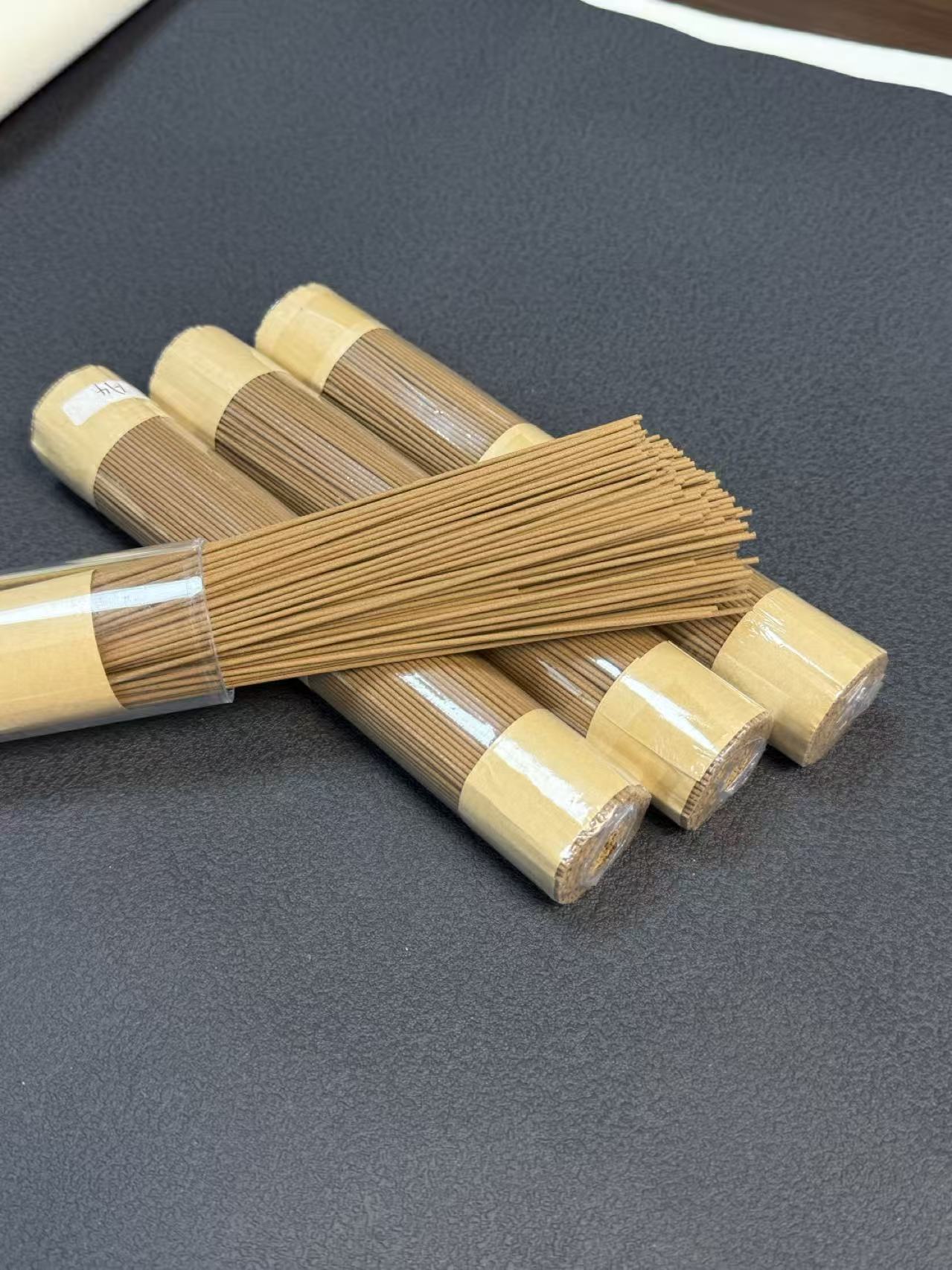
Buying bulk agarwood incense sticks is a repeatability problem long before it is a price problem. The manufacturer worth a wholesale order is the one that can show, with measurements, that the next shipment will match the sample you approved: the same diameter, the same grams per stick, the same burn behaviour, the same breakage rate. Price only becomes comparable once those limits are written down, because the cheapest carton is usually the one with the least defined stick inside it.
Most guides stop at "request a sample and compare the price". This one goes a level deeper and treats a repeat batch as testable: measurable acceptance limits, a sampling plan, a coded sample protocol, and a claim route that triggers on a number rather than on an impression. If you have not yet fixed the stick itself, work through our wholesale specification guide first, then come back here to decide which supplier can hold that specification across shipments.
Why batch repeatability decides a wholesale order
Agarwood sticks are a material purchase, not a scent purchase
Most incense in the world is a splint dipped in a fragrance compound, where the wood powder is a carrier for perfume oil. An agarwood stick is bought for the resin-bearing heartwood ground into the paste, so the thing you are paying for is a material whose species, grade and share in the blend can be described. Ask every candidate to state, in writing, which of three products they are offering: a stick made predominantly from agarwood powder, a blended stick where agarwood is one component, or an agarwood-scented stick with little or no agarwood content. A supplier who cannot place the offer in one of those categories is selling a fragrance, and should be compared with fragrance suppliers rather than wood suppliers.
That single sentence also explains why two quotations for bulk agarwood incense sticks can differ by a factor of five and both be honest. It is not a pricing trick; it is a different raw material.
Construction, size and scent set the limits before the factory does
Whether the stick is coreless or built on a bamboo splint changes the aromatic share of every piece, the smoke, the ash and the way it breaks in a carton. Neither construction is better in the abstract, and a well-made cored stick will outperform a poorly made coreless one. What causes problems is an undefined or changing construction, so put it in the specification and never allow a substitution when stock runs short; our cored versus coreless comparison covers the technical differences. Length and diameter then follow the holder, the room and the sales channel, because a longer stick is not a better stick, it is a heavier product with different packing and freight.
What a container amplifies
Three defects that are invisible in a sample of ten sticks become commercial problems at container scale: brittleness that turns into broken tips, moisture uptake that makes sticks go out mid-burn, and slow drift in diameter or paste density that changes burn time between lots. All three are measurable, and all three are cheap to control when the limit exists before production.
Setting acceptance limits you can measure
An acceptance limit is a number plus a method plus a consequence. "Good quality" is none of those. Agree the numbers below against your approved sample, then write the method into the purchase order so a third party could repeat the check without asking either side for an opinion.
| Attribute | How to measure it | Example limit to negotiate | Why it matters |
|---|---|---|---|
| Length and diameter | 20 sticks taken from 3 bundles, measured with a caliper | Length within 1 mm, diameter within 0.2 mm of the approved sample | Controls holder fit, burn time and packing count |
| Weight per stick | 20 sticks on a 0.01 g scale, averaged | Within about 5% of the sample average | The closest proxy for paste density and paid-for material |
| Straightness | Roll each stick on a flat surface, note visible bow | No stick with a bow visible against a straight edge | Bowed sticks break earlier in packing and in the holder |
| Surface defects | Visual check for cracks, blisters, exposed splint | Zero cracked or split sticks in the inspection sample | Cracks become breakage and uneven burning |
| Breakage | Count broken pieces in each opened inner box and carton | A stated percentage of pieces per carton | The line item that decides whether a claim is valid |
| Dust and fines | Tap the bundle over a tray, weigh the loose material | A grams-per-bundle ceiling | Signals dryness and abrasion, and shortens usable count |
| Burn time | 5 sticks, same room, same holder, no draught, timed | Within about 10% of the sample mean | The attribute buyers notice first and dispute most |
| Early extinguishing | Burn to the end without relighting | Zero tolerance in the inspection sample | Usually moisture or binder, and it scales badly |
| Smoke and ash | Score 1 to 5 at a fixed distance against the sample | No score worse than the approved sample | Keeps the retail experience stable between lots |
| Scent drift | Blind comparison with a retained sample by two testers | No consistent preference for the old sample | Detects a quiet change of material or oil |
Treat the figures in the third column as starting points for negotiation, not as industry standards. The correct limit for your order is the one your approved sample supports and your market tolerates, and it should be written as a tolerance band rather than a single target value.
Use a sampling plan instead of one stick
A single stick proves nothing about a carton. Agree how many cartons are opened, how many sticks are drawn from each and which defect stops the check immediately. A simple three-class structure is enough for most buyers: critical defects (a stick that will not burn to the end, the wrong construction, a species mismatch) which reject the lot; major defects (breakage or weight outside the agreed band) which are counted against a stated share; and minor defects (dust, slight colour variation) which are recorded but tolerated. Where a buyer wants a formal statistical basis, attribute sampling plans such as those in ISO 2859-1 describe how sample size and acceptance numbers relate to lot size, and the same logic can be applied by hand to a few cartons.
Burn the samples the same way every time
Same room, same holder, same ignition source, same distance for judging smoke, and a written sheet rather than a memory. Record ignition behaviour, total burn time, smoke score, ash colour and whether the ash curls or falls, and how the scent develops from the first third to the last. Our burn-performance test sheet is built for exactly this and can be sent to a supplier with the order.
Verifying the material and the formula behind the stick
What to ask for in writing
Request the species or trade name and the part of the tree used, the agarwood share as a percentage band rather than an exact recipe, the binder type, whether fragrance oils or resins are added, whether any colourant is used, and the moisture level at packing. A supplier protecting a formula can still disclose categories and bands. A refusal to describe anything at all is also information about how a later claim will be handled, and it should be priced in.
How to read a test report
Look for the laboratory name, the method used, the test date and the batch or sample code the result refers to. A report without a method and a batch reference proves very little, and a report dated two years before your production window proves nothing about your order. Ask which batch the document belongs to and keep that answer with the lot record.
Approving a sample that survives a container
Two rounds, coded, weeks apart
One sample shows that a factory can make a good stick; a second sample ordered a few weeks later shows that its process repeats. Code both, remove supplier names before scoring, and test them on the same day against the same record sheet. A stick that one tester calls smoky and another calls weak usually has an inconsistent burn, which is the defect that scales worst.
Tie the bulk order to finished product, not to the sample room
Seal and sign an approval sample that both parties keep, reference it in the purchase order, and require a pre-shipment sample drawn from finished bulk rather than from the sample room. Ask for photographs of the packed cartons before loading. If you skip this step, every later disagreement becomes a conversation about memory.
Wholesale terms that change the real cost
MOQ and the sample request
Send the format, the first-order and estimated annual quantity, the target market, the intended use, the packing direction and the brand stage. Ask for MOQ per SKU rather than per order, because a single number for a mixed container is usually the smallest line the factory would prefer to run. When you request a sample, ask what it is: stock, a made-to-specification trial, or a cut from a production lot. A trial tells you about capability, a production cut tells you about consistency, and the courier cost is charged differently in each case.
Unit price versus landed cost
Confirm the price basis (per stick, bundle, inner box or carton), the count in each unit, whether printing and packing are included, the Incoterm, who books freight, the currency, the validity period, the payment terms and any breakage allowance. Then convert every offer to landed cost per sellable stick. On bulk agarwood incense sticks the packing and freight lines routinely reorder the shortlist; our walkthrough of reading an incense quotation shows the arithmetic.
Private label, OEM and ODM
Agree who owns and approves the artwork, whether a signed dieline proof is required before mass printing, the minimum per SKU rather than per order, who pays for plates or setup, and which label content is the importer's responsibility in the destination market. A private label programme is a packaging project bolted onto a product specification, and both need sign-off; the briefing sequence is set out in our private-label OEM guide.
Packing that survives freight
Inner protection matters more than carton print. Specify the inner packing method, carton board grade, whether a moisture barrier is used, the pallet pattern, a lot or batch code and production date on every carton, and loading photographs. Keep the lot code in your own records so a complaint six months later can be traced to a production window.
The claim route: breakage, drift and wrong goods
Three failures deserve three different responses. Breakage is a packing and handling claim, proved by photographs of the sealed carton, the opened bundle and a count of broken pieces. Drift is a specification claim, proved by weight, burn time and a blind scent comparison against the retained sample. Wrong goods (a different construction, a changed material, a species that does not match the documents) is a compliance claim and the most serious of the three. For all of them, agree the notice window after arrival, the evidence pack, the remedy ladder (replacement, credit, price adjustment on the next order, or return) and who pays return freight, before the container ships rather than after.
Import compliance: documents and CITES
No single certificate makes incense sellable in every market, and a supplier who says otherwise is simplifying a question that belongs to your importer of record. Ask for a component declaration, a safety data sheet where the product or its fragrance components require one, an allergen statement for the fragrance portion, and any test reports with the laboratory, method, date and batch code visible. Label requirements, including the language, warnings, importer identity and use instructions, are set per market, so confirm the label text before artwork is approved. In the European Union, for example, the General Product Safety Regulation (EU) 2023/988 has applied since 13 December 2024 and places traceability and labelling duties on manufacturers, importers and distributors, while other markets apply their own rules.
Agarwood itself is the part buyers underestimate. Commercial agarwood comes mainly from Aquilaria and Gyrinops, both listed in CITES Appendix II, and international trade in their parts and derivatives is documented through permits. Finished incense is not automatically outside that framework: a CITES CoP20 working document on agarwood trade lists "agarwood incense sticks" among the trade terms used when permits are issued, which is a useful correction to the common claim that retail-packed sticks need no paperwork at all. Background on harvest and trade is documented in the TRAFFIC review of agarwood use and trade published through the IUCN library. Ask the supplier to name the species and provide permit copies that match the shipment, then confirm the position with your customs broker for your destination and product form.
One more practical point: incense burning releases particulate matter, so a plain ventilation instruction on the pack is a normal use consideration. It is not a basis for health claims in either direction, and marketing language should stay descriptive.
Wholesale Agarwood Incense Supplier Comparison Checklist
Score each candidate from one to five on every row, multiply by the weight, and keep the evidence column filled. The weights below suit a first or repeat wholesale order where consistency matters more than a one-off price; adjust them if your programme is a single seasonal run. A supplier with a strong price and an empty evidence column is one you cannot audit after the container lands.
| Dimension | Weight | What you score | Evidence to hold | Limit or target agreed in writing |
|---|---|---|---|---|
| Raw material | 15% | Species or trade name, part used, plantation or wild origin, stated on the offer | Material declaration on the quotation | Species and grade named on the packing list |
| Formula transparency | 10% | Agarwood share given as a band; binder, oils, resins and colourants disclosed | Component list, allergen statement | Written component band, not a verbal claim |
| Product specification | 10% | Coreless or cored, length, diameter, grams per stick, packing count, tolerances | Specification sheet with tolerance bands | Every attribute has a number and a method |
| Burn performance | 15% | Burn time range, smoke, ash behaviour, early extinguishing, self-relight rate | Your test sheet, filled from their sample | Burn time within the agreed band of the sample |
| Sample stability | 15% | Two coded samples ordered weeks apart behave the same | Two coded samples plus the retained approval sample | Same result on the second round |
| MOQ and order structure | 5% | Minimum per SKU, mixed-container rules, reorder minimum | Written MOQ table | MOQ per SKU, not per order |
| Packaging | 10% | Inner protection, carton grade, moisture barrier, print readiness, dieline | Packing specification and signed proof | Breakage allowance stated per carton |
| Quotation | 5% | Price basis, Incoterm, packing and freight included or not, validity | Itemised quotation with validity date | Landed cost per sellable stick |
| Lead time | 5% | Sample, production and documentation windows, seasonal capacity | Written schedule on the order confirmation | Dates, not ranges such as "about a month" |
| After-sales | 10% | Notice window, evidence pack, remedy ladder, named contact | Claims clause in the contract | Faulty lot has a defined remedy |
Agarwood incense sticks from NanjaOud
NanjaOud, operated by Jiangmen Nangjiaxiang Agarwood Development Co., Ltd., supplies agarwood incense from Jiangmen, Guangdong to incense brands, wholesalers, importers and private-label customers, with products supplied to the Middle East, Southeast Asia, Europe and North America. The company reports more than ten years of agarwood cultivation experience, a managed plantation base of over 1,000 mu (about 160 acres), its own deep-processing facility, and cultivation that does not use chemical agents to accelerate resin formation.
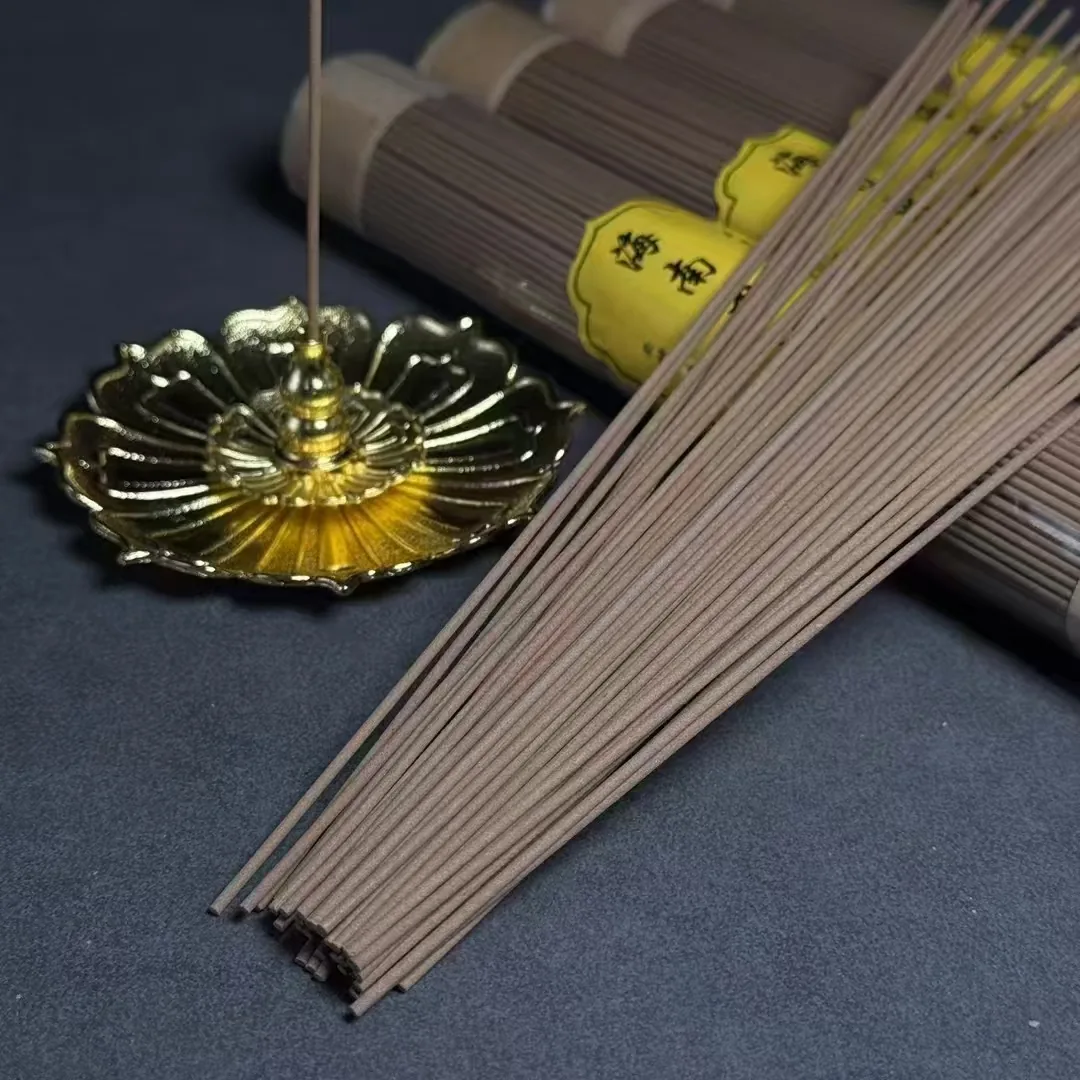
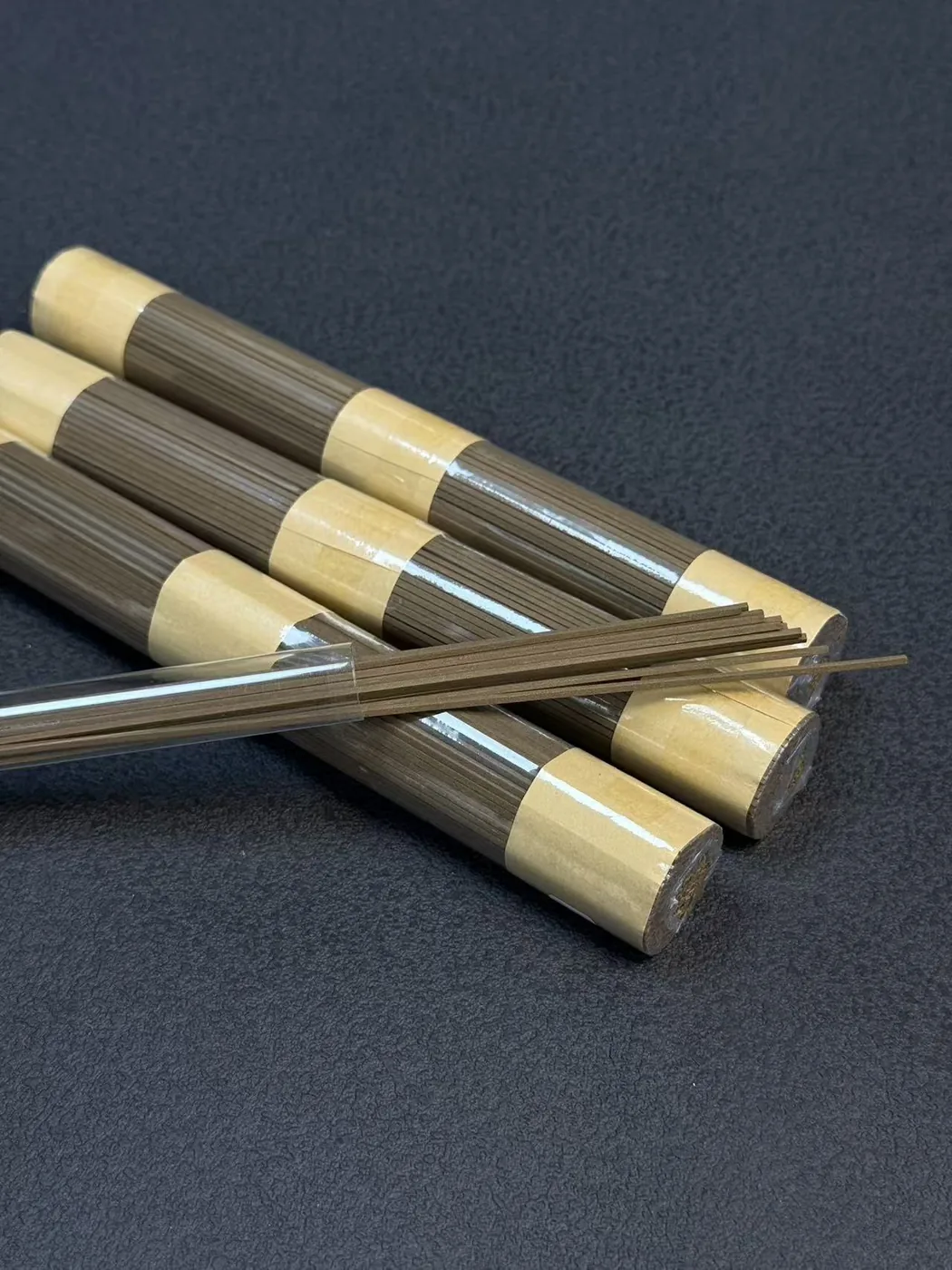
The current incense range includes Hainan agarwood incense sticks and Kynam agarwood incense sticks, both presented in a slim, straight, coreless format with a uniform appearance, packed in compact bundles, and offered for bulk supply, private label and ODM cooperation. The wider agarwood incense range also covers coils and ritual formats. These pages deliberately do not publish fixed burn times, dimensions, smoke levels or recipe ratios: those are confirmed against a buyer-approved sample during sampling and quotation, which is exactly where the limits described above are meant to be set. The quality and supply page sets out the checks applied to an order.
Conclusion
Bulk agarwood incense sticks are only a bargain if the second batch matches the first. Decide which product you are buying, write tolerances for diameter, weight, burn time, smoke and breakage, test two coded samples under identical conditions, attach the approved sample to the purchase order, price packing and freight into the landed cost, and agree the claim triggers before the container ships. Buyers who do those things argue about numbers after arrival, not about quality. If you are preparing a first or repeat order, send your estimated quantity, target market, stick type and dimensions, packing direction and sample standard to our contact page and we will confirm what is available for your project.
Frequently asked questions
How do I choose an agarwood incense sticks manufacturer for wholesale orders?
Compare candidates on evidence rather than on the first price: a written material declaration, a specification with tolerances, two coded samples that behave the same, an MOQ per SKU, and a claims clause. Score them on the checklist above, then choose the supplier whose numbers you can re-measure on arrival.
What is an acceptable breakage rate for incense sticks in transit?
There is no universal figure. Breakage depends on stick diameter, dryness at packing, inner protection and pallet pattern, so the allowance has to be agreed per product and per packing format, measured as broken pieces per carton and documented with photographs at arrival.
How many sticks should I burn to judge a sample?
Five sticks drawn from different positions in the bundle, burned under identical conditions, give a usable picture of burn time, smoke and ash. Repeat the test on a second sample ordered weeks later to see whether the process repeats.
Can bulk agarwood incense sticks be supplied private label?
Yes, and the questions to settle are the minimum per SKU, artwork and dieline approval, who pays for print setup, and which label content your importer is responsible for in the destination market.
Do finished agarwood incense sticks need CITES documents?
Not always, and not never. Aquilaria and Gyrinops are listed in CITES Appendix II, and the requirement for a particular shipment depends on the species, the form of the material and the destination. Ask for species details and permit copies that match the shipment, then confirm with your customs broker.
Why does burn time change between shipments?
Usually because weight per stick, diameter or paste density moved slightly, or because sticks took up moisture in packing or storage. That is why weight tolerance and a moisture note belong in the specification, and why burn time is tested on arrival rather than assumed.
What should I include in my first inquiry?
Estimated first-order and annual quantity, target market, stick type (coreless or cored), length, diameter, packing direction, whether you need private label, and the sample standard you will test against. Suppliers quote far more accurately when those six items are present.


