Why Wholesale Agarwood Incense Sticks Need a Different Selection Process
An agarwood incense sticks manufacturer is only comparable once you can audit three things: what the stick is actually made of, whether an approved sample can be repeated at volume, and which commercial and documentary terms sit behind the quotation. Retail buyers choose a scent; wholesale buyers are choosing a production record, a packing standard and a claims process that must survive reorders and customs. This guide sets out that audit in the order a wholesale buyer runs it, from product form through sample testing, commercial terms and import documents, and ends with a comparison checklist you can score three shortlisted suppliers against.
What to Verify Before Requesting a Quote
What buyers actually weigh
Three capabilities decide most wholesale decisions, and they are rarely weighted equally. OEM and private-label capability matters if you sell under your own brand; stable supply matters if you reorder; formulation transparency matters if your market asks what is burning. A supplier strong in one is not automatically strong in the others, so score them separately rather than accepting a single "we support OEM" statement.
The gap most supplier pages leave open
Most manufacturer pages explain scent, tradition and craft. Far fewer publish the operational detail a purchase order needs: diameter and length tolerance, the conditions behind a stated burn time, the breakage allowance per carton, the retained-sample reference, or the remedy ladder if a container arrives wrong. Those are the questions this guide is built around, because they are the ones that decide whether the second shipment matches the first.
Product Selection: Form, Dimensions and Scent Before Price
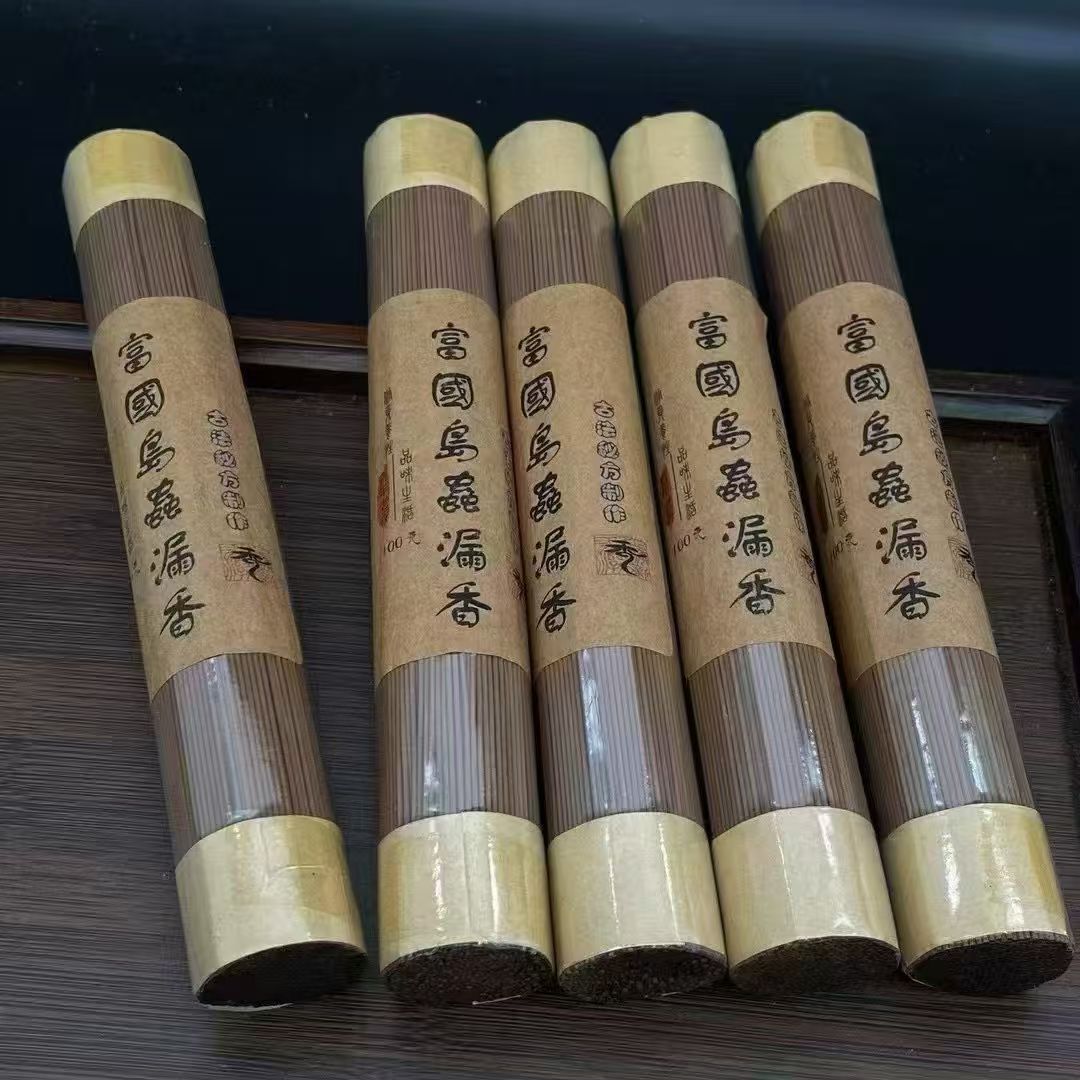
Agarwood incense sticks versus ordinary incense sticks
An agarwood stick is defined by its aromatic material, not by its shape. A stick can contain agarwood powder at a stated share, a binder that holds the column together, and possibly fragrance or filler materials. Two suppliers can both call a product "agarwood incense" while differing in agarwood share, binder type and stick weight. Ask for the composition in writing, including the binder, and ask whether the agarwood is powder, oil or both. If a supplier cannot describe the recipe in categories, price comparisons are meaningless.
Cored versus coreless construction
Construction changes burn behaviour, breakage and packing more than most buyers expect. The comparison below is the one to settle before sampling.
| Criterion | Cored stick | Coreless stick |
|---|---|---|
| Structure | Incense coating around a thin bamboo or wood core | Extruded incense column with no support core |
| Burn behaviour | Core keeps the stick straight; the core itself may smoulder | Burns as a column; the whole stick is aromatic material |
| Ash and residue | Leaves a core stub and firmer ash | Usually finer ash; can curl or collapse |
| Breakage in transit | More resistant to bending, but cores can snap | More prone to snapping in thin diameters |
| Packing implications | Needs support at both ends; core ends must be clean | Needs a rigid tray or tube to hold alignment |
| Typical fit | Long-burning ceremonial formats, humid markets | Slim premium formats, gift and home-fragrance ranges |
| What to verify | Core material, core diameter, whether the core is scented | Diameter tolerance, straightness, tip integrity |
Our own wholesale formats are coreless: both the Hainan agarwood incense sticks and the Kynam agarwood incense sticks are described as slim, straight coreless sticks with a uniform appearance, supplied in compact bundles. For a deeper comparison of the two constructions, see cored vs coreless agarwood incense sticks.
Size, material and scent as market decisions
Length, diameter and stick weight should follow the burn duration your market expects and the holder your customers already own, not the other way round. Record all three in millimetres and grams, because "long" and "thick" are not specifications. Scent direction should be described as an experience — for example a woody, resinous opening with a soft dry-down — and then tied to a coded sample, since a scent name alone tells a factory very little. If you are briefing a custom programme, a written scent brief is a better starting document than a photograph.
Quality and Sample Evaluation
Verify the material and formulation disclosure
Ask four questions in writing: what aromatic material is used and in what form; what the binder is; whether colourants, fragrance compounds or fillers are added; and whether the supplier can provide a safety data sheet or composition statement for the finished stick. A supplier who answers in categories is easier to audit than one who answers only with adjectives. Where a claim such as "natural" appears on retail artwork, the wording has to match the declaration behind it — the label-claims audit process is covered in natural agarwood incense label claims.
Inspect appearance and packing first
Before burning anything, measure twenty sticks from the sample: length, diameter at three points, weight, straightness and tip condition. Photograph the bundle as received, including the inner wrap, because packing damage is easiest to prove before the sample is opened. Check for surface dust, colour variation between sticks, mould or damp smell, and whether the bundle holds its shape when the wrap is removed.
Test burn performance under recorded conditions
Burn time, smoke density and ash behaviour are only comparable when the test conditions are recorded. Use the same room, note temperature and humidity, keep a fixed distance from the observer and the same ignition method, and burn at least three sticks per sample. Record time to full ash, whether the stick self-extinguishes, smoke density on a simple scale, ash colour and whether the ash curls or falls, and any cracking or splitting. A practical observation sheet is set out in how to test incense stick samples for burn performance.
Design a repeatable sample comparison
Code every sample so the panel does not see the brand or the price, and evaluate one sample per session so the previous scent does not carry over. Score scent, burn behaviour, appearance and packing separately, then combine them with weights agreed before the test. Keep the original packaging and a retained stick from each sample; the approved sample becomes the physical reference for the bulk order, so it should be stored with its lot code and the date it was approved.
Confirm sample-to-order consistency
Ask whether the sample came from a production lot or a laboratory batch, and request the lot code. Write into the order that bulk goods will be measured against the retained sample on diameter, weight, burn time band and breakage allowance. Where a supplier cannot tie the sample to a lot, treat the sample as indicative only and plan a pre-shipment check.
Wholesale Terms: MOQ, Pricing, Packaging and Claims
What a sample request and MOQ should confirm
A sample request should confirm four things: whether the sample is free or charged, whether the charge is credited against a first order, the courier and declared value, and which specification the sample represents. On MOQ, ask what the minimum is per SKU, per scent and per pack format, because a low headline MOQ often hides a higher minimum per fragrance. Establish whether MOQ is counted in sticks, boxes or kilograms, and whether mixed containers are accepted.
Compare unit price, packing and freight together
Convert every quotation to a cost per sellable stick, then add packing, inner trays, labels, carton cost and freight to the same basis. A quotation per box tells you nothing until you know how many sticks the box contains and whether the price includes the retail pack. Ask for the Incoterm, the port, the carton dimensions and gross weight, since incense is light and freight is often charged on volume. The full breakdown method is covered in reading an agarwood incense sticks wholesale price.
OEM, ODM and private-label items to verify
For a private-label programme, confirm who supplies the artwork, who approves the label text against destination rules, what the print method is, how many SKUs the minimum applies to, and who owns the printing plates or tooling. Ask whether the supplier can hold your approved sample and artwork on file for reorders, and whether packaging changes require a new sample approval. None of this should be assumed from a catalogue photograph.
Delivery, protective packing and batch records
Specify the inner protection — rigid tray, tube or bundle wrap — and the carton grade, and ask for a drop or compression check on a packed carton. Request the batch code on the carton and the corresponding production date, so an arrival can be traced back to a run. Where a shipment is consolidated, ask which lot each carton belongs to; mixed lots are the most common reason a reorder drifts in scent or burn.
Claims: breakage, drift and wrong goods
Agree a claims window in days from arrival, the evidence required (photographs of the carton label, the inner pack, the affected sticks and a count), and a remedy ladder — replacement, credit or price adjustment. Define an acceptable breakage percentage per carton and state that exceeding it triggers the remedy. Quality drift should be handled against the retained sample and the burn record, not against memory, so keep both for the life of the order.
Import Compliance and Documents
Requirements are not uniform across markets
There is no single global certificate for incense. Labelling, consumer-product safety and chemical obligations differ by destination, and a document accepted in one market may be irrelevant in another. Ask your supplier which documents they can provide for your specific market, and confirm the current requirements with your own importer or compliance adviser rather than relying on a supplier's summary. In the United States, for example, the Consumer Product Safety Commission publishes labelling guidance that applies to many consumer products; in the EU, the General Product Safety Regulation (EU) 2023/988 sets the general safety framework.
Composition and test documents to request
Request a finished-product composition statement, a safety data sheet where applicable, and any test reports the supplier holds for the specific stick — not for a different product in the range. Check that the product name, dimensions and lot on each document match the goods you are buying. Documents that cannot be tied to a lot are marketing material, not evidence.
Regulated species and CITES
Agarwood comes from Aquilaria and related genera, several of which are listed under CITES. Where the material is covered, the shipment needs the correct permits, and the species and product description on the permit must match the goods. Ask who holds the permit, which species is declared, and whether the finished stick is treated as a covered product in your destination. The CITES Secretariat and the IUCN/TRAFFIC review of agarwood trade are the reference points to read before a first container; a supplier's assurance alone is not a substitute for the paperwork.
Wholesale Agarwood Incense Supplier Comparison Checklist
Score three shortlisted suppliers on the same sheet. Use a 1–5 scale per row, multiply by the weight, and keep the evidence column for the document or sample that justifies the score.
| Dimension | What to score | Evidence to request | Weight |
|---|---|---|---|
| Raw material | Species, origin claim, agarwood form and share | Composition statement, lot code | 20% |
| Formulation transparency | Binder, colourant, fragrance and filler disclosure | Written ingredient categories, SDS | 15% |
| Product specification | Length, diameter, weight, straightness tolerances | Signed spec sheet | 10% |
| Burn performance | Burn time band, smoke, ash, self-extinguishing | Test record with conditions | 15% |
| Sample stability | Sample tied to lot; second sample matches first | Retained sample, repeat test | 10% |
| MOQ | Per SKU, per scent, mixed-container flexibility | Written MOQ schedule | 5% |
| Packaging | Inner protection, carton grade, label approval route | Pack spec, drop-check result | 10% |
| Quotation | Cost per sellable stick, Incoterm, freight basis | Itemised quotation | 5% |
| Lead time | Production, packing and document timeline | Written schedule, reorder lead time | 5% |
| After-sales | Claims window, evidence rules, remedy ladder | Order terms | 5% |
Common Mistakes in Wholesale Incense Sourcing
- Approving a sample without recording its lot code, then having nothing to measure the bulk order against.
- Comparing quotations per box while packing counts differ between suppliers.
- Assuming "coreless" or "natural" describes the recipe; both are construction or claim words, not a composition.
- Testing burn time in different rooms or humidity and treating the results as comparable.
- Leaving breakage allowance and the claims window out of the order, then negotiating after arrival.
- Accepting a certificate that names a different product or lot from the one being shipped.
- Choosing on price before checking whether the supplier can repeat the scent on a reorder.
Frequently Asked Questions
How do I choose an agarwood incense sticks manufacturer for wholesale?
Shortlist on written specification, then approve a lot-linked sample, then confirm commercial and documentary terms. Score each supplier on material, formulation transparency, specification, burn performance, sample stability, MOQ, packaging, quotation, lead time and after-sales, and keep the evidence for each score.
What is the difference between cored and coreless incense sticks?
A cored stick wraps incense around a thin bamboo or wood core; a coreless stick is a solid extruded column. Cored sticks resist bending better, while coreless sticks burn as a column of aromatic material and usually need more rigid packing.
How long should an agarwood incense stick burn?
Burn time depends on length, diameter, density and the blend, so no single figure applies. Ask the supplier for a burn time band measured under stated conditions, then verify it yourself on three sticks per sample in the same room.
Can I get private label or OEM agarwood incense sticks?
Many manufacturers offer private label and ODM programmes, but the terms differ. Confirm who supplies artwork, how label text is approved, what the minimum is per SKU, and whether your approved sample and artwork are held for reorders.
Do agarwood incense sticks need CITES documents?
Several Aquilaria species are CITES-listed, so shipments may need permits. Ask which species is declared, who holds the permit, and whether your destination treats the finished stick as a covered product. Confirm the current rule with your importer or compliance adviser.
How do I check that a bulk order matches the sample?
Measure diameter, weight and length against the retained sample, repeat the burn test under the same conditions, and compare breakage against the agreed allowance. Do this before the goods leave the factory where possible, and again on arrival.
What should a wholesale quotation include?
Cost per sellable stick, packing counts, inner and outer packaging, Incoterm and port, carton dimensions and weight, lead time, MOQ per SKU, and the documents included. Anything missing from the quotation becomes a negotiation later.
Conclusion
Choosing an agarwood incense sticks manufacturer is a sequence of evidence checks: a written specification, a lot-linked sample tested under recorded conditions, commercial terms that define breakage and remedies, and documents that match the goods. Buyers who run those checks before the deposit spend less time arguing after the container arrives, and reorders stay closer to the scent they approved.
If you are comparing suppliers now, send us your estimated volume, target market, stick type, dimensions, packing requirements and sample standard. You can review our Hainan and Kynam coreless formats, read the wholesale specification guide, or contact our team with the details of your programme.