Oud oil grades are supplier labels, not a published standard. A quotation that says "AAA", "super" or "premium" is describing the seller's own sorting of wood, oil, or both — and no two suppliers are obliged to use the label the same way. What the label cannot tell you is the species, the extraction route or the batch behind the drum, and those three facts are what your purchase order actually buys.
This guide is written for importers, perfume houses, fragrance houses, incense manufacturers and private-label brands that are comparing agarwood oil offers and need to turn grade vocabulary into a specification. It treats oud oil quality grades as claims to be checked rather than ranks to be trusted, and it shows how wood source, extraction route, samples and batch records decide what a grade is worth in your own formula.
Oud Oil vs Agarwood Oil: The Same Material, Different Trade Vocabulary
"Oud" is the Arabic trade name; "agarwood" is the English botanical trade name for resin-bearing heartwood of Aquilaria and Gyrinops species. The oil appears in catalogues as oud oil, agarwood oil, agarwood essential oil, dehn al oud and jinkoh oil. These are naming habits, not specifications.
The naming problem also runs into process language. ISO 9235, the vocabulary standard for aromatic natural raw materials, separates distilled essential oils from extracts, concretes and absolutes. A solvent-extracted or supercritical CO2 product is an extract in that vocabulary, even when a page calls it agarwood essential oil. If the words on the offer do not match the process in the quotation, ask which term the supplier is using and why. The naming question is covered in more depth in our guide to oud oil vs agarwood oil sourcing.
Reading Oud Oil Grades in a Quotation
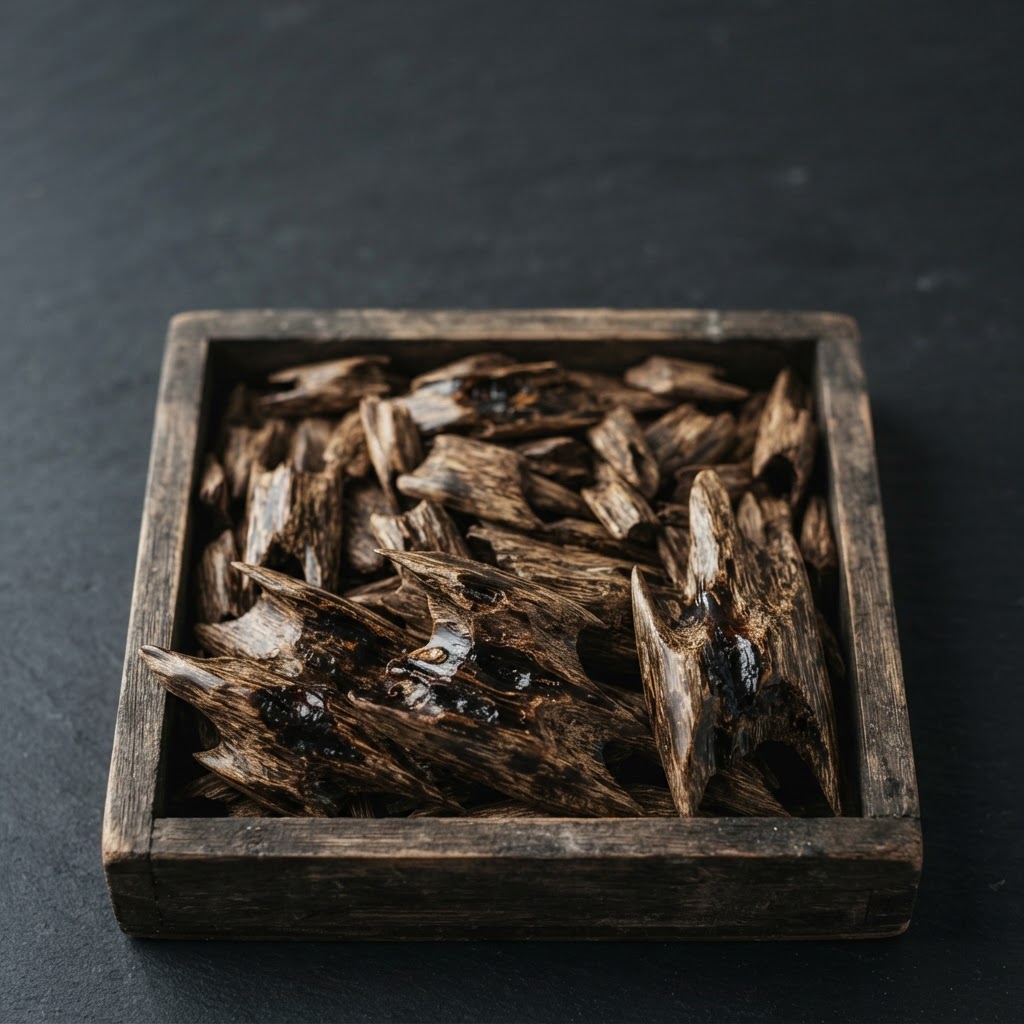
Most grade words originated with wood, not oil. "Sinking" describes a piece of wood dense enough to sink in water; "super" and "double super" were wood sorting terms; "AAA" is a merchant ranking that different sellers apply to different ranges. When those words move onto a bottle of oil, they become a price signal rather than a measurement.
Two sellers can quote the same letter for oils with different species, different wood-to-oil yields and different documentation, and both can be honest. Oud oil grades are therefore claims about input material and seller tier, not measurements of the liquid, which is why a letter is only useful once it is attached to fields that can be checked.
| Label in the quotation | What it usually describes | What it does not prove | Ask instead |
|---|---|---|---|
| Sinking / sinking grade | Wood density and resin loading of the input material | That the oil came from that wood, or the yield achieved | Which lot of wood, and how many kilograms of wood per kilogram of oil |
| Super, super double | A seller's top wood tier, historically a sorting term | Any shared definition across suppliers | The written specification for appearance, odour reference and density |
| AAA, AA, A, A+ | Relative ranking inside one seller's range | Comparability with another seller's letters | The species, origin and batch record behind the letter |
| Premium, royal, kynam | Positioning, or a named wood type in the case of kynam | A measured grade or a laboratory result | Whether the name refers to wood species, wood type or marketing tier |
| Double distilled | A process description, sometimes a quality claim | Purity, or that the oil was not blended afterwards | Distillation dates, still type, and a composition statement |
| 100% pure | An assertion about composition | Species, origin, or freedom from carrier oils | A composition statement, a lot-linked COA and a retention sample |
Agarwood oil grades borrow the same vocabulary stock, so this mapping holds whichever name your supplier prints on the offer. Ask for the same four fields either way: species and origin, extraction route, wood grade consumed, and the batch record.
How Wood Source and Extraction Route Set the Grade You Receive
Resin loading varies from piece to piece, so low-resin wood produces a thinner oil for the same distillation effort. Ask which grade of wood the batch consumed, whether the wood was cleaned and sorted first, and how the resin formed — naturally, or through wounding and induction treatments. Practices differ by origin and buyer acceptance differs by market, so the answer belongs on the specification, not in a chat message.
The extraction route then changes what the grade means commercially. Hydrodistillation and steam distillation separate oil with steam; solvent extraction leaves residue questions that must be specified; supercritical CO2 uses pressurised CO2 and produces a different aromatic profile and cost base. A supercritical extract and a hydrodistilled oil from comparable wood are not interchangeable inputs, so the route should appear in the same line as the grade.
Why Aroma Descriptions Cannot Confirm Purity or Grade
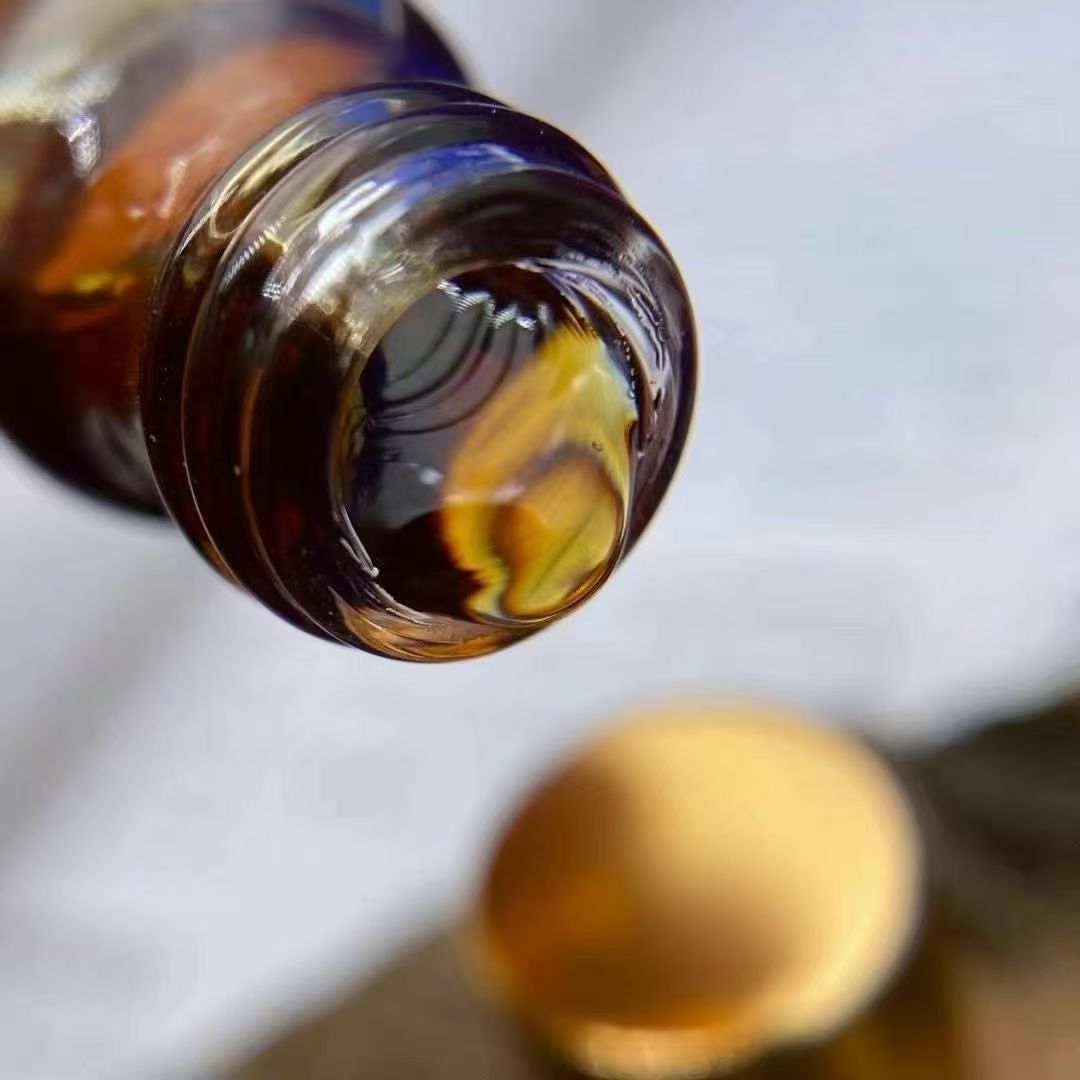
Sweet, woody, smoky, animalic and balsamic are useful words for matching a brief. They are not evidence. Sensory results shift with temperature, humidity, substrate, dilution and how many samples the evaluator has already smelled, and nose fatigue sets in quickly during a comparison session.
A convincing opening note also says nothing about what is in the bottle. Oud oil can be extended with carrier oil or blended with other aromatic material, and the result may smell plausible while delivering less oud character per kilogram. A chromatogram has the same limit in a different form: it reports what one method detected in one sample, so check which batch, method and laboratory appear on the report. None of this settles oud oil grades or purity on its own. Our guide to reading an oud oil certificate of analysis sets out the fields that make a report usable.
Manufacturer, Wholesaler or Trader: Who Is Actually Grading the Oil
A grower-processor controls wood, extraction and the batch record, so it can usually trace a lot to a plantation and a still. A trader or wholesaler buys and resells: it may hold stock, consolidate origins and serve small volumes well, but its documentation is only as good as what its upstream supplier provides. A private-label or ODM partner fills and packs under your brand and may not produce the oil at all.
None of these is automatically wrong. Whether the page calls itself an oud oil manufacturer or an agarwood supplier, the risk is the same: paying manufacturer-level prices for documentation the seller does not control, or assuming a "factory" claim means the oil was distilled at the address on the invoice. Ask which production steps happen on which site, and who signs the batch record.
Verifying Processing Capability and Supply Continuity
Start with identity: the legal entity on the quotation, the invoice and the bank account should match, and the production address should be a site you can locate. Then ask for capacity in units you can compare — kilograms of oil per month, typical batch size, number of stills or extraction lines, and how much of that capacity is already committed.
Put your own volume in proportion. If your annual requirement is a large share of a supplier's stated output, you carry every disruption on that line; if it is a small share, you risk being deprioritised in a busy season. Ask how material is allocated when demand exceeds supply, and what the supplier does when a batch fails its own check.
Samples and Documents: What to Request Before You Compare
- State the application, the target volume and the destination market in the first email, so the sample matches the offer.
- Ask that the sample be drawn from the lot you would buy, or from current production, and carry a lot number and packing date.
- Request enough volume for a bench trial and an application trial, not a single smelling strip.
- Ask how the sample was stored and shipped, and whether sample and freight costs are credited against a first order.
An oud oil sample that arrives without a lot number cannot be compared with anything, and a grade that cannot be traced to a lot is a description. Ask for the paperwork that makes the sample auditable: a specification sheet naming species, origin, extraction method, appearance, odour reference, batch number, production date and pack format; a certificate of analysis that names the same batch; the full chromatogram if one is offered; a current safety data sheet; permits where the species and route require them; and an HS code proposal for your broker to confirm. The oud oil manufacturer RFQ guide shows how to put those requests into one document.
Designing a Sample Test That Grades Oil for Your Application
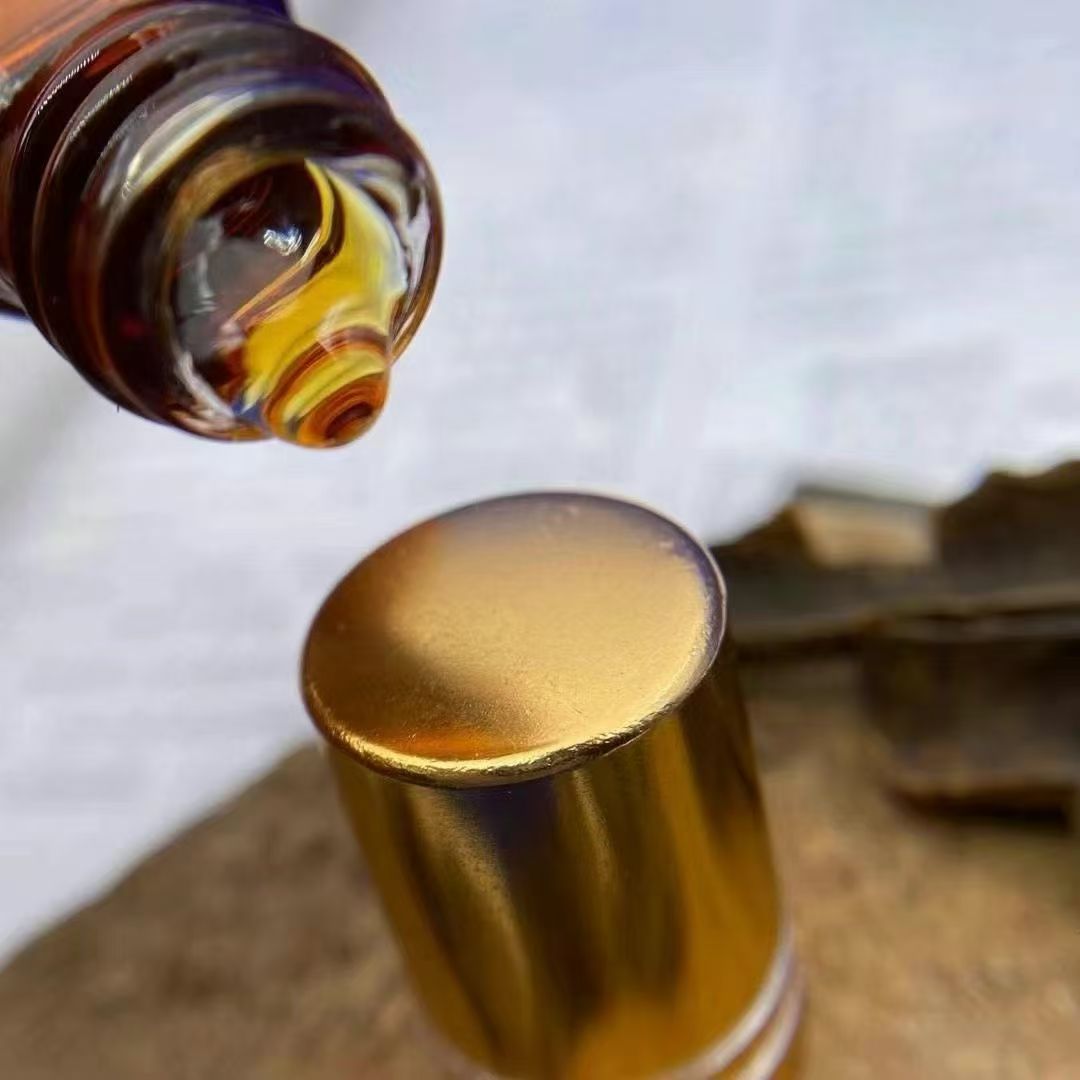
Blind the samples. Give each supplier a code, remove branded packaging, and let the evaluator score without seeing the price. Test everything in one session, at the same dilution, on the same substrate, and record room temperature and time of day.
Score in stages: opening, heart and dry-down; intensity and tenacity on blotter and on your intended substrate; colour, clarity and sediment; and off-notes such as burnt, sour or solvent-like characters. Then run the shortlisted oils inside your real application — a perfume base, an incense blend, a candle — because an oil that performs on paper can behave differently in a formula. If the end use is oud oil for perfume manufacturing, that base trial is the decisive test. Keep a sealed retention sample of each coded sample with the record, and re-test the winner against the first bulk delivery.
Batch Consistency, Storage and Packaging
Consistency has to be defined before it can be measured. Write tolerances into the agreement: an appearance range, an odour comparison against the approved reference, density where specified, and clarity. Ask for the batch numbering convention and for retention samples held per batch.
Light, heat and oxygen change oil between production and your warehouse, so ask how the oil is stored before shipment, whether containers are filled to minimise headspace, and whether transit climate has been considered. Packaging is part of the specification: glass is inert but fragile, coated steel or aluminium drums suit bulk volumes, and plastic needs a liner compatibility check. Confirm fill volume, closure, liner, seal integrity, labelling and the pack sizes available for sampling versus production, plus the supplier's shelf life and the basis for it. Storage and retest clauses are covered further in our guide to how long oud oil lasts.
What Moves the Price Behind an Oud Oil Grade
Six factors explain most of the gap between quotations: the resin content and species of the wood, the yield, the extraction route with its energy and capital cost, documentation and legality costs, packaging and testing, and freight, insurance and payment terms.
One factor is easy to miss: what else is in the bottle. An oil extended with a carrier or blended with other aromatic material can look cheaper per kilogram while delivering less oud character per unit. Ask for the composition statement and compare price per kilogram of the material as specified, not per kilogram of liquid — the point matters most once you move from a sample to a bulk oud oil order.
Comparing Three or More Quotations on Equal Terms
Send every supplier the same written specification and ask for the same quotation structure. Then convert each offer into a landed cost per kilogram of usable material, including freight, insurance, duty and any testing you will commission yourself.
| Field to normalise | Why it changes the comparison |
|---|---|
| Material definition | Species, route, wood grade and batch basis must be identical before prices mean anything |
| Quantity and pack size | A per-kilogram price at 1 kg is not the price at 25 kg in a drum |
| Incoterm and named port | Ex-works and DDP quotes differ by freight, insurance and duty |
| Currency and payment terms | Payment timing and currency risk are part of the cost |
| Documents included | A quote that excludes permits or testing leaves you to pay for them |
| Lead time and MOQ | A faster, smaller order may be worth more than a lower unit price |
| Composition statement | Carrier or blend content changes the cost per unit of oud character |
A quote without a specification cannot be compared at all, and a price far below the others needs a stated reason: a different species, a lower wood grade, a carrier, or documents you will have to obtain yourself. Three quotations on identical terms tell you more than ten on different ones, and that is true whether the header says oud oil grades or agarwood oil grades.
Compliance Files: SDS, Labelling and CITES for Regulated Species
Requirements depend on the destination country, the intended use and the form of the material, so confirm them for your own market rather than relying on a supplier's general statement. At minimum, request a current safety data sheet that matches the product and is written in the language your market requires, and check that its trade name and composition match what you are buying.
Labelling is a separate question. A fine-fragrance or cosmetic application brings allergen declarations, labelling rules and IFRA-related considerations; incense, bakhoor and home fragrance follow different rules. Ask which market-specific documents the supplier regularly provides, then have your own regulatory adviser confirm they are sufficient.
Agarwood is also a regulated trade issue. Aquilaria and Gyrinops species are listed in CITES Appendix II, as FAO guidance on CITES, trade and sustainable forest management records. Appendix II listing means trade is controlled; it does not mean every oil shipment needs the same certificate. The permit type, the issuing party and the requirement itself depend on species, form, origin and destination, so confirm the position with your importing authority before ordering, and ask which permits the supplier can obtain and in whose name they are issued. "CITES certified" is a phrase, not a document — ask to see the permit that names your shipment.
MOQ, Sample Orders and Custom Packaging
MOQ is rarely one number. Ask separately about the minimum for a trial order, for a repeat order, per pack size and per private-label SKU, and whether sample costs are credited. For custom packaging, confirm who supplies the bottle, closure and label, who fills and seals, whose batch record applies, and how artwork approval and label compliance for your market are handled.
Separate what is genuinely customised — formula direction, pack format, outer packaging — from what is standard, and get the finished-product specification in writing rather than only the bulk oil specification. NanjaOud sets out its OEM and private-label options; use that page to frame a brief, then confirm MOQ, artwork timeline and label responsibility for your destination in writing.
Lead Time, Logistics, Inspection and Claims
Break lead time into its parts: material allocation, production, testing and documents, packing, freight booking, transit and customs clearance. Ask for each date in writing, attached to the order rather than to an email thread.
Agree inspection before shipment: who inspects, where, which samples are drawn and sealed, and who holds them. Confirm the document pack — commercial invoice, packing list, HS code, permits, safety data sheet and any certificate of analysis — plus the incoterm and insurance cover. Claims need a clock and an evidence list: a notification window after arrival, what the buyer must provide, and a remedy ladder of replacement, credit or return agreed before the first order. Both sides keeping a sealed retention sample is what makes a dispute resolvable.
Oud Oil Supplier Evaluation Checklist
Use this table as the agenda for a supplier call and as the structure of your comparison file, whatever grade word the quotation uses.
| Area | What to confirm | Evidence to request |
|---|---|---|
| Raw material source | Declared species, country of harvest, wood grade, plantation or wild, how resin formed | Specification sheet naming species and origin; written statement of wood source |
| Sample performance | Sample drawn from the offered lot; behaviour in your own application | Lot number and packing date on the sample; your coded evaluation record |
| Batch documents | Batch number, production date, retention sample, analysis parameters | Batch record, certificate of analysis and chromatogram sharing one batch number |
| Quotation terms | Price per kg at the stated specification, incoterm, currency, payment terms, MOQ | Written quotation against your specification, not a chat message |
| Packaging | Container material, liner, fill volume, closure, seal, pack sizes | Pack specification and a photo of the packed unit |
| Lead time | Allocation, production, testing, documents, freight | Dated schedule attached to the order |
| Verifiable documents | Legal entity match, SDS, permits where applicable, HS code | Business licence, current SDS, permit naming the shipment, broker-confirmed HS code |
Oud Oil Formats Available from NanjaOud
NanjaOud, operated by Jiangmen Nangjiaxiang Agarwood Development Co., Ltd., supplies agarwood materials and finished products from Jiangmen, Guangdong, with more than ten years of cultivation experience and a managed plantation base. The agarwood and oud oil range separates distilled oil, supercritical extract and finished fragrance directions, which matters for grading: each format carries its own specification, sample basis and cost structure.
The supercritical agarwood oil product page describes a deep amber to reddish-brown oil intended for fragrance blending, incense fragrance blending, home fragrance and private-label fragrance products, presented for bulk and ODM inquiries; confirm current availability before ordering. Current formats, internal grades and commercial specifications are confirmed for the item quoted and sampled rather than published as fixed catalogue data, and the company states that no chemical agents are used to accelerate resin formation. The quality and supply pages describe material selection, process control and batch checks; treat those as the starting point for the questions in the checklist above.
Common Grading Mistakes
- Treating AAA or "super" as an industry scale that two suppliers must interpret the same way.
- Choosing on scent alone, with no specification and no retention sample.
- Comparing prices across different incoterms, currencies, pack sizes and grades.
- Accepting "100% pure" or "CITES certified" as a document rather than a phrase.
- Testing a sample that was never linked to the lot being offered.
- Leaving packaging, storage, shelf life and claims out of the purchase order.
FAQ
What do AAA, AA and A mean for oud oil?
They are a seller's internal ranking, usually inherited from wood grading, not a published standard. Two suppliers can use the same letters for different material, so ask for the specification and batch record behind the letter.
Is a higher oud oil grade automatically purer?
No. Grade language usually describes the input wood or the seller's tier, while purity is a statement about composition. Extension with carrier oil can happen after distillation, so request a composition statement and a lot-linked analysis.
Is oud oil the same as agarwood oil?
In trade practice, yes: both names refer to oil from resin-bearing Aquilaria or Gyrinops wood. Because neither name defines species or extraction method, specify both in your request for quotation.
Can a GC-MS report prove the grade?
It reports what a method detected in a sample. It is strong evidence when the report names your batch, method and laboratory, but it does not establish the wood grade, species or legal origin on its own.
Do I need CITES documents for oud oil?
Possibly. Aquilaria and Gyrinops species are listed in CITES Appendix II, but the requirement depends on species, form, origin and destination. Confirm with your importing authority and ask which permit the supplier can obtain.
How much sample should I request?
Enough for a bench trial plus a trial in your real application, drawn from the offered lot and carrying a lot number. A single smelling strip cannot support a purchasing decision.
Why do two suppliers quote the same grade at very different prices?
Because the offers are usually not the same material. Species, wood grade, yield, extraction route, documents and pack size all move the cost, and so does anything added to the oil after distillation.
Conclusion
Oud oil grades only become useful when you treat them as the opening of a specification rather than the end of one. Tie every letter to a species, an extraction route, a lot number, a sealed retention sample and a document set you have read — then compare quotations on identical terms and a landed cost per kilogram of the material as specified.
Write your brief before you write your request: intended use, target market and its requirements, estimated annual and first-order volume, pack format, sample quantity and the documents you need to see. If you are grading oud oil for your own market, send those points to NanjaOud and ask which products, sample arrangements and services can be confirmed for your case.