

Choosing an incense stick manufacturer in China is a verification exercise before it is a price negotiation. The supplier worth shortlisting is the one that answers four questions in writing: which wood is in the stick, how the stick is constructed, which approved sample the bulk run will be measured against, and which documents travel with the container. Everything else — the catalogue photographs, the trade-show badge, the promise of a good price at volume — is easier to produce than those four answers.
This guide is written for importers, distributors and brand owners preparing a first or repeat wholesale order. It sets out seven checks, in the order that protects your money, then the red flags that end a conversation early, and a comparison table you can copy into a spreadsheet.
What you are actually buying at wholesale
Most incense sold internationally is a bamboo splint or a charcoal blank dipped in a fragrance compound, where the scent comes from a perfume oil and the powder is only a carrier. An agarwood stick is bought for the wood itself: resin-bearing heartwood of Aquilaria or a related genus, ground and blended with a binder, sometimes with added resins or oils.
At wholesale that is a commercial difference, not a poetic one. You are either paying for a named raw material whose species, grade and share in the blend can be described, or you are paying for a scent name that any factory can reproduce from an oil. Two quotations for "agarwood incense sticks" can differ by a factor of five and both be honest, because they are not the same product.
Three categories to sort every quotation into
- Predominantly agarwood-powder stick. The wood is the aromatic body of the product; the binder and any additives are secondary.
- Blended stick. Agarwood is one component among others, and its share of the blend is the number that drives your cost.
- Agarwood-scented stick. The oud note comes largely from fragrance material rather than wood content.
Ask each supplier to place their offer in one of these three categories in writing. A company that cannot, or will not, is functioning as a fragrance supplier rather than a wood supplier, which is a legitimate business but a different purchase.
Origin names are trade conventions, not grades
Hainan, Kynam and similar names describe a wood source, a scent direction, or both, depending on who is speaking. They are not universal grades, and two factories can use the same name for visibly different sticks. Ask what the name refers to in that supplier's offer, whether the wood is plantation-grown or wild-collected, and whether the same name will appear on the packing list and the export paperwork. The second question matters as much as the first: the species in the shipment has to match the species in the documents.
Decide construction before you compare prices
Construction is the specification buyers most often forget to write down, and it changes what you are paying for on every stick. Coreless incense sticks are extruded aromatic paste with no splint; a cored stick is paste coated onto a thin bamboo splint. Neither is better in the abstract — a well-made cored stick outperforms a badly made coreless one — but a supplier switching between the two mid-order is a quality problem you cannot test your way out of.
| Decision point | Coreless stick | Bamboo-cored stick |
|---|---|---|
| Where the aroma sits | The whole cross-section is aromatic material | Part of the cross-section is splint, which contributes little scent |
| Cost logic | You pay for paste along the full length and diameter | Paste volume can be lower at the same stick length |
| Breakage pattern | Snaps cleanly; brittle when very dry, so inner packing decides the loss rate | Splint keeps the stick rigid; typical defects are coating cracks and exposed splinter ends |
| Burn and ash | No splint combustion; test smoke and ash yourself rather than trusting a description | The splint burns with the paste and can add its own note and heavier ash |
| Market fit | Premium retail, gifting, meditation and tea-culture assortments | Volume retail, ritual and long-format markets where a holder is standard |
| What to write in the RFQ | Diameter, length, grams per stick, straightness tolerance, moisture at packing | Splint diameter, coating thickness, exposed splint length, coating adhesion |
If you plan to sell both constructions, treat them as separate SKUs with separate approval samples. Never allow a substitution when one line runs short: the difference is visible to your customer in the first minute of burning.
Length, diameter and scent have to fit the market
Burn time scales mainly with length, diameter and how densely the stick is packed, so a longer or thicker stick is not a better one — it is a different product, with different packing counts, freight weight and shelf price. Fix the holder, the room and the retail context first, then ask for sticks that fit them. Treat any burn time published on a website as a claim to test, and replace adjectives such as "sweet" or "deep" with a written scent brief and a coded sample.
Check 1 — the company behind the quotation
Before discussing product, establish who you are dealing with. Ask for the registered company name, business licence, factory address and the name that will appear on the commercial invoice, then confirm that the bank account beneficiary matches that legal entity. A trading company is not automatically a bad supplier, but you should know which one you have, because recourse and lead-time promises behave differently.
Practical evidence of production is harder to fake than a certificate: a live or time-stamped video of the extrusion, drying and packing areas; the address on the cartons; the lot-coding system used on finished goods; and a named contact who can answer a technical question about drying or binder without escalations. Ask how many days of drying the sticks get before packing, and what the workshop does when humidity spikes. Vague answers here predict vague answers later.
Check 2 — the material and formula in writing
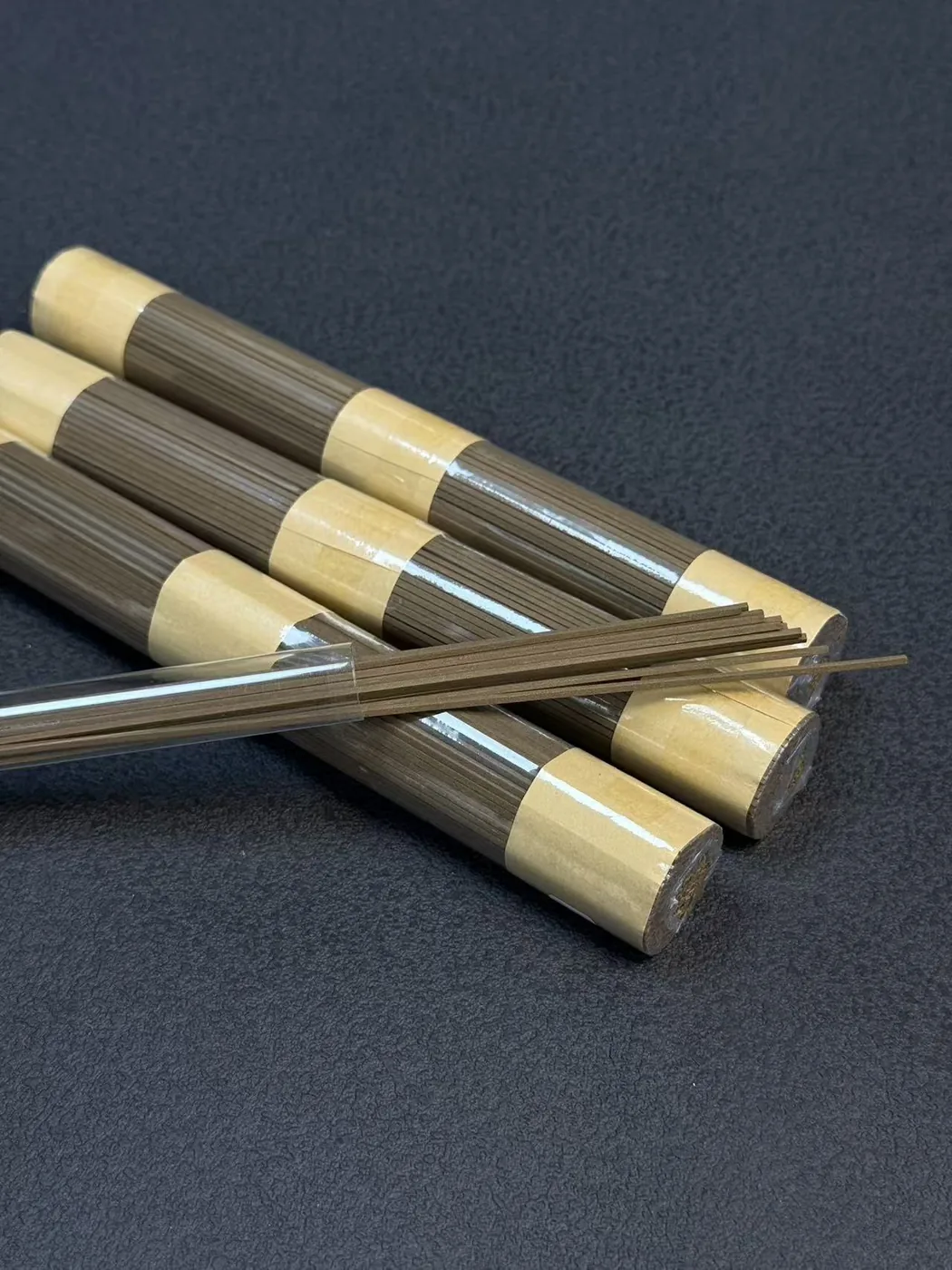
A supplier can protect a recipe and still disclose categories. Request, on the quotation or a signed specification: the wood species or trade name and the part used; the approximate agarwood share of the blend as a percentage band; the binder type; whether fragrance oils, resins or colourants are added; and the moisture level at packing. Exact ratios are not required — bands and ingredient categories are enough to price the offer and to describe the product honestly in your market.
An oud incense sticks manufacturer that describes the wood, the binder and the added fragrance is giving you something you can sell against; one that answers only with scent adjectives is selling a fragrance. A complete refusal to describe anything is also information, and it belongs in your risk calculation. If the stick is sold as agarwood but the answer never mentions wood, assume you are buying a scented stick and negotiate accordingly.
Check 3 — the specification and the sample that proves it
Samples are cheap; repeatable samples are not. The purpose of sampling is not to decide whether a stick smells pleasant. It is to create evidence you can compare across suppliers and later hold one supplier to. Incense stick specifications belong in the same document you test against, so write them before the sample arrives rather than after it disappoints.
- Ask what the sample represents. Production stock, a sample-room stick, or a made-to-brief trial are three different claims. Only the third tells you about capability; only the first tells you about consistency.
- Code and blind-test. Remove brand names, number the samples, and run every supplier's stick on the same day in the same room, away from draughts and in the same holder.
- Record the same fields every time. Ignition behaviour, whether the stick flames before settling, total burn time, smoke density, ash colour and whether it curls or falls, self-extinguishing before the end, and how the scent develops from first third to last.
- Score in numbers, with notes. A one-to-five score per attribute plus a short observation beats an overall impression. If two people test, score separately: disagreement on smoke usually means an inconsistent burn, which is exactly the defect that scales badly in a container.
- Order a second sample weeks later. Batch-to-batch drift is invisible in a single sample and expensive in a repeat order.
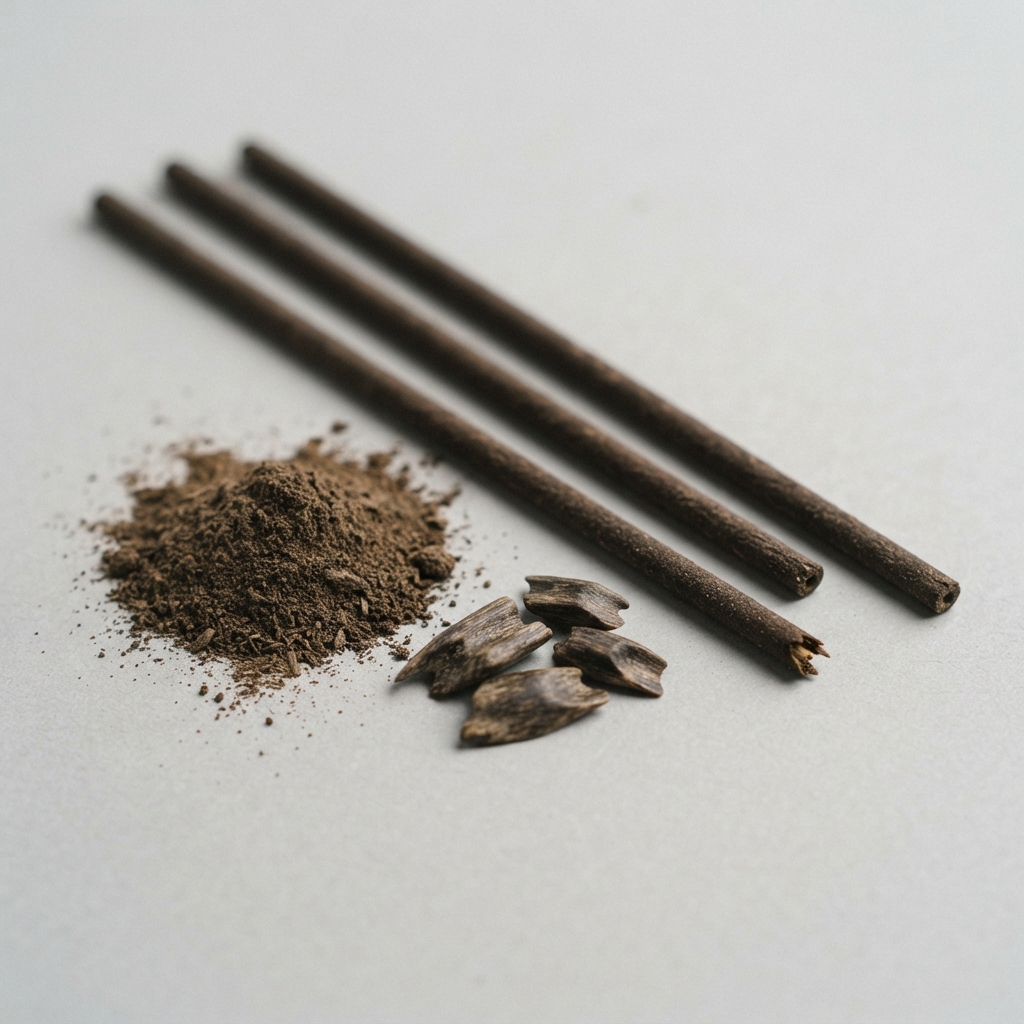
Inspect the physical goods as carefully as the burn: straightness, surface cracks, diameter variation along the stick, colour variation between sticks, loose dust in the bag, actual bundle count against the stated count, seal quality and carton condition. Bulk agarwood incense sticks are judged on the share of sellable sticks in the carton, not on the best stick in the bundle. Photograph the opened bundle as received: that image is your baseline if the shipment arrives with more fines and more broken tips.
Check 4 — MOQ, price basis and packing
Incense sticks MOQ should be quoted per SKU, not per order. A supplier quoting one number for a mixed container is often quoting the smallest line they would prefer to run, and the real constraint appears later when you try to split it across pack sizes. Ask separately about stock packing and private label packing, because print setup usually resets the minimum.
Then read the quotation past the unit price: the price basis (per stick, bundle, inner box or carton), the count in each unit, whether packing and printing are included, the Incoterm, who books freight, currency, validity, payment terms and the breakage allowance. Agarwood incense sticks wholesale offers only become comparable at cost per sellable stick at your door, and packing plus freight routinely reorder the list.
Incense is brittle and hygroscopic, so inner protection matters more than carton print. Specify the inner packing method, carton board grade, whether a moisture barrier is used, pallet pattern, lot or batch code on each carton, and production date. Private label incense sticks add a print run to that list: confirm who owns and approves artwork, that a dieline proof is signed before mass printing, who pays for plates, and which label content is your responsibility in the destination market.
Check 5 — proof before shipment
Agree three things in the purchase order: that a sealed approval sample is retained by both sides; that a pre-shipment sample is drawn from finished bulk rather than from the sample room; and that loading photographs are sent before the container leaves. Compare the pre-shipment sample against the retained one with the same burn test you used at the start, and check that the lot code on the cartons matches the one on the documents.
Check 6 — the claims route you can actually use
Write the claim procedure before you need it: the notice window after arrival, the evidence you will send (photographs of the sealed carton, the opened bundle, a count of broken sticks, a burn comparison against the retained sample), and the remedy ladder — replacement, credit, price adjustment on the next order, or return. Decide in advance who pays return freight on a rejected lot, and name the person who receives claims. A dispute handled by a sales contact with no clause behind it usually ends in a discount on the next order, whether or not the goods deserved one.
Check 7 — labels, safety files and CITES documents
No single certificate makes incense sellable everywhere, and a supplier who says otherwise is simplifying a question that belongs to your importer of record. Requirements follow the material, the finished form, the destination and the sales channel.
Product files. Ask for a full component declaration, a safety data sheet where the product or its fragrance components call for one, an allergen statement for the fragrance portion, and test reports showing the laboratory, method and date. A report without a method and a batch reference proves very little.
Labels. In the European Union, Regulation (EU) 2023/988 on general product safety, applicable since 13 December 2024, sets traceability and labelling duties for manufacturers and importers, including a responsible economic operator established in the EU for many products. Other markets set their own rules on language, warnings, importer identity and use instructions. Fix the label content before artwork is approved, not after the cartons are printed.
Species and permits. Commercial agarwood comes mainly from Aquilaria and Gyrinops, both listed under CITES, and international trade in their parts and derivatives is controlled. Whether a finished incense shipment needs permits depends on species, form and destination, and the question is under active review: the CITES Secretariat working document for CoP20 discusses agarwood powder, incense sticks and perfume in the context of the agarwood-producing taxa, while Canada's CITES permit guidance states that permits apply to listed species in any form, including parts and products. Ask the manufacturer to name the species and to supply permit copies that match your shipment, then confirm the position with your customs broker before the order is placed.
Burning and indoor use. Incense burning releases particulate matter; a 2022 review of the health and environmental risks of incense smoke documents indoor air quality concerns and supports simple ventilation guidance on pack and label. Keep that language factual and descriptive rather than making health claims in either direction.
Red flags at an incense stick manufacturer in China
Most of these appear in the first two exchanges, before any money moves. Treat each one as a reason to slow down rather than a reason to walk away immediately — but treat three together as a decision.
- The species or trade name never appears on the quotation, only the scent name.
- The MOQ is given as one number for the whole order, with no per-SKU figure.
- The sample is described as "from our sample room" and no bulk-drawn pre-shipment sample is offered.
- No lot or batch code exists on finished cartons, so a claim cannot be traced to a production window.
- The price sits far below the material cost implied by the agarwood share they quoted.
- Requests for permit copies or a component declaration are answered with a certificate image that names no species and no shipment.
None of these proves fraud. Together they describe a supplier whose product you cannot specify, test or claim against — which is the practical definition of an unverifiable source. When you shortlist an incense stick manufacturer in China, ask the same six questions of every candidate so that the answers, not the personalities, decide the ranking.
Wholesale agarwood incense supplier comparison checklist
Score each candidate from one to five on every row and keep the evidence column filled. A supplier who scores well on price but leaves the evidence column empty is a supplier you cannot audit six months later, and comparing one incense stick manufacturer in China against another is only meaningful when both columns are populated.
| Dimension | What to score | Evidence to keep on file |
|---|---|---|
| Raw material | Species or trade name stated, part used, plantation or wild origin | Written material declaration attached to the quotation |
| Formula transparency | Agarwood share given as a band; binder, oils, resins and colourants disclosed | Component list and allergen statement |
| Product specification | Coreless or cored, length, diameter, grams per stick, packing count, tolerances | Signed specification sheet |
| Burn performance | Burn time, smoke level, ash behaviour, self-extinguishing rate under your test conditions | Your completed test sheet for their sample |
| Sample stability | Two samples ordered weeks apart behave the same | Two coded samples plus the retained approval sample |
| MOQ | MOQ per SKU, mixed-container rules, reorder minimum, private-label setup | Written MOQ table, not a verbal range |
| Packaging | Inner protection, carton grade, moisture barrier, dieline and proof process | Packing specification and approved proof |
| Quotation | Price basis, Incoterm, packing and freight included or excluded, validity | Itemised quotation with dates |
| Lead time | Sample lead time, production window, documentation time, peak-season behaviour | Schedule written into the order confirmation |
| After-sales | Notice window, remedy ladder, named contact, response record | Claims clause in the contract |
Agarwood incense sticks supplied by NanjaOud
NanjaOud supplies agarwood incense from Jiangmen, Guangdong, for wholesale and private-label programmes. The current incense range lists Hainan agarwood incense sticks and Kynam agarwood incense sticks, both described on their product pages as a slim, straight coreless format with a uniform appearance, presented in compact bundles.
The company states more than ten years of agarwood cultivation experience and a managed plantation base of more than 160 acres, with its own processing facility, and says its cultivation uses no chemical agents to accelerate resin formation. Both product pages name traditional incense use, home fragrance, meditation, tea spaces, gifting and boutique retail as applications, and list bulk supply with private-label and ODM support; the incense range overview also covers sticks, coils and ritual formats.
What the product pages deliberately do not publish is equally relevant to this guide: fixed burn times, stick dimensions, smoke levels, recipe ratios, MOQ and lead times are confirmed per enquiry against a buyer-approved sample, which is where those numbers belong. The quality and supply page describes the select, process, check and deliver framework and states plainly that it is a working framework for the order at hand, not a certified quality system or laboratory accreditation. Buyers who need figures for comparison should request them in writing rather than infer them from a photograph.
For background reading before you brief a supplier, our companion guides cover shortlisting and qualifying an agarwood incense sticks manufacturer, writing a specification you can enforce, running a repeatable burn test, comparing quotations on landed cost, and what each certificate actually proves.
Conclusion
An incense stick manufacturer in China becomes a reliable supplier at the point where the stick is defined, sampled twice, documented and priced on a common basis — not at the point where the unit price looks attractive. Work through the seven checks in order, keep the evidence in one folder per supplier, and score the comparison table before you release a deposit. If you are preparing a wholesale enquiry, send your estimated quantity, target market, stick construction and dimensions, packing direction and sample standard through our contact page and we will confirm what is available for your project.
Frequently asked questions
How do I verify an incense stick manufacturer in China is a real factory?
Match the registered company name, factory address, invoice issuer and bank beneficiary, then ask for time-stamped video of extrusion, drying and packing. A trading company can be a good partner, but you should know which one you are contracting with before you pay a deposit.
Is a coreless stick better than a bamboo-cored stick for wholesale?
Neither is inherently better. Coreless incense sticks carry aromatic material through the full cross-section; cored sticks gain rigidity from the splint. What matters is that the construction is written into the specification and never substituted between the approved sample and the bulk run.
What MOQ should I expect for agarwood incense sticks?
Incense sticks MOQ is set per supplier, per SKU and per packing format, and it shifts with stick size, print setup and material grade. Ask for a written table that separates stock packing from private-label packing and states whether mixed SKUs can share a container.
How do I check that bulk production matches the sample?
Keep a sealed approval sample, reference it in the purchase order, require a pre-shipment sample drawn from finished bulk, and compare it with the same burn test you used at approval. Check the carton lot codes and ask for loading photographs before the container leaves.
Do agarwood incense sticks need CITES documents?
It depends on the species in the product, the form of the material and the destination country. Ask the supplier to name the species and provide permits that match the shipment, and confirm the requirement with your customs broker; the treatment of processed agarwood products is under active review.
Why do incense sticks break in transit?
Usually a combination of weak inner packing, over-dry sticks and cartons compressed on the pallet. Specify the inner packing and a breakage allowance in writing, photograph the cartons on arrival, and use the claims clause rather than an informal message.
Can I order private label incense sticks from a Chinese factory?
Many manufacturers coordinate it. The practical questions are the minimum per SKU, artwork and dieline approval, label content for your market, and who pays for print setup — confirm all four in the quotation before approving a design.
What should I include in a first wholesale enquiry?
Estimated annual and first-order quantity, target market, stick construction and dimensions, intended use, packing or private-label direction, and the sample standard you will test against. Suppliers who receive that list answer with a specification instead of a catalogue page.


