
Short answer: describe the incense process before asking for a chip grade. Tell the supplier whether the material will be burned as pieces, milled, blended into a loose product or used as an input to a formed incense item. Request a labeled sample tied to an offered material, then trial the cut, foreign matter, handling and processing behavior under your actual equipment settings. Approve a written reference and acceptance method before a larger order. A photograph, grade name or single mesh number cannot establish manufacturing fit.
NanjaOud's raw-material and chips range includes more than one cut direction. Its small agarwood chips listing offers a concrete enquiry path. The public pages do not publish a single cut profile, moisture limit, species identification or origin for every future order. Ask what current material can actually be sampled for the application. This guide is a buyer's specification method, not a claim that every pictured piece can be supplied in the same lot.
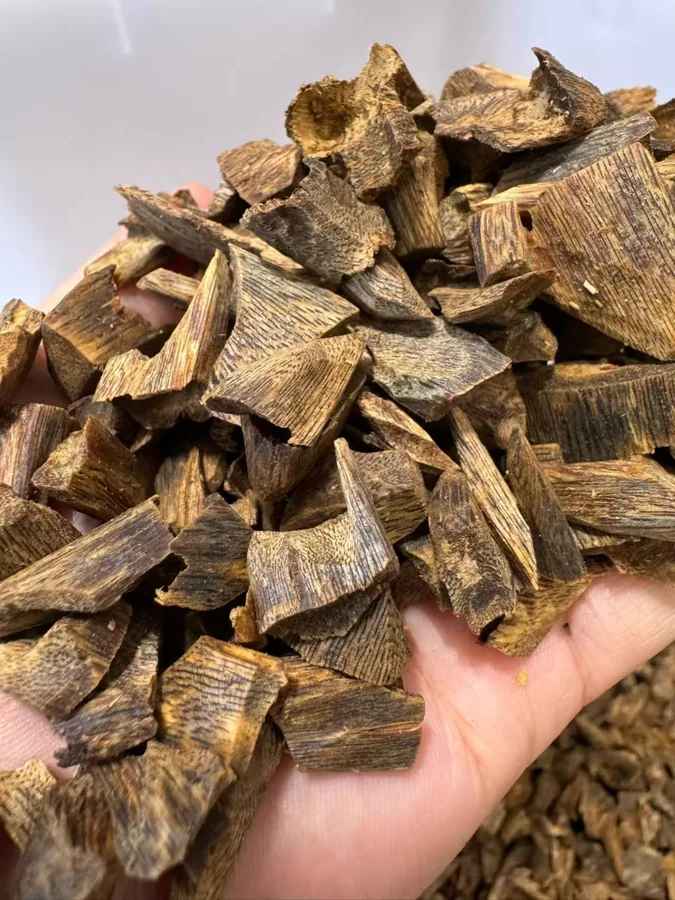
NanjaOud site reference photograph of small wood pieces. It shows an appearance direction, not the lot or processing result in this article.
First specify the job the chips must do
“For incense manufacturing” describes a market, not a manufacturing step. A producer may buy chips for a visible loose blend, for further crushing or grinding, or for a controlled addition to a formed product. The useful piece size and acceptable dust will differ. If the buyer has to mill the chips, the ability to feed the mill and the amount of fines produced may matter. If the pieces stay visible, shape, color range and foreign matter may be prominent. Write down the operation and the finished product before discussing a seller's label.
Record the present process problem. Perhaps material bridges in a hopper, produces an unwanted dusty fraction or varies too much in the finished blend. Those are examples of buyer questions, not observations about NanjaOud material. Describe the equipment type and what happened in the current process, without sending confidential formula details you do not wish to share. The supplier can then advise what sample direction it can offer and what still needs a trial.
Do not translate a requested output into an assumed input specification. A fine incense stick may use a milled input, but the starting chips need not be identical to a ready-to-use powder. Likewise, visible pieces can be useful in one incense product and unsuitable for another. The material form comparison guide helps choose between chips, granules and powder; this article goes further into the manufacturing trial once chips are under consideration.
Make the cut profile observable
Ask for photographs with a scale and a representative spread of pieces, not only the best-looking handful. Record approximate length, width and thickness ranges if those dimensions matter to the process. For irregular natural pieces, state how you will measure them and whether an oversize or fines fraction is acceptable. A vague phrase such as “small chips” cannot tell two teams whether a shipment is usable. If screens are used, identify the aperture and procedure rather than writing only a mesh number. The separate particle-size specification guide covers that measurement problem in detail.
Surface appearance should be recorded without turning it into an unsupported grade claim. Note visible resin pattern, color variation, bark or other apparent inclusions and broken fines. These observations can help compare received samples, but they cannot prove botanical identity, precise origin, extraction potential or fragrance strength. If a buyer needs a documented identity or restricted-trade determination, ask for documents appropriate to the offered material and destination; do not infer the answer from a photograph.
Moisture and cleanliness deserve written questions even if the public product page gives no number. Ask what condition the sample and offered material are packed in, whether there is visible dampness or unexpected odor, and how foreign matter is identified. Do not invent a universal acceptance percentage. A buyer can define a provisional rejection rule for its own incoming process, then validate the rule with representative samples and a mutually agreed method.
| Specification field | What to request or record | Why it matters to an incense process |
|---|---|---|
| Intended operation | Visible blend, grinding, direct heating or formed-product input | Changes the useful material form |
| Sample identity | Code, supplier description, date and relation to offered lot | Keeps the trial tied to a real offer |
| Cut profile | Piece dimensions or screen method, oversize and fines | Affects feeding, mixing and appearance |
| Visual condition | Photos with scale, color range and visible inclusions | Makes comparison repeatable |
| Handling | Pack, dust, clumping and condition on arrival | Identifies process and storage questions |
| Trial output | Yield or waste recorded by the buyer, finished-product appearance and behavior | Tests fit in the intended operation |
| Acceptance | Approved sample and written method for later lots | Limits disputes over subjective labels |
This table is a request template. It contains no NanjaOud standard limit, test result or guaranteed performance value.
Trial the material in the process that will use it
Before processing, photograph the unopened pack, label and a spread of the received material. Record the mass and condition of the sample, the date, the equipment and any relevant settings. Keep part of the sample as an unprocessed reference if the amount permits. If several suppliers are compared, use the same steps and observation form. A trial without identity can reveal a problem but cannot support a reproducible purchase decision.
Start with a small, controlled run appropriate to your equipment and safety procedures. Record how the chips feed and whether the cut causes bridging, excessive dust or a need for unexpected sorting. If milling is part of the process, record the resulting particle profile using your normal method and note any change in heat, odor or handling that matters to the product. These are checks for the buyer to perform; no NanjaOud milling outcome is asserted here.
Next evaluate the finished incense format. In a loose blend, examine visible distribution and whether pieces segregate during handling. In a formed item, check whether the processed input mixes, forms and dries as expected, then carry out the relevant burning or use test. Do not credit or blame the wood alone when binder, moisture, equipment settings and pack conditions also changed. Hold the other variables as steady as practical, and record deviations. The powder formulation guide covers a later decision if chips are milled into a fine ingredient.
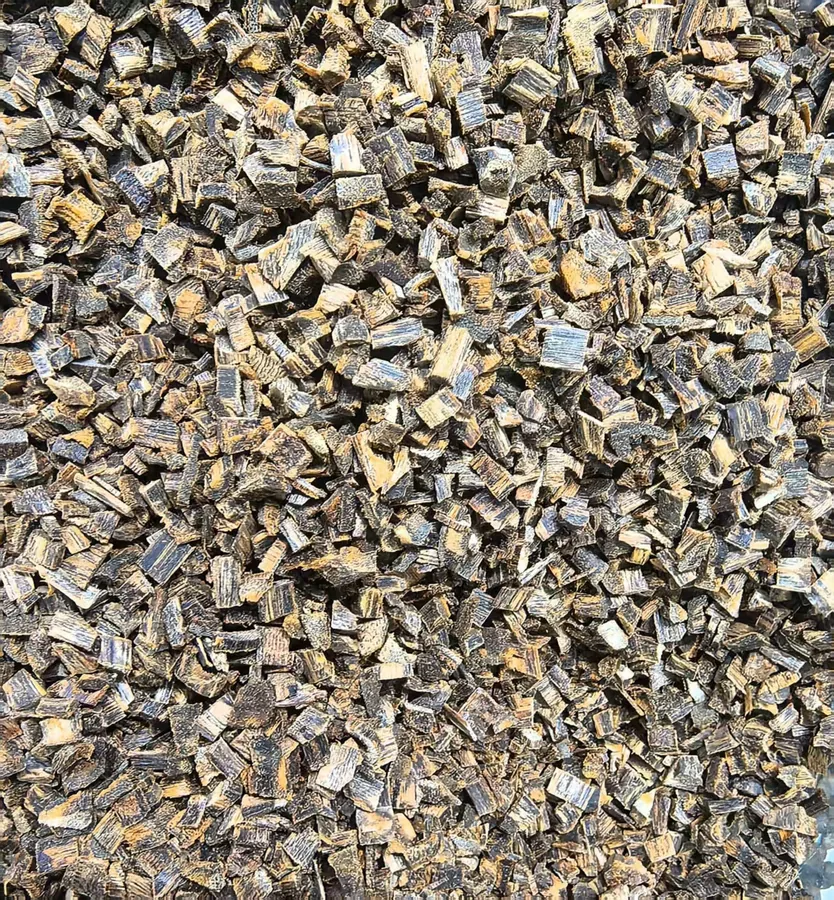
NanjaOud site reference image of another cut appearance. The image does not establish an agreed sieve distribution, cleanliness level or shipment specification.
Link a successful trial to the offered lot
An approved bench sample may be a selected example, development material or material taken from a current lot. Ask the supplier which it is. If the bulk offer comes from a different lot, agree which identity, visual, cut and functional checks need repeating. Keep the reference sample protected and labeled. A buyer's internal acceptance record should name the sample code, process, date, reviewers and decision, including any tolerated variation.
Ask how packing will protect the agreed condition in transit and what labels will distinguish lots. Do not specify a promised shelf life, moisture limit, packaging method or lead time without supplier confirmation. A photograph of a neat sample bag is not a shipping specification. The NanjaOud quality and supply page describes the broader supply discussion; the exact inspection and packing terms belong in a quotation and order document for the offered material.
If a trial fails, send a structured observation rather than a broad quality verdict. “This sample contained an oversize fraction that blocked our stated feed opening” identifies what to investigate. “Bad chips” does not. State the sample code, measurement method and whether the issue was isolated or recurring. Ask whether a different cut or form can be sampled. Keep a failed trial useful as a decision record.
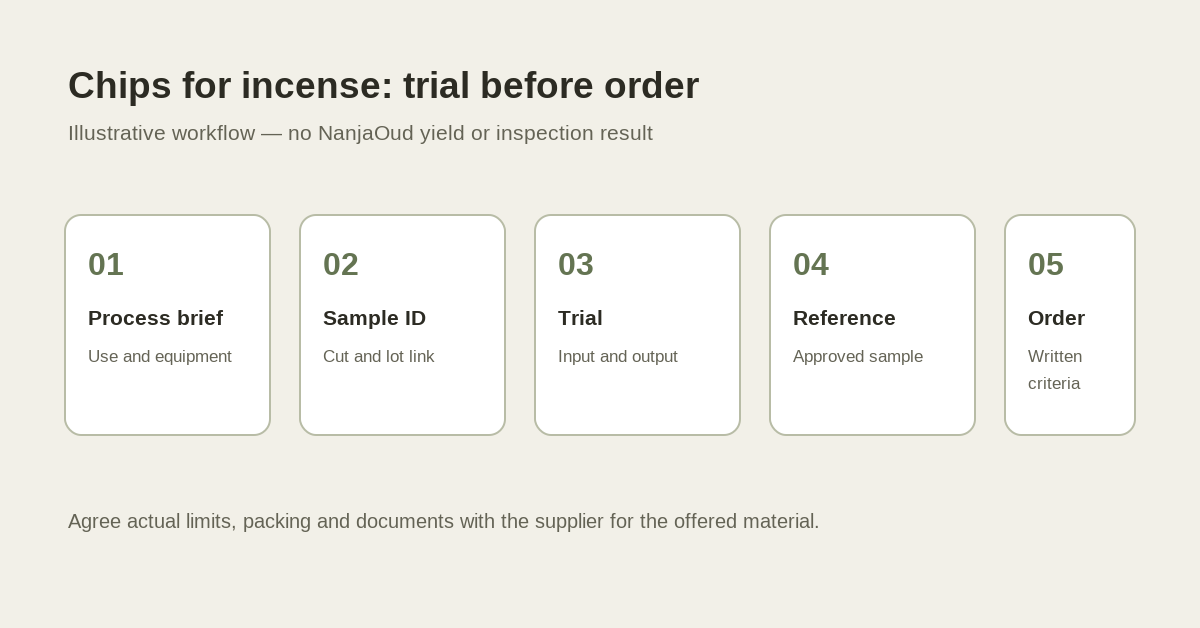
Illustrative buyer workflow only. It contains no NanjaOud process measurement or guaranteed yield.
Buyer FAQ
Can I buy chips by grade name alone?
No. Ask what the name means for the actual offered material and confirm a representative sample, cut description and acceptance method. Grade labels can vary between suppliers and markets.
Is a mesh number enough if I will mill the chips?
No. State the screen aperture and procedure if screening is relevant, but also review piece shape, fines, foreign matter, handling and what your mill produces. A number without a method is hard to enforce.
Can a photo prove that chips are suitable for incense?
A photo can show visible shape and color under its lighting conditions. It cannot demonstrate aroma in use, process behavior, identity or consistency across a lot. Request an identified sample and run the intended trial.
Should I use the same acceptance check for a loose blend and a formed stick?
No. They may share identity and cleanliness checks, but visible appearance, mixing, forming and burning decisions differ. Write the checks against the final product and process.
What belongs in the first RFQ?
Send the intended incense format, process step, desired cut or sample reference, evaluation quantity, destination, packing questions and any documents you need reviewed. Ask NanjaOud which current chips can be sampled and which specifications it can confirm before quoting.
The best starting point is a short process brief and a traceable sample request. Use NanjaOud's contact page to describe the job, share an acceptable reference if available and ask for a sample that can be tested in your own production route.


