
Short answer: tell the supplier what you plan to do with the wood, then request a labeled sample whose relationship to the offered lot is clear. Ask for several views with a scale, a description of cut and size range, the sample's weight and pack condition, and a statement of whether the pieces are representative, selected examples or development material. On receipt, record appearance and aroma under a consistent method. Approve only the identified material and agreed acceptance criteria, not an entire unseen stock from one attractive photograph.
NanjaOud's raw-material category and large agarwood pieces listing show relevant enquiry directions. The public pages do not make every pictured shape, species or grade available for every order. The published wood block buyer guide introduces uses and RFQ inputs; this article focuses on the narrower job of requesting, receiving and retaining a sample. Ask the company to confirm the actual current material before making a specification.
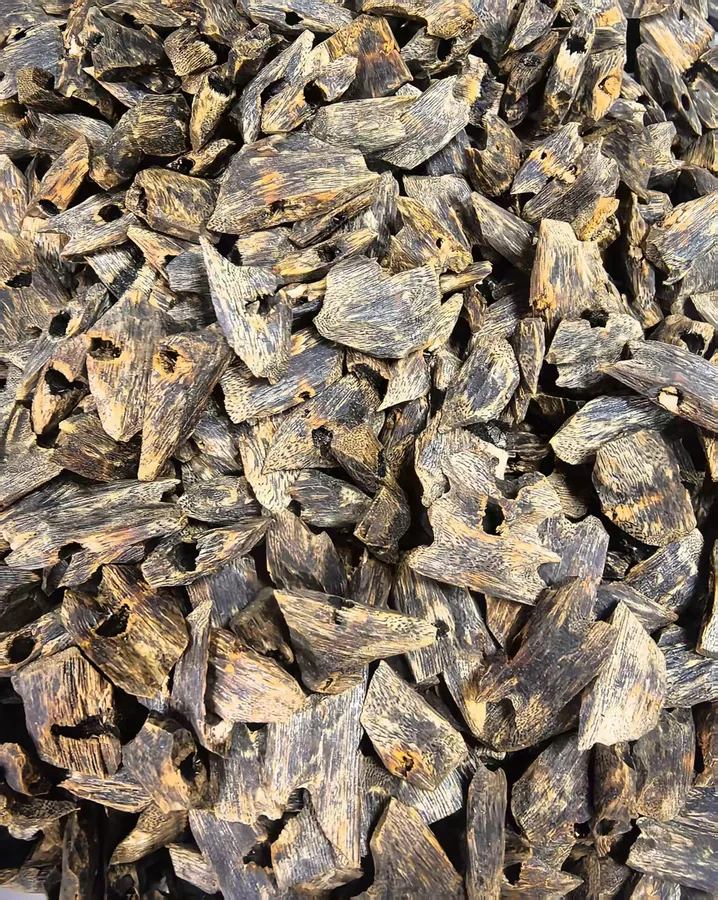
NanjaOud site implementation image used as a visual form reference. It is not identified as the lot or sample discussed in this guide.
Write the intended use before discussing a grade
“Agarwood block” may mean a display piece, a cut suitable for heating, feedstock for further cutting or material for a maker's own process. Those uses ask different questions. A carver needs workable geometry and information about cracks or voids. An incense maker may care about the amount of usable wood after cutting and how pieces behave in the intended process. A reseller may need consistent presentation across a pack. An oil maker would need to discuss process suitability separately; appearance alone cannot predict a yield.
Give the supplier a simple brief: intended application, target size or range, whether natural outline is acceptable, destination market, approximate trial amount and the decision the sample will support. If the use is not settled, say so and ask for two clearly labeled directions. A supplier cannot select a meaningful sample from a vague request for “top grade oud.” Grade names vary and may hide different expectations about visible resin, scent, geometry and price.
Do not turn the brief into invented specifications. If you have no preferred moisture range, color threshold or resin percentage, do not write one merely to sound technical. State the observation you need to make and ask what the supplier can measure or show for this lot. A written question is more useful than a number that no party has tested.
Ask how the sample relates to the offer
The most important sampling question is not “How beautiful is this piece?” It is “What purchase does this piece represent?” Ask whether the sample came from the actual proposed lot, a retained reference, a selected showpiece or a separate batch. Ask how the supplier defined the lot: the material grouped for one quotation, shipment or production selection. If the supplier cannot yet identify a lot, mark the sample as exploratory and do not use it as final bulk approval.
Request more than one piece when variation matters. A small chip cut from one attractive face can conceal differences in the rest of the wood. Ask for a selection that shows the range the supplier expects to deliver, including typical pieces and any permitted lower-end appearance. Agree on sampling method, number and selection responsibility according to the risk of the order. There is no universal piece count suitable for every NanjaOud enquiry.
Keep a written sample code and received date. Record the supplier's description exactly as given, but separate it from your own observations. A label saying “Kynam” or a named origin is a supplier claim until the buyer has the documents and verification appropriate to that purchase. Do not infer species, geography or resin content from a photo or a scent memory.
| Request field | What the supplier should clarify | What the buyer should record |
|---|---|---|
| Intended use | Which offered cut or form is relevant | Application and trial decision |
| Sample identity | Code, date, lot or prototype status | Label photograph and receipt record |
| Selection basis | Representative, range sample or selected piece | Limits of what approval can cover |
| Geometry | Length, width, thickness or size range and method | Measurements of received pieces |
| Visible condition | Cracks, voids, bark, foreign matter or cutting marks | Multi-angle photographs with scale |
| Aroma trial | Suggested safe evaluation method, if any | Conditions and plain sensory notes |
| Commercial link | Proposed supply form and quotation reference | Questions remaining before an order |
This is a request checklist, not a published NanjaOud product tolerance. The actual acceptance range should come from an identified sample and written agreement.
Request photographs that can be checked later
Ask for a group image showing all sample pieces and close views of each piece's front, back, end grain and any notable flaw. Place a ruler or other known scale in the frame and use consistent lighting. A video can show rotation, but a still photograph makes measurements and later comparisons easier. The image file or label should carry the sample code; a separate spreadsheet can map photo numbers to weights and measurements.
Lighting can exaggerate dark streaks or hide cracks. Ask for a neutral background and an unedited view as well as any attractive sales image. Do not ask the supplier to infer a resin percentage from appearance. Research on physical and chemical variation among agarwood batches illustrates why visible features and analytical properties should be treated as different observations. That study's samples are not evidence about the wood NanjaOud currently offers.
If photographs and the actual sample disagree, document the difference before evaluating scent. Perhaps the camera, lighting or selection basis explains it; perhaps the pack contains a different material. The buyer needs the supplier's explanation tied to the sample code, not an assumption.
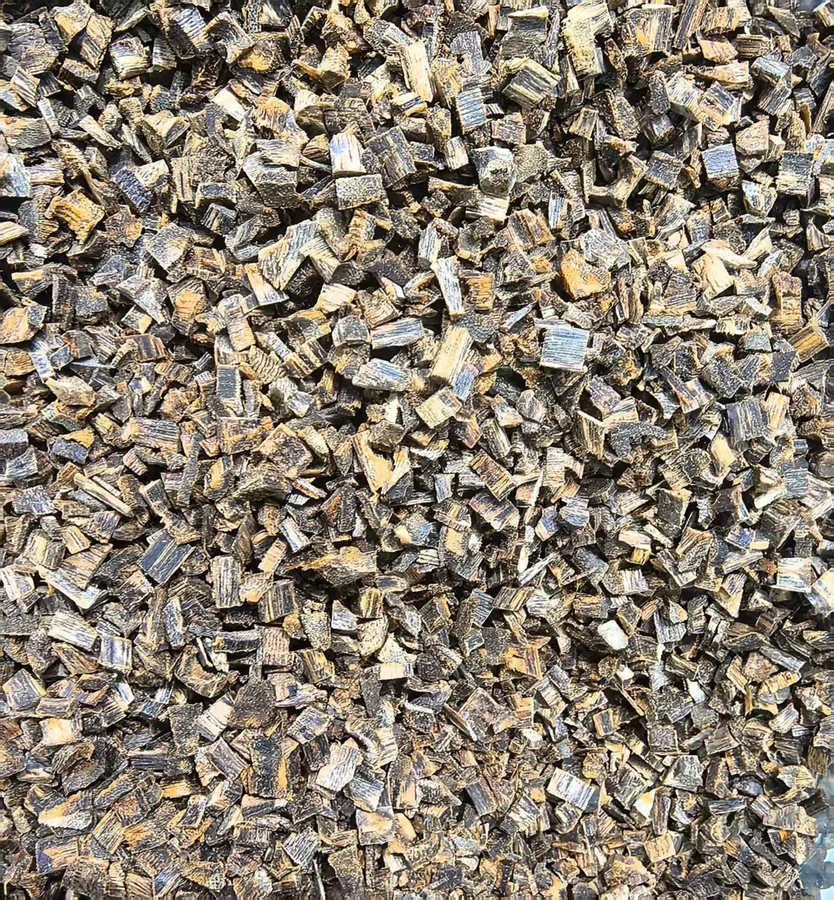
A separate NanjaOud site implementation image showing a smaller cut form. The image helps distinguish form, not prove a sample's identity or grade.
On receipt, separate condition from suitability
Photograph the package before opening, including any labels and damage. Count and weigh the pieces using a stated method, then measure the dimensions that matter to the intended use. Note visible dust, broken edges, cracks, foreign matter and obvious variation. These are receiving observations, not a verdict on authenticity. If there is a discrepancy, keep the original pack and send the supplier an identified report.
For aroma, use a consistent approach appropriate to the product and safe handling. Smell the unheated wood first and describe what is actually perceived. If the intended use involves heating, agree on a small controlled trial with suitable equipment and local fire precautions. Record the test conditions, piece code, reviewer and notes. Do not claim that one warmed chip proves the behavior of a full shipment. Avoid therapeutic or health claims from this sensory exercise.
Evaluate usable geometry separately. A piece may have an appealing scent but be too thin for carving. Another may be visually striking yet yield little material in a cutting pattern. Calculate the trial's usable fraction only from the actual sample and process, and state that it is a trial result. Do not present it as a NanjaOud yield or a guarantee for another lot.
Preserve a labeled retained piece if the buyer expects repeat orders. Store it under recorded conditions and keep its photographs with the evaluation sheet. If the future offer differs in cut, lot or appearance, ask what needs reapproval. A reference sample is helpful only when both parties know how it was selected and which later supply it is meant to represent.
Give the supplier a decision it can act on
The response should say one of three things: approved for a specific next step, acceptable if stated differences are corrected, or a new representative sample is needed. List the evidence behind the decision. “Piece B has a crack across the proposed carving face; please confirm whether this condition is allowed in the offer” is actionable. “Poor quality” is not.
For an RFQ, send intended use, sample code, approved cut and size method, appearance range, packaging needs, destination, expected order scale and documents to be verified. Ask the supplier to confirm current supply, feasible specifications and commercial terms for the actual item. Keep the question about origin, grade or certification open until supporting evidence is available. Contact NanjaOud with the brief and sample record rather than relying on an unlabeled image from a catalogue.
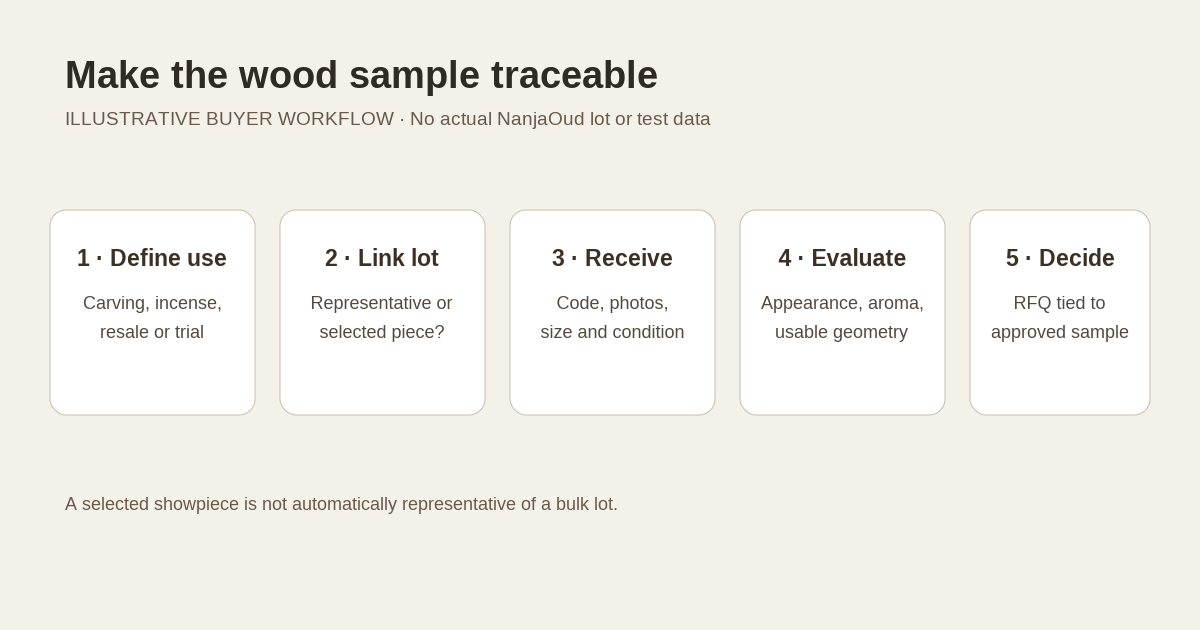
Illustrative buyer workflow; no NanjaOud lot, inspection or test result is depicted.
Buyer FAQ
Can one attractive block approve an entire bulk order?
Only if a buyer and supplier have clearly agreed that the piece is representative under a suitable sampling and acceptance method. Usually one selected piece shows possibilities, not the range of a natural-material lot.
Should I ask for a grade name or a sample code first?
Ask for both, but use the code to tie evidence to the actual material. Clarify what the grade means in measurable or observable terms for the intended use.
How many views should a remote sample record include?
Enough to show all sides, size and notable defects. A group image, front and back, end grain and a scale are a useful start. Record which image belongs to which piece.
Does dark color prove high resin content?
No. Appearance can guide questions but cannot quantify resin, confirm species or prove authenticity. Ask for evidence appropriate to the transaction and evaluate the physical sample.
What if the supplier cannot link a sample to a current lot?
Treat it as a development or exploratory sample. Use it to refine the brief, then request a lot-linked representative sample before approving a bulk purchase.


