
An agarwood wood block is not a standardized commodity. Pieces can differ in cut, size, visible resin pattern, aroma, and suitability for a buyer’s process, even within a single shipment. For a useful quotation, tell the supplier what the wood will become, request a sample tied to an identified lot, and agree on acceptance criteria before approving bulk supply.
That approach is more reliable than asking for a “top grade” block. Grade names are often seller-specific; a buyer needs a description that can be checked against the sample and the delivered material.
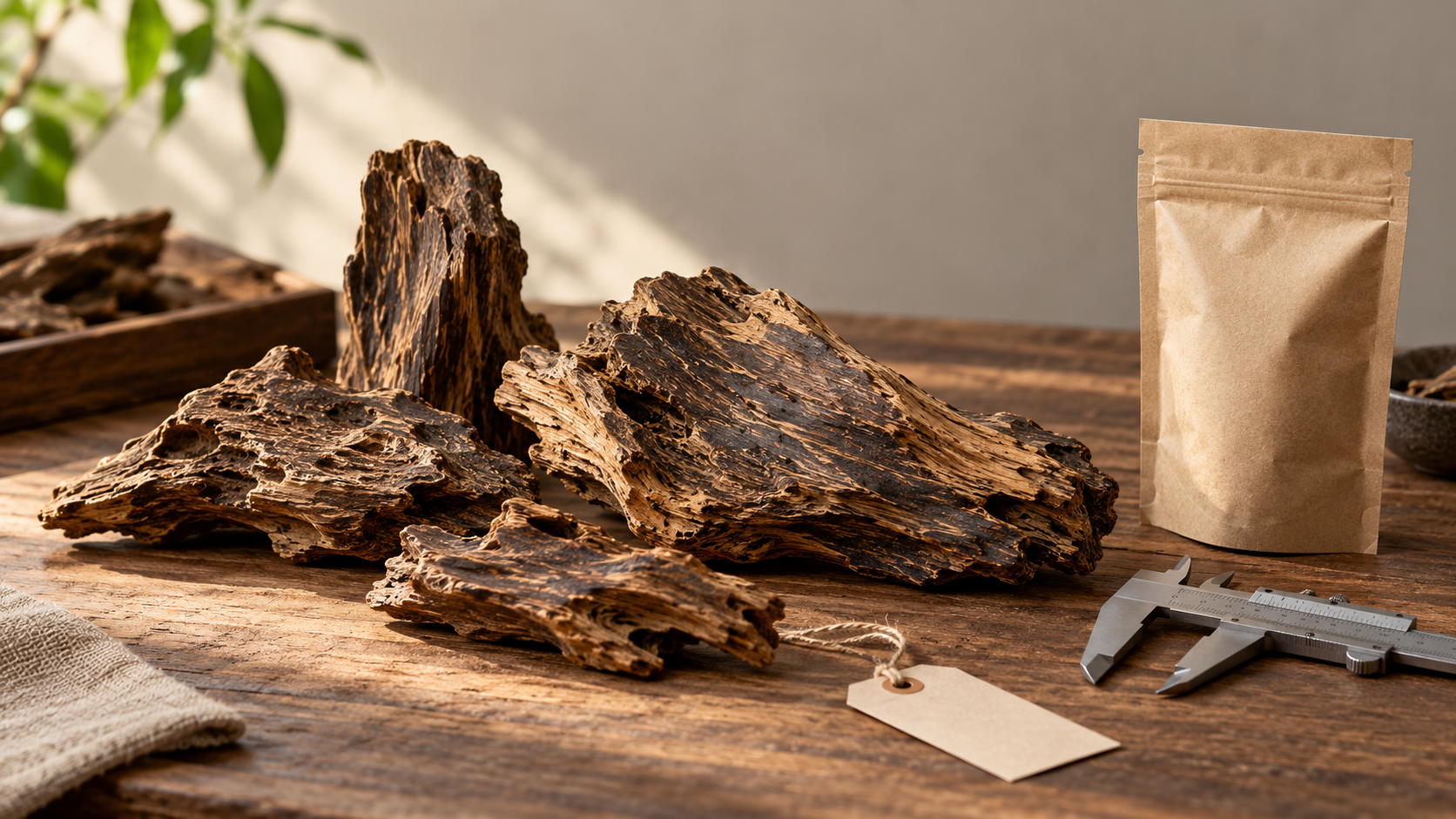
Illustrative scene. The pictured pieces are not a NanjaOud inventory lot or a grading reference.
Start with the finished product
The first question is not “Which grade is best?” It is “What will you do with the wood?” The answer changes which characteristics matter.
| Planned use | Priorities to put in the brief | What the sample should prove |
|---|---|---|
| Display or collectible pieces | Shape, visible character, dimensions, presentation | Appearance under ordinary light; condition of all sides |
| Carving or craft production | Usable dimensions, cut direction, cracks, workable sections | Whether the piece yields the required finished size |
| Incense or bakhoor blending | Cut form, aroma when used as intended, size distribution | Performance in the buyer’s actual burning or blending method |
| Fragrance extraction | Identified botanical material, feedstock form, lot and processing suitability | Result in the buyer’s pilot extraction process |
A block that looks striking in a photograph may not fit a carving template. A piece that smells attractive in a quick room-temperature check may behave differently when heated or processed. Define the use first and test accordingly.
For NanjaOud’s public range, see Agarwood Raw Materials & Chips. Ask the team which wood forms and cuts are available for your particular brief rather than treating every illustrated form as a standing specification.
Translate appearance into a written specification
Resin-rich-looking streaks and darker areas can help a buyer decide which pieces to examine further. They do not, by themselves, establish species, origin, composition, aroma, extraction yield or legal status. Agarwood is resinous wood associated with biological responses in Aquilaria and related agarwood-producing taxa; its formation and chemical profile can vary. A published review of agarwood formation explains why visual uniformity should not be assumed.
Write down the items that you can inspect or measure:
- Form: whole block, cut section, irregular chunk or another agreed cut.
- Dimensions: desired length, width and thickness, plus acceptable range. For irregular pieces, define a practical minimum usable dimension or weight range instead of an impossible exact geometry.
- Condition: acceptable cracks, loose fragments, surface contamination and visible damage.
- Aroma evaluation: room-temperature impression, controlled heating method, or processing trial. Record which method was used; otherwise two people may be discussing different observations.
- Lot identity: sample code, source or production lot, date of sample and link to the proposed bulk quantity.
- Packing: individual protection or bulk packing, inner bag, outer carton, labeling and destination.
Not every application needs every test. A display buyer may put more weight on visual condition, while an extraction buyer will need a pilot process result. The key is to agree in advance which observations decide acceptance.
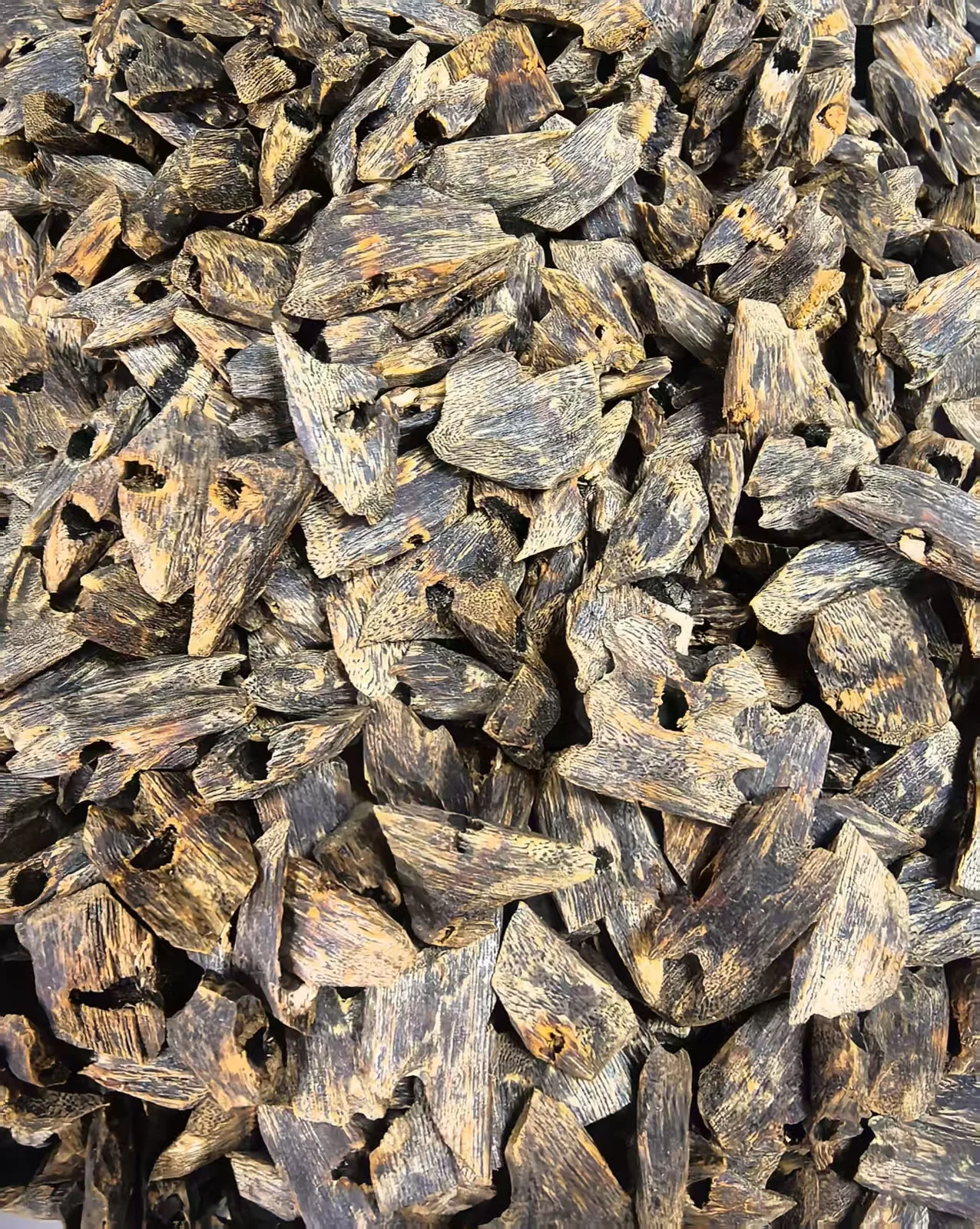
Image from NanjaOud’s public raw-material category page. It illustrates a wood form; it does not define the specification of a future order.
Ask for a sample that represents the proposed order
A single attractive piece can tell you very little about a larger mixed lot. Request a sample-selection explanation: Was it randomly selected, selected to show the expected range, or selected as a premium reference? If the order includes multiple size or appearance groups, ask for samples from each group.
Give every sample an identifier and keep it until the bulk shipment has been checked. Record the date, weight or count, photographs of multiple faces, dimensions, condition and the evaluation method. If the buyer heats or processes material, use a controlled comparison with the same conditions across candidates. A subjective aroma note is useful for selection, but it is not a substitute for the agreed purchase specification.
The bulk approval question should be explicit: “Will the material offered in the quotation be drawn from the sampled lot, or will the future production lot be different?” If it will differ, agree on how the second lot will be sampled and approved.
Compare lots with one scorecard
Avoid choosing one lot by a close-up photograph and another by a supplier’s grade word. Use the same scorecard for both:
- Confirm intended use and minimum usable form.
- Record the sample’s lot identifier and how it was selected.
- Measure the agreed dimensions or weight range.
- Inspect visible condition and foreign matter under consistent lighting.
- Evaluate aroma or process performance with the same method.
- Review packing, documentation and quotation terms separately.
Keep observations separate from conclusions. “Dark streaks visible on three faces” is an observation. “Authentic high-grade agarwood” is a conclusion that needs a defined basis. If a supplier uses a grade name, ask what specific measurable or observable criteria sit behind it.
Build the RFQ before discussing price
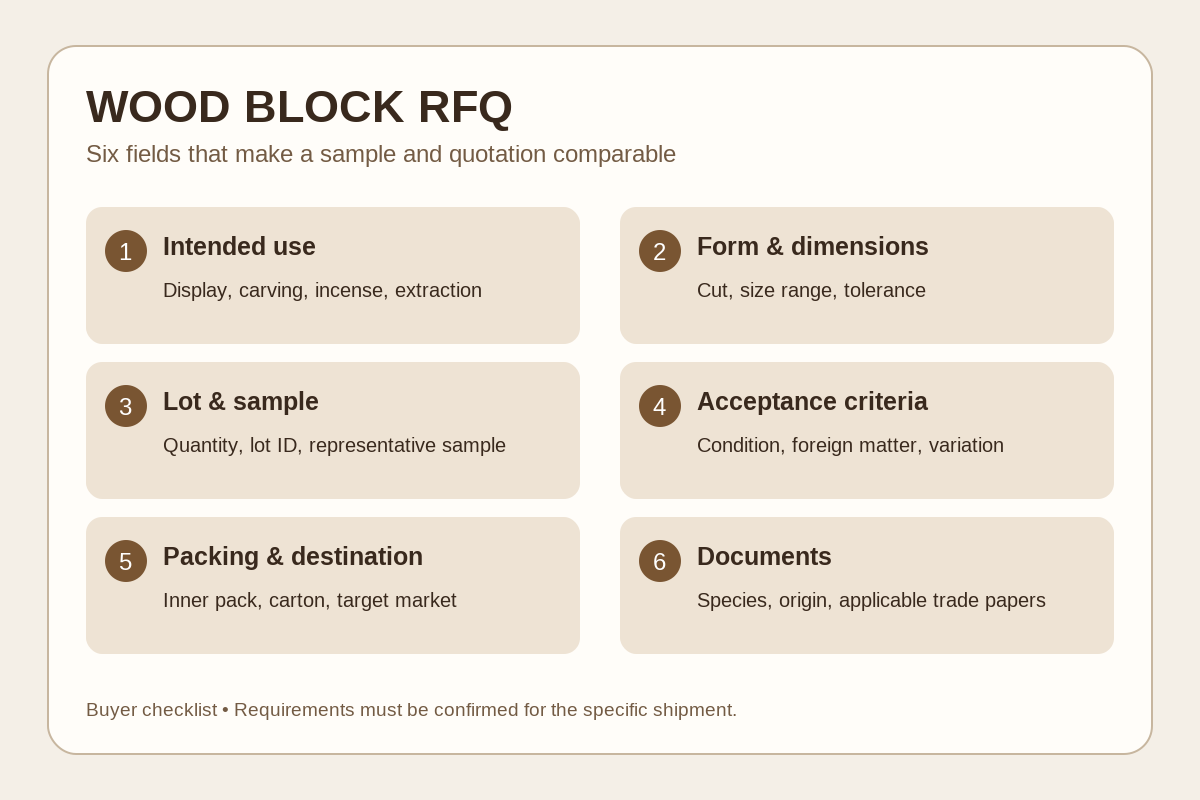
A short but complete RFQ reduces repeated questions and makes quotations comparable. Copy and adapt these fields:
| RFQ field | Buyer input to provide |
|---|---|
| Application | Display, craft, incense, extraction, resale, or other use |
| Product form | Block, chunk, section; reference photos if useful |
| Size and tolerance | Dimensions or weight range, minimum usable size |
| Sample request | Quantity, representative range, lot identity |
| Acceptance | Condition, visible variation, foreign matter, performance test |
| Order volume | Trial quantity and estimated repeat demand, if known |
| Packing | Inner/outer pack, labeling, destination market |
| Documentation | Botanical identity, source and trade papers applicable to this transaction |
| Commercial terms | Ask supplier to confirm price basis, lead time and available shipping terms |
International documentation deserves particular attention. Aquilaria and Gyrinops are addressed by CITES Appendix listings; the exact paperwork depends on the botanical material, product form, source, route and current rules of the relevant countries. Ask the exporter and your customs specialist to verify the requirements for the specific shipment. A marketing statement such as “plantation sourced” is not a substitute for the applicable documents.
Common purchasing mistakes
Buying from a single glamour photo. Ask for consistent lighting, multiple views, a scale reference and images of the proposed lot rather than only one selected piece.
Assuming a grade name travels between suppliers. Define the traits you will accept and retain the approved sample.
Treating sample approval as bulk approval without a lot link. Put the lot and replacement-lot process in writing.
Leaving packing until the invoice stage. Agree on moisture protection, damage prevention and labeling during the RFQ, especially for mixed pieces.
Using an aroma claim without a method. A room-temperature sniff, controlled heating and extraction trial answer different questions.
Frequently asked questions
Are darker agarwood blocks always better?
No. Darker areas are a visual observation, not a complete quality grade. Judge a block against its intended use, an approved sample and any agreed inspection or process test.
Can I buy agarwood blocks from photographs only?
Photographs help screen candidates, but they cannot establish aroma, usable yield, botanical identity or bulk-lot consistency. Request a representative sample and lot-linked evidence for a significant order.
What is a representative sample?
It is a sample chosen to reflect the range of material proposed for sale, with its selection method and lot recorded. A supplier should disclose if the sample is a hand-picked premium piece.
Should I request an exact dimension for irregular wood?
You can, but a practical size range, minimum usable dimension and agreed tolerance may be more useful. State the finished-product requirement so the supplier can propose a workable cut.
Does “plantation sourced” remove the need for trade documents?
No. Ask which botanical material and product form are being shipped and have the applicable origin, export and import requirements checked for the route and date of shipment.
A clearer next step
If you are comparing wood forms for a wholesale or production project, send NanjaOud your intended use, target cut or size, trial quantity, destination and sample requirements through the contact page. The team can confirm what is available for your specification and which details need review before a quotation.


