

An oud chips manufacturer negotiation is won on structure, not on pressure. The buyers who get a workable price without losing grade are the ones who arrive with a written specification, a cost breakdown and a ranked list of what they are willing to trade, because a supplier pushed on price alone will recover the margin somewhere in the material. This guide sets out the eight levers that genuinely move an oud chips quotation, the order to pull them in, and the four terms you should never trade away.
Why the price per kilogram is the weakest lever you have
Oud chips are a graded agricultural material, so a supplier has only three honest ways to meet a lower price: shift to a cheaper grade, deliver a smaller or more heavily screened format, or quote on a wetter weight basis. All three look like a discount on the invoice and none of them is one. The first negotiation therefore happens inside your own team: fix the specification before you ask anyone for a number. A buyer who opens with "what is your best price for 500 kg of wholesale oud chips" invites a quotation that cannot be compared to anything, including the next quotation.
The practical consequence is that the oud chips price per kilogram is a result of five or six specification decisions, not an independent variable. Once you can see which decisions drive the number, you can trade the ones that cost you little and protect the ones that cost you a lot. A buyer who understands this stops negotiating against the supplier and starts negotiating against the specification.
Read the cost structure before you ask for a concession
You cannot trade a cost line you have not identified. Ask every agarwood chips supplier on your shortlist to mark, line by line, whether the figure is included in the quoted price or invoiced separately. Suppliers that answer this well are usually the ones whose production you can trust, because the same discipline shows up in their lot records.
| Cost line | What actually drives it | What a buyer can realistically trade |
|---|---|---|
| Raw material grade | Resin appearance, piece integrity, origin and lot scarcity | Grade mix within the order, or a lower grade for non-visible applications |
| Cutting and screening | Target size band, screen openings, labour per tonne | Wider size tolerance, or accept a defined share of oversize and fines |
| Drying | Whether the lot is dried to a stated basis or sold as-received | Nothing. This is a specification, not a discount |
| Hand sorting | How strictly pale, hollow and defect pieces are removed | Sorting standard for secondary SKUs, never for the hero SKU |
| Packing | Bulk sack versus retail-ready unit, labelling, palletisation | Standardise packs, or pack in bulk and repack at destination |
| Documentation | CITES permits, certificate of origin, phytosanitary certificate | Who applies and who pays, but never whether it is done |
| Inland haulage and freight basis | Incoterm, named port, actual versus volumetric weight | Port choice, consolidation, and who books the forwarder |
| Payment terms | Deposit percentage, balance trigger, currency | Deposit size against inspection rights, not instead of them |
Two lines in that table are frequently excluded and then invoiced at shipment: documentation and custom screening. Asking a supplier to state in writing what is not included surfaces more hidden cost than any single negotiation tactic, and it costs you nothing to ask.
The eight levers, ranked by what they cost you
The levers below are ordered from the ones that cost you least to the ones that damage the material or your position. Work down the list, not across it, and treat every oud chips wholesale supplier as a different negotiation rather than applying one template to the whole shortlist.
1. Volume commitment over a longer period
A twelve-month commitment at a stated monthly call-off is worth more to a processor than a single large order, because it lets them plan raw material allocation and drying capacity. Ask what the price difference is between a one-off order and a committed annual volume with quarterly releases. Keep the commitment conditional on the approved sample being repeatable, and write the condition into the agreement rather than assuming it. This is also the question that separates a real factory from a trader: a supplier with a documented production schedule can explain its available capacity, while a reseller should identify which party controls the order.
2. Grade mix inside one order
If your range includes a visible-piece SKU and a grind-or-blend SKU, you can often improve the blended price by accepting a higher share of the lower grade in the same lot. This is the single most effective lever for buyers whose end product does not display the chip. Be explicit about which SKU the mix applies to, and never let a mix allowance migrate into the visible-piece line.
3. Size band and screening tolerance
Custom size bands are a separate operation, and a tight band with a low fines allowance is genuinely more expensive to produce. If your process can tolerate a wider band, trade it: a defined oversize and fines percentage, measured on a stated screen, is a real cost saving that does not touch resin quality. What you must not do is leave the tolerance undefined, because an undefined band is where an oud chips wholesale supplier quotation quietly changes after the sample is approved.
4. Payment terms and deposit structure
Deposit size is a cost of capital, and on repeat orders it is often the largest commercial variable after price. A smaller deposit in exchange for a pre-shipment inspection right, or a balance released against documents rather than against a loading photo, is usually a better trade than a percentage point of price. Keep inspection rights and payment sequencing linked: the moment inspection becomes optional, the deposit becomes the only leverage the supplier needs.
5. Packaging standardisation
Retail-ready packing is a different production run from bulk sacks, and every additional pack format adds a changeover. Reducing the number of pack configurations, or standardising inner liners and carton sizes across SKUs, is a low-risk concession that often pays for itself in freight efficiency. If you are building a private label oud chips programme, confirm who owns the artwork and the dieline before you trade packing flexibility away.
6. Who pays for inspection and documents
Third-party inspection and permit handling are usually costed separately. Rather than arguing about the fee, agree the scope: what is checked, on what sampling basis, and what record you receive. A supplier who pays for a generic inspection report has bought you very little; a supplier who accepts your checklist has bought you evidence. The same logic applies to the documents required for the specific species and destination, which may have a separate processing time and cost.
7. Lead-time flexibility
If your launch calendar allows, offering a wider delivery window in exchange for a firm production slot is worth more than a discount, because it lets the factory fill capacity around your order. Ask for the stage breakdown rather than a single number: sample dispatch, production slot after deposit, processing and drying, permit issuance, inland transit, and sailing. A lead time quoted without its starting event is not a commitment.
8. Exclusivity and contract length
Exclusivity is the most expensive thing on this list and the most commonly given away for a small price movement. If you grant it, define the territory, the grade, the minimum volume that sustains it, and what happens if the volume is not met. An exclusive arrangement with no performance condition is a permanent constraint bought with a temporary discount.
| Lever | What you give | What you can ask for | Risk to grade |
|---|---|---|---|
| Volume commitment | Forecast and release schedule | Price validity, priority allocation | Low, if repeatability is a condition |
| Grade mix | Higher share of lower grade in one lot | Blended price on non-visible SKUs | Medium, if it reaches the hero SKU |
| Size tolerance | Wider band, defined fines allowance | Lower processing charge | Low, if measured on a stated screen |
| Payment terms | Larger or earlier deposit | Faster slot, better price | High, if inspection rights are reduced |
| Pack standardisation | Fewer pack formats | Lower packing cost, better freight density | Low |
| Inspection scope | Accept a shared or supplier report | Fee contribution | High, evidence is the product |
| Lead-time flexibility | Wider delivery window | Firm slot, price stability | Low |
| Exclusivity | Territory and grade exclusivity | Price protection, development work | Medium, needs a performance condition |
The concession ladder: a sequence that works
Sequence matters more than the individual ask, because each concession should buy information as well as value. A workable order is:
- Confirm the specification in writing. Size band, screening, moisture basis, appearance reference and packing. Nothing else is comparable until this exists.
- Request the itemised quotation. Ask which lines are included and which are invoiced later. This alone often closes part of the gap.
- Trade volume and lead-time flexibility. Both are cheap for you and valuable to a factory with capacity to fill.
- Trade size tolerance and packing standardisation. Measurable, low-risk, and easy to reverse if the trial lot disappoints.
- Discuss payment terms. Only after inspection scope is agreed, so the two are linked in the contract.
- Leave exclusivity and grade mix to last. These are the two concessions that are difficult to take back.
At each step, ask for the concession in writing and confirm what it does not change. A price movement that quietly alters the moisture basis is not a concession, it is a re-quotation from the same oud chips manufacturer.
Four terms you should never trade away
- Lot linkage of the approved sample. The sample must come from the offered lot and be retained, sealed and referenced in the purchase order. A sample from general stock is a scent impression, not an approval.
- The moisture basis. State whether the quoted weight is as-received or on a dry basis, and how it is measured. Buying water weight is the quietest loss in wholesale oud chips, and it is invisible on a price comparison.
- The screening tolerance. A defined oversize and fines percentage, measured on a named screen. Without it, "chips" can legally arrive as fragments.
- The claims window and remedy ladder. A stated number of days to raise a claim, the evidence required, and the order of remedies: replacement, credit note, price adjustment, return.
If a supplier resists any of these four, treat it as information about how the next dispute will go rather than as a negotiating position to overcome.
How to ask: weak and strong versions of the same request
| Weak ask | Strong ask |
|---|---|
| "Can you do better on price?" | "If we commit to a twelve-month volume with quarterly releases, what changes in the price and what stays fixed?" |
| "Your MOQ is too high." | "What is the MOQ for this exact size band, and is there a small-order surcharge instead of a different lot?" |
| "We need a discount to place the order." | "We can accept a wider size tolerance on the blend SKU. What does that save, and how is it measured?" |
| "Can you include the certificates?" | "Which permits apply to our destination, who applies, and what is the lead time on each?" |
Common mistakes in oud chips price negotiations
- Negotiating before the specification exists. Every subsequent number is unverifiable, including your own budget.
- Comparing price per kilogram across different size bands. More heavily screened material is cheaper to produce and behaves differently in use.
- Accepting a lower price without asking what changed. Something in the material, the weight basis or the packing moved; find out which.
- Trading inspection rights for a better price. The saving is small and the exposure is the entire order value.
- Leaving documentation to the supplier's discretion. Permits and certificates have their own lead time and are frequently excluded from the quoted price.
- Giving exclusivity without a volume condition. You have handed over a permanent constraint for a one-off movement.
- Letting a verbal concession replace a written one. If it is not in the quotation or the purchase order, it will not survive a change of account manager.
What NanjaOud Can Confirm for a Quotation
NanjaOud lists natural large agarwood chips and natural small agarwood chips. These product forms provide a starting point for a negotiation; a listing does not establish the current lot, grade, available quantity, MOQ, lead time or document package. Send the intended use, target size band, sample requirement, packing and destination. Ask for a written quotation that identifies what is included and what must be confirmed for the actual order.
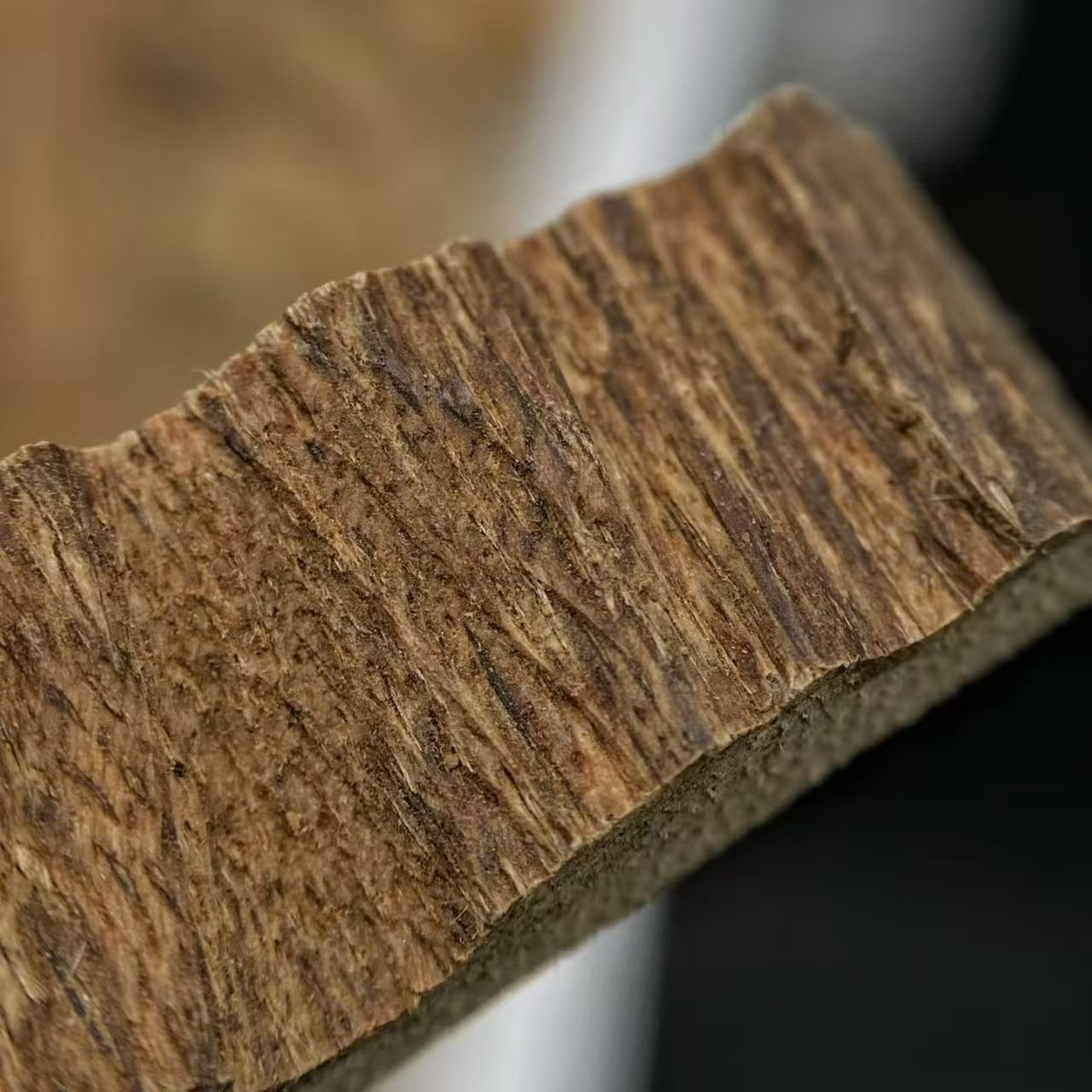
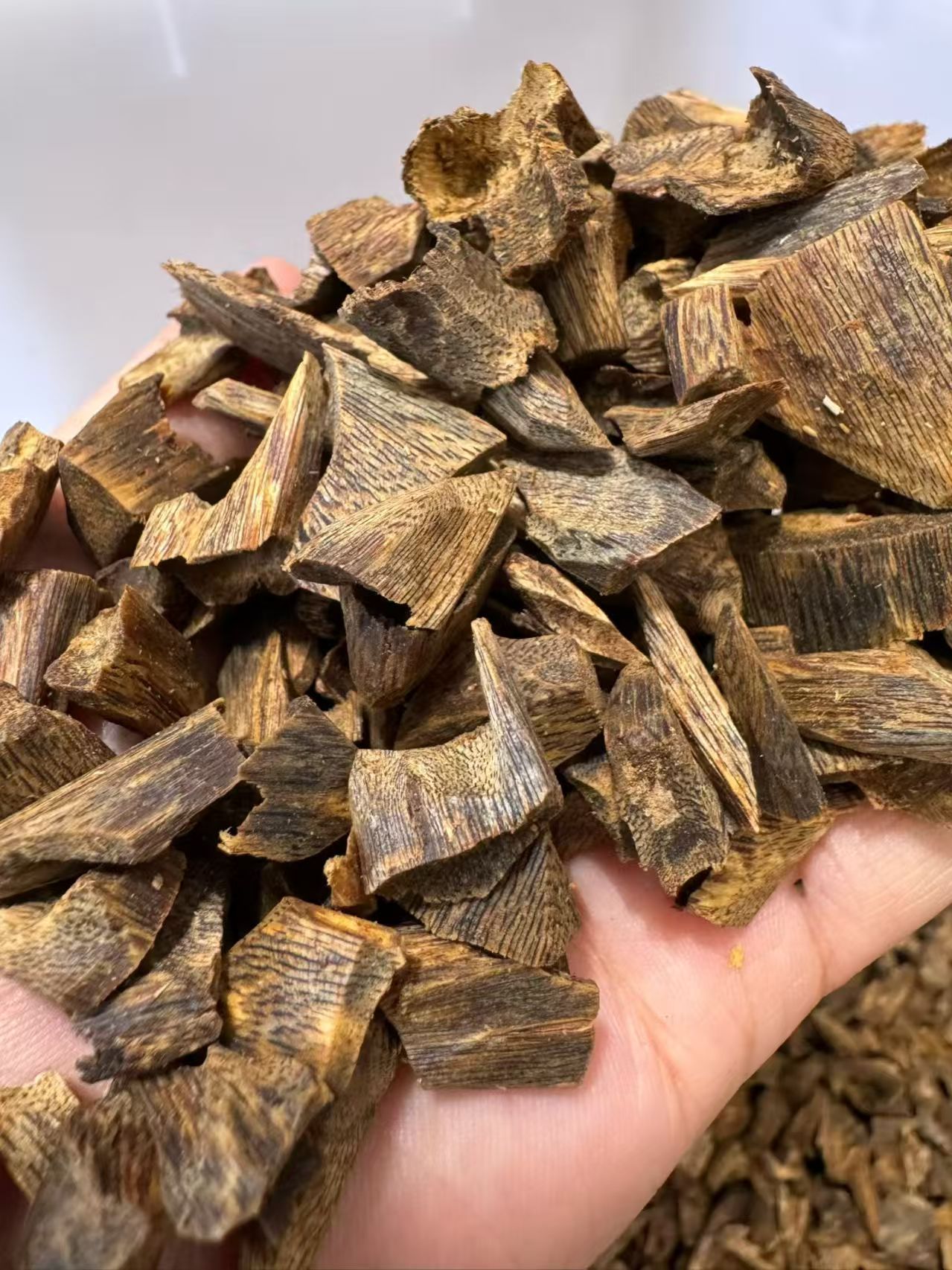
For a useful offer comparison, request the size and screening specification, moisture basis, lot-linked sample, packing unit, applicable documents, Incoterm and price validity. If a concession changes any of these, record the revised specification alongside the revised price.
FAQ
What should I negotiate first with an oud chips manufacturer?
Start with the specification, not the price. Once size band, screening, moisture basis, appearance reference and packing are written down, ask for an itemised quotation showing what is included and what is invoiced later. Most of the apparent price gap disappears at that step.
Is a lower price per kilogram always a better deal?
No. A lower figure usually reflects a cheaper grade, a smaller or more screened format, or a wetter weight basis. Convert every offer to a landed cost per usable kilogram on the same Incoterm before you compare, and check what the weight basis actually is.
How do I negotiate MOQ without accepting a different lot?
Ask for the MOQ for your exact size band and specification, and ask whether a small-order surcharge is available as an alternative. The outcome to avoid is an oud chips wholesale supplier filling a small order from a different production run without telling you.
Should I trade inspection rights for a better price?
No. Inspection scope, sampling basis and the record you receive are the evidence behind every later claim. A supplier who pays for a generic report has bought you very little; agree your checklist instead and treat the fee as a separate commercial question.
What payment structure is normal in this trade?
Structures vary by supplier and order, so confirm the deposit percentage, the balance trigger and the currency in writing. The important point is sequencing: balance should be released against documents or inspection evidence, not against a loading photograph.
Can I get exclusivity on a grade or territory?
It can be discussed, but define the territory, the grade, the minimum volume that sustains it and what happens if the volume is not met. Exclusivity without a performance condition is a permanent constraint bought with a temporary discount.
Do oud chips require CITES documents?
Check the species, product form, origin and destination against the current CITES listing and the requirements of the exporting and importing authorities. Ask the supplier and your customs broker to identify the documents needed for this order before booking freight.
How do I stop a price concession from becoming a quality problem?
Write the concession into the quotation and the purchase order, state what it does not change, and keep the retained sample and inspection standard intact. If a concession cannot be described in measurable terms, it is not a concession.
Conclusion
An oud chips manufacturer negotiation is really a specification exercise with a commercial overlay. Fix the size band, screening, moisture basis, appearance reference and packing; ask for an itemised quotation; then trade volume, lead-time flexibility, size tolerance and packing standardisation before you touch payment terms, and leave exclusivity and grade mix for last. Protect the four terms that carry the evidence: lot-linked sample, moisture basis, screening tolerance and claims remedy.
If you are sourcing oud chips for incense, fragrance processing, distribution or private label, send your specification, estimated quantity, target market and packaging direction through our contact page, and we will confirm what applies to your order. For the wider comparison framework, the guide to comparing oud chips manufacturers covers the eight vetting criteria, while what sets an oud chips MOQ and what drives the price per kilogram go deeper on the two numbers buyers ask about first.


